
Karthik and his mother just returned from a science museum. It was a fun-filled day with dinosaurs, mirrors and magic objects.
The next day, as he was moving around the balcony playing with his football, he suddenly found something.
“Woah! What is this?” he exclaimed
He saw a trail of tiny ants moving hurriedly in a straight line.
“Mama!” he began shouting.
As the mother rushed in to check on him, she saw her son keenly observing the ants.
“Look mama! They are so small. I wish I could see them clearly”, he said making a face.
Her mother got an idea, “Honey, you remember yesterday at the museum, there was a glass that made you look huge?”
He nodded.
“Well, we have such a glass at home to. Do you think it can help you?” she winked.
He beamed and ran inside his father’s room and returned with a magnifying glass.
“That’s my boy” Her mother exclaimed as she recalled introducing the object to her 5 year old a few weeks back.
The boy quickly ran off, chasing the trail with a magnifying glass in one hand and loads of curiosity and adventure on mind.
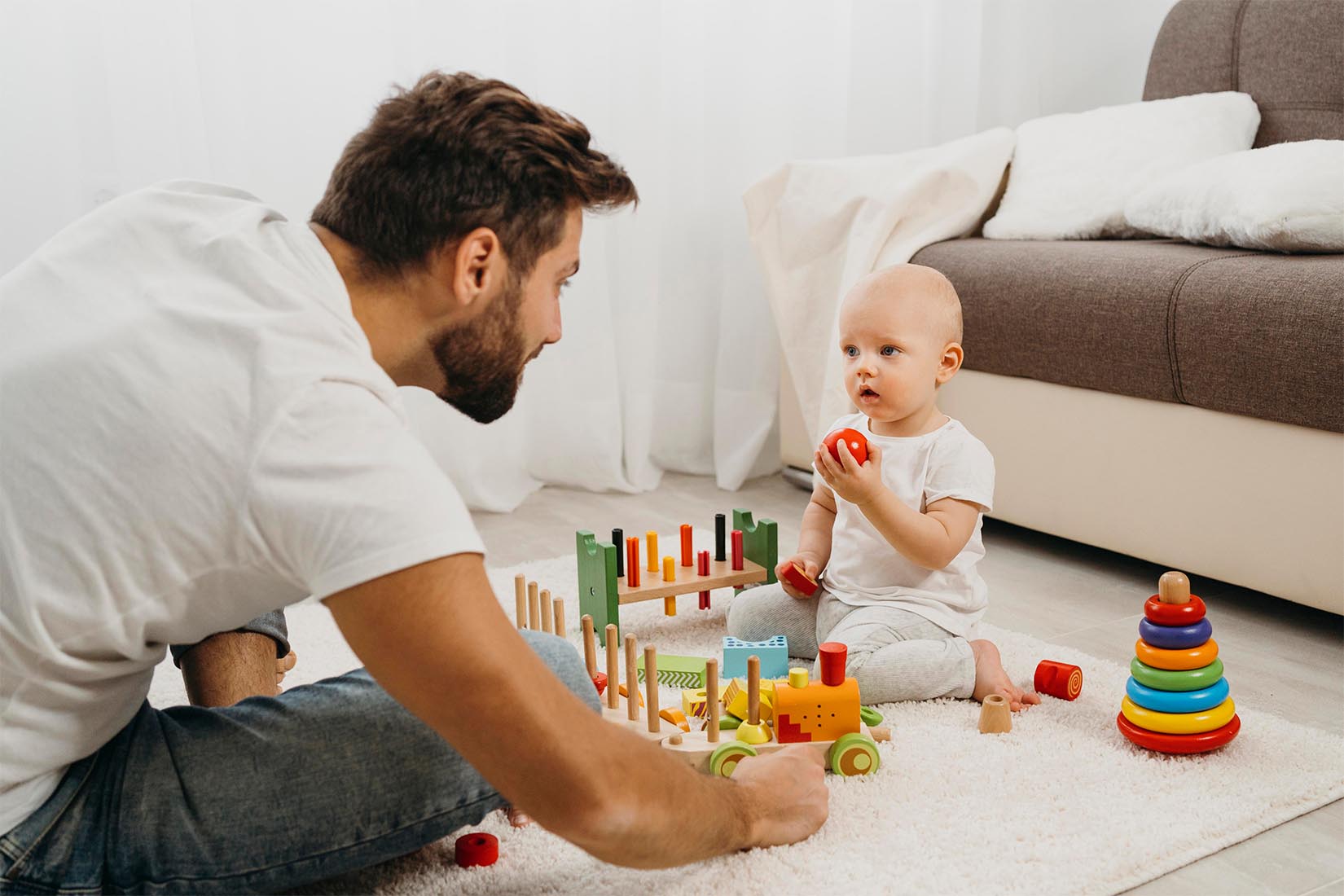
Technically, intentional teaching is a form of purposeful or deliberate teaching; where activities are planned keeping in mind the learning goals (in terms of children’s development –social, emotional, cognitive, physical and creative or academically in terms of literacy, math and science). It is not about saying at a particular part of the day I will intentionally ‘teach’ children something. It is about an intentional experience that we provide across the whole day.
The activities are carefully and developmentally chosen, keeping in mind an individual child’s levels of functioning and comprehension. The teacher uses intentional teaching strategies to help children learn skills or habits or information that they cannot discover on their own. Just like in the above example, a slight nudge (intentionality) on the mother’s part and poof! The child went on a quest of learning.
If we look at the steps of intentional teaching by a teacher or parents, it would involve-
- Intentional instruction and modeling(creating scenarios to impart the concept)
- Intentional arrangement of the environment.(choosing the right location)
- Intentional learning experiences(choosing a unique activity targeting at teaching a specific skill)
- Intentional teaching of social skills; e.g., how to greet peers, how to take turns, how to wait for something they want, how to demonstrate care and sympathy.
Parents should be intentional about the environment they provide for their children.
If you feel that your child is having difficulty in learning details, patterns and sequence of activities, you can pitch in with a song. For example, to teach the order of wearing clothes to a 3 year old, invent a song to remember better
A vest and a undie, then a shirt on the top
A pant in the bottom and then you hop
To grab socks and pull “em up your feet
Just wear those shoes after wiping them neat.
So every next time they have trouble learning the steps, they know what to do.
Parents can also teach children about social and emotional skills. We teach them about themselves and how to relate to others. For example, if your toddler has a habit of spilling a lot of toys and then playing, you can use this trick. As you move in their room, pretend that you tripped and fell on the floor because of a toy. Act ‘crying’ and call for your toddler’s help. Tell them that you got hurt because ‘Bugs the bunny’ was lying on the floor. Make them realize that spilled toys can hurt anyone.
To teach problem-solving, ask your kids a lot of questions and let them come up with ideas. For example, “Look at a lump of playdough. It is too sticky – what can we do about it?” or “What do you think will happen if we add more flour?”
Some children will struggle with fine-motor skills. Provide materials that interest the child and use them to teach the lag skill. Of course, this would involve understanding the habits of the child first. For example, if we know a child likes to paint and ‘brush it off’ often, we can teach him to brush his teeth. “Honey, a stroke up, one down, one this way and other long the edge just like you did on the sheet last night” In fact, instead of paint brushes, you can let him use toothbrush for a few days while he learns how to use it.
Children learn by watching and listening, and from the experiences and environment we provide. Hence, helping them by modeling and teaching the things that will help them develop the skills they need to be successful in life requires us to be intentional in our approach time to time yet be realistic in our expectations.