

“You’re amazing”- the throwaway use of superlatives
- Sitting on a park bench while my son was playing, I watched a toddler whoosh down the slide on his stomach, headfirst. His father yelled across the playground with pride: “That was amazing!” look amazing
- Waiting in the school corridor to speak to my child's teacher, I listened as a girl showed her mother a simple charcoal drawing that she had made in class. Not pausing a moment to really admire the picture, her mom declared: “You're an amazing artist!”
With parents, coaches, and teachers overusing the superlative amazing, it's become a throwaway remark in our culture. Like other exaggerated expressions of praise (brilliant, awesome, extraordinary to name just a few), it no longer has much value and depth. Our children need us to be the ones who are honest and genuine with them, even they figure out when we haven’t appreciated them truthfully. Making them doubt our judgment and sincerity is certainly the last thing we’d want.
SELF-ESTEEM on a SILVER PLATTER!?
Many parents feel the pressure to give superfluous compliments because it’s often what they see others doing. They figure that with praise and affection, the more the better. BUT! Research shows otherwise-- excessive appreciation makes children LESS confident, LESSresilient, and LESS likely to try new things. It actually transforms kids into ‘praise junkies’ who seek constant external validation instead of finding it within themselves. Today, many employers crib that young workers require too much praise and too much reassurance that they're performing well, this is possibly because of the excessive praise they received as children.
PRAISE with PURPOSE:
If you want to see your children trying harder, taking more risks without the fear of failure and setting bigger goals, let’s really break this down and see how you can try doing so:
*celebrating their uniqueness:
Our little ones really don’t want much more than to be seen and accepted as unique individuals—not better than but different than anyone else. You could try refraining from making remarks such as: “No question about it, you're the prettiest girl in the class" or "You're the best player on the team and they're lucky to have you.”
(Being pitted against children of their age can give them the impression that they’re always judged on the basis of how others do things and not on the basis of their performance. What can be more damaging is that they tend to start viewing their mates as their rivals and not allies, resulting in poor peer relationships and maybe even a feeling of loneliness.)
To focus on their uniqueness, try and make your kids feel that they are accepted for WHO THEY ARE:
- Make simple observations: "It’s wonderful how you’ve coloured the sky orange" is more meaningful to kids when looking at their art than something over-the-top like "Wow! This is fantastic!"
- Embrace their imperfections and humanness: "You're grumpy in the morning until you get some food in you. I'm that way, too!"
- Emphasize that their differences are a plus, not a liability: "Having glasses will help you do everything so much better”
*recognize their efforts:
Parents who praise their children's effort and ability to persist, boost their resilience.
To encourage effort over outcome, here are our suggestions:
1. Recognize hard work: “I saw you spent a lot of time colouring and picked out colours carefully"
2. Connect improvement with effort: "After practicing the ‘ABC’ song for so many days, now you can sing it well."
3. Celebrate learning, not awards and achievements: "You’ve learnt how to sing so many songs now” is far more significant in the long-haul compared to "I'm so proud that you won talent contest in school!"
The ability to bounce back after disappointment and defeat is a better indicator of ………success in life than intelligence or talent. Source: Pixabay (modified)
*make it about them, not you:
We tend to see a part of ourselves and our childhood in our children and start reliving it through them. While it is one of the most beautiful aspects of being a parent, can it sometimes go wrong? Claiming our children’s success or taking their failings as personal failures can be harmful to us and them. To accomplish a balance, be mindful of your ego and focus on the child’s emotions and experiences.
1. Zero-in on their feelings, not yours: Instead of “I feel great about your achievement” say “You should feel good about what you achieved.”
2. Ask about their learning, not achievement: "Which song did you like learning the most and why?" is more motivating than "
3. Promote self-care: "You've cleaned your room well enough. Why don't you go outside and play with friends?"
4. Empower them by gradually building self-awareness: When they have “show and tell?" in school, get them to analyse their own performance by asking, "How do you think you did?" Did you talk about your favourite superhero?
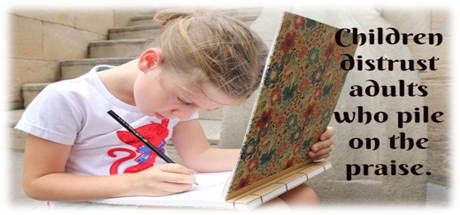
of adults who lavish them with accolades.
“Young children are unlikely to have their self-esteem strengthened from excessive praise or flattery. On the contrary, it may raise some doubts in children; many children can see through flattery and may even dismiss an adult who heaps on praise as a poor source of support-one who is not very believable.” — Prof. Dr. Lilian Katz, University of Illinois