
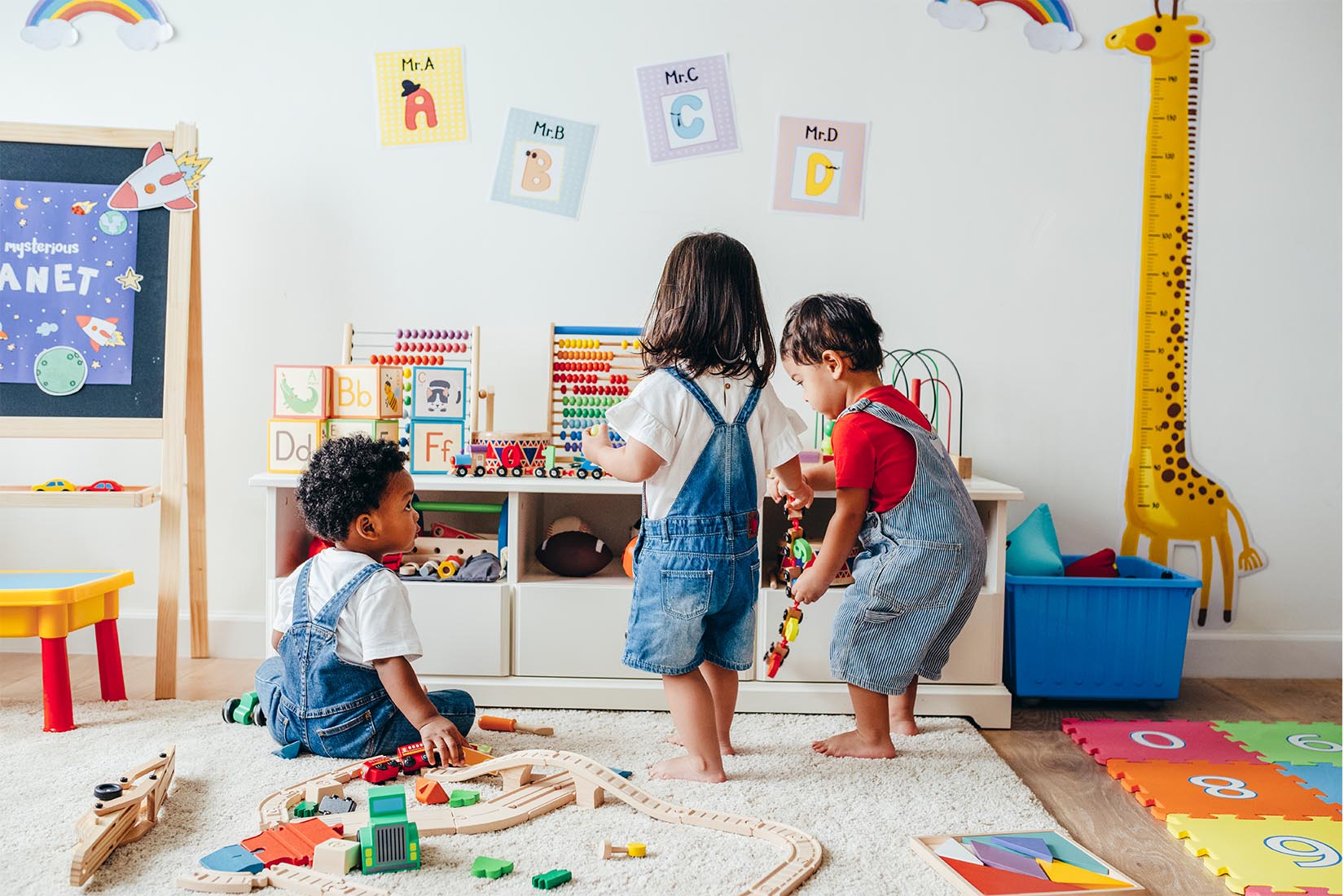
A lot of people might believe play might not deliver the quality education which is pivotal to a child’s development. However, science says otherwise.
It has been a researched and proven fact now that-
through playful learning that combines open-ended experiences, child-directed initiatives and teacher-guided activities, children do learn quality ideas and exceed standards.
To amalgamate play and learning for a holistic and quality development of a child, a caregiver/parent can do the following -
Intentionally craft scenarios
For examples: say if you wanna give a sense of SOUND & SERIATION
(caution - to be done under adult supervision ONLY!)
Collect some varied sized beads, lentils, buttons all or mix of above and a transparent container
Step 1: arrange the ingredients in order of their size
Step 2: Name the size, color, material of each size of object. E.g.- "This is a big red button! You have a red button too on your t-shirt. Look!"
Step 3: Fill a handful of the smallest, say yellow lentils. Allow your child to feel it and help you transfer it to the transparent container and cover it with the lid.
Step 4: Give your toddler enough time to tumble it, shake it, gaze at it, roll it, try to open it in other words immerse in the world of figuring it out.
Step 5: Once he is done, repeat step 3 & step 4 with other sizes.
As the attention span of a toddler is hardly 4-5 minutes, therefore you can complete this activity in 3-4 sittings also. After completion allow your toddler to put mixed sizes in the container. Soon, you will find him engrossed tossing and turning the container and trying to locate the items as they go up and down. Babbling with wonder and excitement! The different shades of items also stimulates the vision. Later offer a child tweezer, or a ladle or merely encourage your child to use fingers to pick out the items from the container - a fantastic exercise for motor skills!
So we have tried to work upon the following senses and skills in this activity, while giving enough free time to the child to experience all the materials involved:
- sound
- touch/feel
- sight
- words
- seriation (small/big/biggest)
- motor skills
and of course there are some side effects too: ample parent-child bonding time, the much needed to and fro reciprocation and priceless moments of joy!
Identifying developmental needs
During the early years there is a window period for varied foundational skillset. Though the broader time-frame of each is set, but every child hops into it as per his/her unique pattern of development. Therefore, knowing your child and meeting him/her at the path of their development is of utmost importance! Once you are tuned-in, you can effortlessly identify the leaps and lags in your child's development. This helps you to derive intentional play learnings through your child's favourite medium (toy/book/object/activity) and help your child reach optimum developmental goals.
Lay out different games in front of children to choose from-Puzzles, board games or the choice to go on nature excursions or to pick random objects like paints, cardboards, bowls, funnels etc. Once chosen, let them find ways to play and explore with it. E.g. If the child chooses to play puzzle pieces and tries to make pictures out of it, initiate a conversation on how to use the shapes and edges of the pieces to join or show the original picture of the animal that they are trying to join. Try taking a snack break “But I want to finish this first!” comes her reply. Realizing the high-quality learning she was engaged in while playing with the puzzle, you can be flexible and give her more time to do it in the day.
Growth assessment and evaluation
Conventionally in schools, teachers use a variety of evaluation tools, such as - portfolios, report cards, running records, anecdotal notes and narratives and formal assessments that measure acquisition and application of skills and concepts. However, switching to play based learning right at home before school involves a dynamic process of evaluation, having a keen eye for detail(observation) upon your child's interests, abilities, and efforts, seeking evidence of child’s learning and honestly reflecting on self- practice. It can be found that the combination of observing play and conducting skill-specific assessments provides well-balanced information and growth in kids. All that is needed is:
the direction of learning and developing activities should be appropriate, flexible, and challenging, which includes more free and guided play.
Playful learning at home combines open-ended experiences, child-directed initiatives, and parent-guided activities.
In the end….
As parents of toddlers, you can ask-
- What did my children gain today from my teachings?
- Did I miss an opportunity for learning?
- Did I reinforce the connection between intentionality, developmentally appropriate activities, and assessment?
- What did they learn from playing? Was it richer than the time when I relied heavily on worksheets (if they go to play school)?
With such introspection, there is always a scope of improving the quality of play learning and coming up with new ideas. When parents at home connect academic standards to play activities, they free themselves to support the overall development of children.
Although children may not fully understand the broader ideas they are exploring while playing, play provides experiences that contribute to their present knowledge and abilities that they will rely on when solving problems in the future. You never know that your baby girl/boy who enjoys reading aloud in preschool years, initiates voice modulation as a kindergartener, and eventually grows up to professionally join theatre as a teenager and excel. To know more read Bending the Coventional Rules: Making Learning Fun!
Happy nurturing!
Trackbacks/Pingbacks