
Once a child turns 3, parents start prepping it for formal education. Holding hands to teach them to write the numbers, oral lessons and rhymes being taught and memorized, learning colour identification etc. are commonplace.
The child quickly learns the alphabet
A for Apple
B for Ball….
A ball is such an important part of any child’s childhood, isn’t it? But is a ball a mere object for a child to play? Or does it have some greater, unknown lessons to teach? Can it teach science, kinetics to infants & toddlers and aid in their mental development? We will figure this out in this blog.
Early childhood science concepts and movement
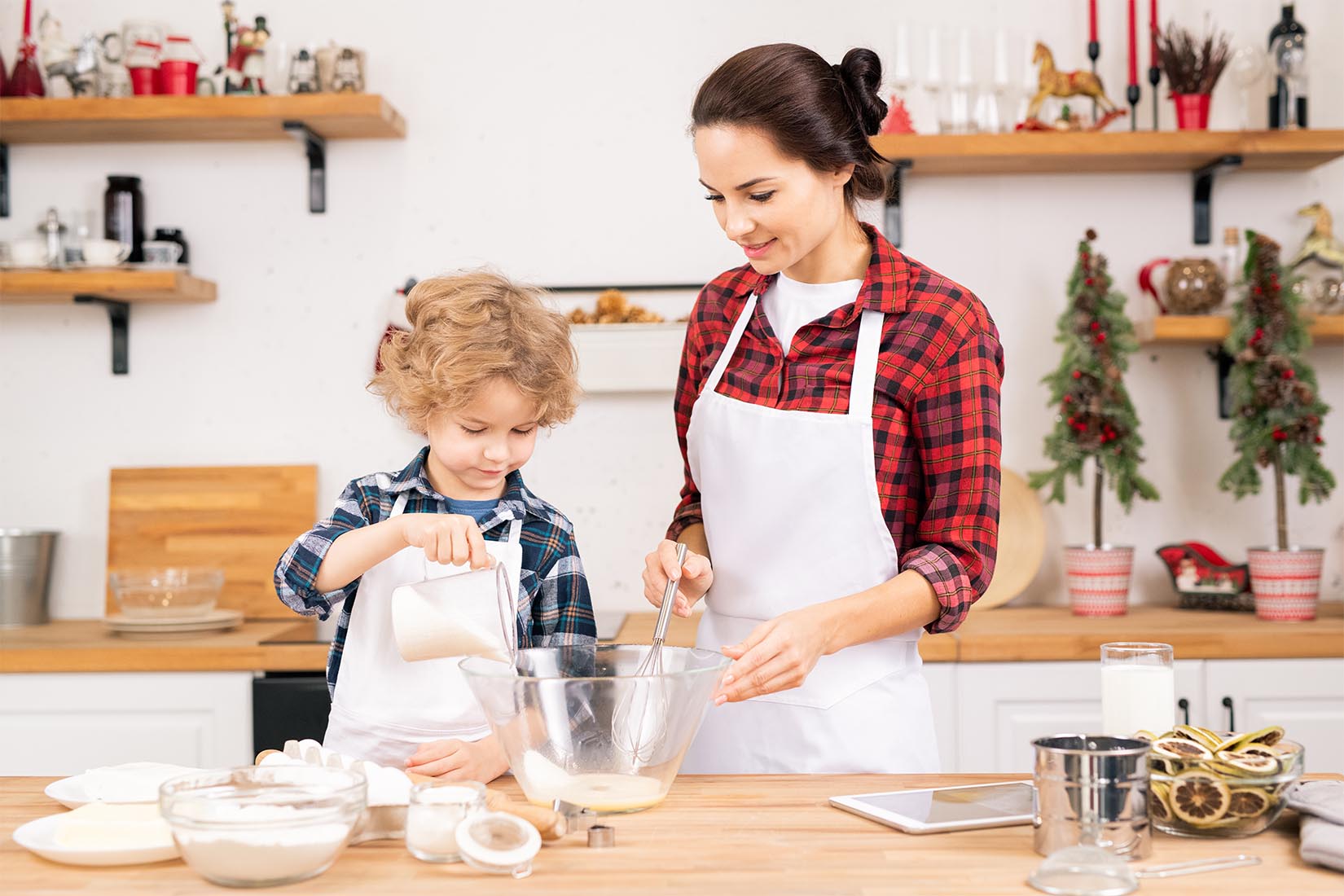
4 year old Aru wants to help mama in the kitchen. She drags a stool to reach the height of the slab insisting to make her own sweet lime. She clumsily adds sugar and stirs the water, splashing the solution all over till the sugar disappears. She gapes in amazement. “Where did the sugar go mama?” Then, she tried to squeeze the lemon but mama had to step in as it was too strenuous a task for her little fingers. The little scientist watched the process intently as the water turned cloudy on adding lemon juice. As mama added ice cubes, she jumped and clapped her hands in excitement “Mama, the ice is turned small. It is baby ice!” Somewhere in her, she was unconsciously making mental note of simple concepts: the movement of objects (stir), the changes in objects (sugar disappearing, water turning cloudy with lime and lastly the ice cube becoming smaller)
Supported by Piaget’s assertion that children’s physical knowledge is connected to their actions on objects and their observations of how objects respond to their actions, we can infer that toddlers understand the concepts of physics through the following three fundamental ideas:
- the movement of objects: simply put, involves actions that make objects move, such as pushing, pulling, rolling, blowing, throwing, swinging, dropping, kicking, or twirling materials. Like in the example, it involves stirring, squeezing and dragging.
- the alterations in objects, such as combining water, soap to produce a bubble solution with different properties from the original ingredients. While toddlers are too young to understand the states of matter, Aru is astonished to see ice going smaller in the final solution.
- Interactions between two different materials with different properties, like here, the cloudiness of the water or sugar disappearing, to better understand the properties of the objects and how they behave when combined.
Toddlers as learners comprehend physics in connection to the movement of objects and the involved actions and interactions. As children explore ways in which they can move their bodies and make objects move, they strengthen their knowledge about a variety of science concepts and figure out how and why objects move. When such deductions are made unconsciously, their brains wire to form logico-mathematical cognitive structures, i.e. they begin connecting dots and understanding the relationships among objects, such as thinking that all round objects bounce, and classify the similarities and differences in the properties of objects
Teaching and learning science
What do children know about physics or movement?
Moving and making things move is always interesting and relevant to the children. Once toddlers master walking, their “motor skills grow by leaps and bounds” (Copple & Bredekamp 2009).They start exhibiting their own kinetics of jumping, throwing and kicking a ball, moving a riding toy forward, pulling toys off a shelf, and carrying as many objects as they can. As children move, they imbibe knowledge about physics concepts. For example, mobile infants may figure out how to move their bodies in new ways by crawling, rolling, and balancing.
Children practice their scientific inquiry skills every single day even via simple ball games.
Aman, 4, started carrying around multiple balls. He threw them and watched them bounce and roll. He rolled them down the slide, tracking their movement. As one ball got lost in the process, he yelped, “Where’s my ball?” After searching for it, he found it and announced, “Found my ball!” He seemed a lot interested in the colourful balls and their movements. He watched them bounce and roll and instinctively realized the pattern-if he threw the ball a certain way, he could make it bounce or roll. Shortly after he figured this out, he could do it every time! The rolling of the ball on a slide tells us that he is aware of the slope of the slide. He is captivated by the texture of the ball and continuously throws, tosses, taps, bounces, flips it to figure out if he can make the same ball move in different ways. There is a lot of physics happening in such trivial actions. He is a quick learner no-doubt! And so are most toddlers of his age.
Children are like little scientists on a rampage to solve new problems each day! They are naturally curious like an explorer- some balls are easy for toddlers to grip with one hand while larger balls require use of the whole body to hold, wooden balls won’t bounce back but only the rubber ones will (such inferences being critical to understand material properties of substances for kids) Unknowingly, they are discovering and grasping kinetics.
As per Kamii and & DeVries 1993, while supporting your child’s knowledge about the physical movement of objects, keep in mind the following criteria:
- the child must be able to produce a particular movement on her own; the child must be able to alter her actions;
- the reaction must be observable;
- and the reaction must be immediate
Why movement experiences are essential.
Exploration with movement of objects is a developmentally appropriate way to help younger children construct understandings of fundamental physics principles, creating a foundation for their later formal education. As stated previously, for toddlers, an understanding of “I can make things happen with my body,” “When I make an action, there is a reaction,” “When I push, kick, or roll a ball, it moves in the opposite direction from me,” or “When a ball touches a barrier like a wall, it stops moving or changes direction.” is critical for that first, hands- on taste of such kinetics.
Such realistic movement experiences solidify their ability to think more critically, solve real-world problems, and successfully transfer skills across domains through relevant and meaningful experiences (Byrnes 2008). As per research, these types of cognitive skills have been associated with the processes of learning, including self-regulation, reasoning, and motivation—skills attributed to success in school as well as in life (Tomasello, Striano, & Rochat 1999; Camilli et al. 2010).
So let the ball roll towards your kid and let it engulf your toddler in the magical world of physics!