Module 3
The Equation of Early Learning & Development
The best kind of learning and development does not need a rigid set of rules, specific books, or toys. It is much more complex than that and depends more on the parent’s awareness level about their child.
New Parents frequently discuss how much or how little, developmental progress their child has made and rightly so. Tracking progress, however, is only one part of the assessment process. The often-overlooked part of progress is effectiveness of the learning process, in order to really know how much impact, we have had!
It is vital for parents to:
1. know and understand the developmental stages, likes and dislikes of their child.
2. Anticipate how child-led activities can be expanded or followed up, to maintain your baby’s interest at a pace that is enjoyable and appropriate to his/her needs.
This will help you empower your child to reach his/her full potential by:
– applying learning and development theories to your planning;
– introduce child-led activities that enables your little one to discover and
– extend your child’s interests, capabilities and limits.
To Thrive
Chapter 3.1
The Equation of Early Learning & Development
Babies are born seekers, ever eager and equally capable to learn, think, evolve, and grow. There are common milestones and characteristics that children of a particular age or stage of development share. However, the extent and the rate of development is an interplay of nature (genes) and the nurture (environment).
Researchers have thus arrived at the following equation…
The Unsaid
Chapter 3.2
Guidance to Support Early Childhood Learning & Development
Young children’s learning is evident in their play and interaction. Appreciate the richness of their play and knowledge!
Detailed, careful, attentive observations with an open mind, helps parents to gain insights as to what their child knows and can do. This is critical for curation of approaches and strategies to aptly support his/her learning and development.
The Whole Child
Chapter 3.3
Characteristic of Effective Learning
The interactions are unique to every family and reflects in the characteristics of the child
Children are born with an innate ability to learn and grow. A newborn reaches out to explore and interact with people and surroundings to make sense of the world it is in. The extent of his/her learning is directly proportional to the quality of the environment & relationship with the caregivers.
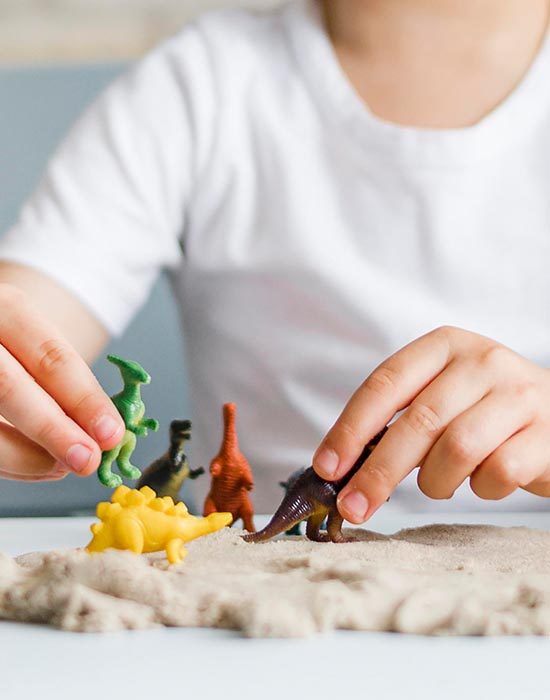
Stimulate
Chapter 3.4
Areas of Learning & Development
Researchers have categorized the seven areas of learning and development into three prime and four specific areas, basis their sensitivity towards time. If a child lacks in the abilities of the prime areas s/he is 5 years old, then it becomes much harder for them to achieve later in life. Development in the specific areas is supported and nurtured by those in the prime areas.

Did You Know?
Chapter 3.5
Sensory Integration: The hidden dimension in learning & development
The way our nervous system deals with sensory input can influence many aspects of our being: from motor skills, cognitive skills, learning and our perceptions of the world. Each day, parents face difficult situations as they respond to their child’s difficult behaviours.
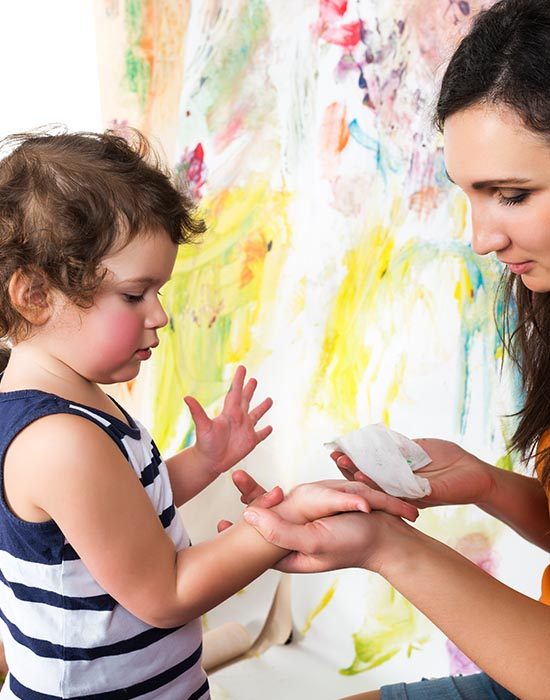
The Secret
Chapter 3.6
Sensory Systems is essential to support academic learning
Pyramid of Learning displays a clear picture of how the sensory systems are truly the foundation for many other areas of development. It helps to understand that for young ones to develop a healthy Brain Architecture a strong foundation of the central nervous system.
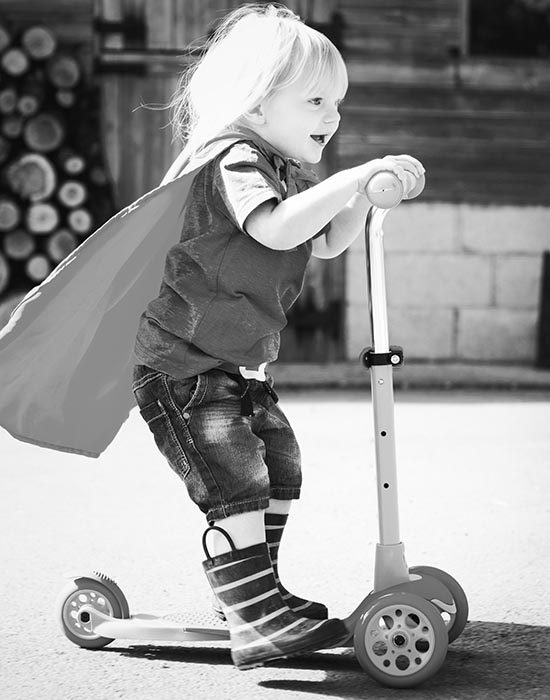
Now You Know!
Chapter 3.7
Things to consider while raising a child
Studies show that the experiences that children have in the first few years of their life are the determinants of how they will be as adults. These experiences influence how their brain will develop – their learning, behaviour, health and have a lasting impact on their lifelong success.

Child-led
Chapter 3.8
Nurturing the ‘Whole Child’
Education with a holistic perspective is about development of the whole human being. Development of every child’s intellectual, emotional, social, physical, artistic, creative, and spiritual potentials. It seeks to engage the child in the teaching/learning process.

The Joy
Chapter 3.9
Intentional Teachings
Learning and development is a continuous process wherein children surpass their current abilities into acquiring new skills by broadening their horizon of ability and knowledge.
Intentional Teaching: invokes the following image in our mind…
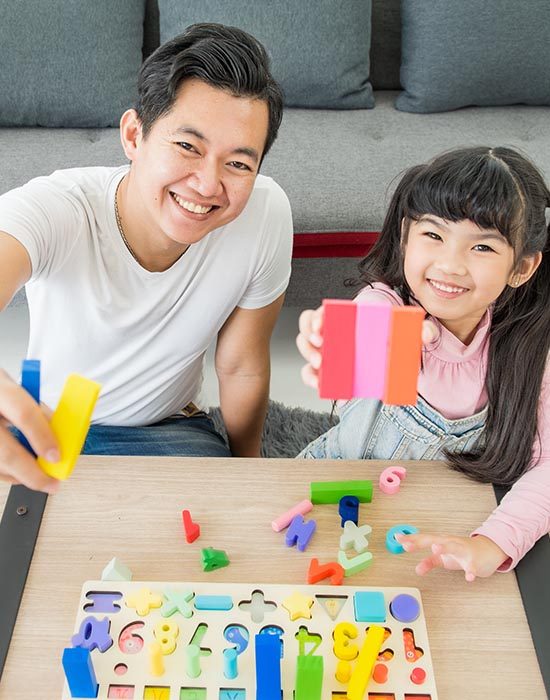
Shshshshsh….
Chapter 3.10
Intentionally crafting play and learning- An amalgamation
Through playful learning that combines open-ended experiences, child-directed initiatives and teacher-guided activities, children do learn quality ideas and exceed standards.
To amalgamate play and learning for a holistic and quality development of a child, a caregiver/parent can do the following…
Process
Chapter 3.11
Observing, Planning and guiding – Analyzing play routines microscopically
“How can I extend the play experience that I’m watching to connect it to the learning concepts I intend to teach?”
With a slight tinge of fun and keen observation, parents can holistically blend the two perfectly!