
Formative Years
Impact of Early Experiences
Chapter 1.2
Share on facebook
Share on twitter
Share on linkedin
Share on whatsapp
Danny grew up in an abusive household, his needs were never met, and he received minimal warmth and affection from his caregivers. Very early in life, he would see his parents always fighting. Danny struggled to cope up with school, to make friends and later developed anxiety.
Let’s Reflect
Do you think Danny’s early experiences influenced his life later? Yes, it did!
Research reinstate that what it takes to succeed in life is formed even before you enter kindergarten. Yes, the future of each child is determined during the first five years of their life!
The First 2000 days (0 months to 5 years) are absolutely crucial & the development during this time is immense!
What’s happening biologically?
We know, the brain is a highly integrated organ, which has multiple unique compartments specializing in different processes. The growth is interdependent, so one cannot have so one cannot have optimum cognitive abilities with impoverished social-emotional skills.
According to developmental research findings, children master different skills at different ages and stages. This implies that opportunities for a variety of effective interventions are present throughout early childhood. This develops more complex brain circuits built upon the initially laid foundations.
The brain architecture is composed of more than a million highly integrated neural connections. These circuits are wired owing to the ongoing interactive influences of experience, environment and genetics.
These circuits are formed through genetics but shaped through the environment.

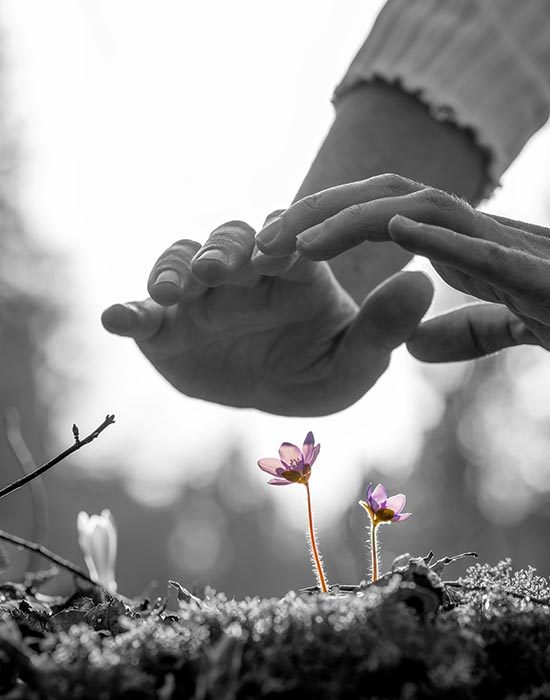

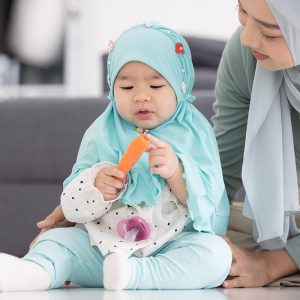

That meaningful early childhood experiences are!
Our brain is a thick jelly-like substance that moulds as per the early experiences. Experiences start registering even before birth and get embedded into the system—these shape the learning capacities, behaviours, physical and mental health.
For instance, Mr Sharma found his 18-month-old daughter sorting leaves from flowers in the garden. This is a high level of organizational skills performed by the child. She copies this from her mother, who usually separates the leaves from the flowers before offering them to God.
A child grows in an environment of relationships, starting with parents and immediate family members and extending to the surrounding community and finally by broader social and economic factors.
What happens in early childhood?
The interaction starts as early as birth. A few month-old babies reach out for interaction through eye contact, babbles, expressions and various other gestures. These little ones thrive in the company of warm & welcoming adults facilitating individualized and stimulating responses. On the other hand, stressful, neglected and impoverished nurturing can result in impairment of health, behaviours and learning for a lifetime.
During this period, there is a rapid brain expansion of your child’s cognitive skills. There is growth in the foundations of literacy, science, and math – as well as character skills, socio-emotional growth, gross motor skills and executive functioning.
For instance, when two-year-old Sunny surprised his parents with phrases like “you are my cutie pie, and I am your kitten, mama cat”. These phrases were based on his recent story reading session with his mother. This shows how early experiences and learning have an impact on a child’s everyday life skills.
Post this rapid multiplication of circuits, the lesser-used neural connections start to dissolve to strengthen the more popular pathways. This process is called pruning. With time and age, connections proliferate and prune in a specified order.
As per the National Association for Education of Young Children, parents stand a good chance of setting young children on an upward trajectory if they capitalize on the early childhood phase. There is an explosive growth of the child with the right learning opportunities and support from parents.
Is it a one-way street to development? Is it just limited to experiences of the child with the parent?
No, the development is a chain of constant to and fro communication verbally or otherwise between the parent and the child initially and other caregivers gradually.
This is popularly known as “Serve and Return” Interactions.
SHARE
Share on facebook
Facebook
Share on twitter
Twitter
Share on linkedin
LinkedIn
Share on whatsapp
WhatsApp
Last chapter
Next chapter