
Developmentally Appropriate Practice
Determinants for ‘School Readiness’
Chapter 2.3
Share on facebook
Share on twitter
Share on linkedin
Share on whatsapp
School bag…check
Water bottle…check
Snack- check
Her teddy buddy…check
Aditi was compiling a list of stuff that her daughter would need at the first day of school. Sanchita her 5-year-old was ready to go to school! Aditi had been working on polishing her counting skills, phonetics, how to introduce herself, rhymes and so on.
But was she missing on something while getting her kindergartner ready for her big day?
Research says that children who are developmentally ready to ‘learn ‘at the onset of school life tend to do better in school – which sets their ball rolling for further success in life.
Let’s Reflect
First thought on hearing “School Readiness” comes reciting ABC, counting 0-9, recognizing colors, and the likes.
But it is not about getting on with a formal approach to education as early as possible. It is about the development of the whole child. Hence, parents need to be mindful of the fact that School Readiness is not about your toddler and preschoolers:
- being compliant
- being able to sit still
- being able to ‘line up’
- being able to read
- being able to write
- being able to count till 10
- being able to tie shoelaces
- being able to do homework
Whoops! Then what is School Readiness about?
It is about preparation for later i.e. when they step out of the care of their home. Getting hold of invaluable life skills i.e. ability to:
- express and communicate
- being independent
- able to self-feed
- to use the toilet
- knowing and understanding their own needs
- empathize
- mingling with fellow kids
It is the positive experiences that babies, and newborns receive which contributes to their school readiness!!!
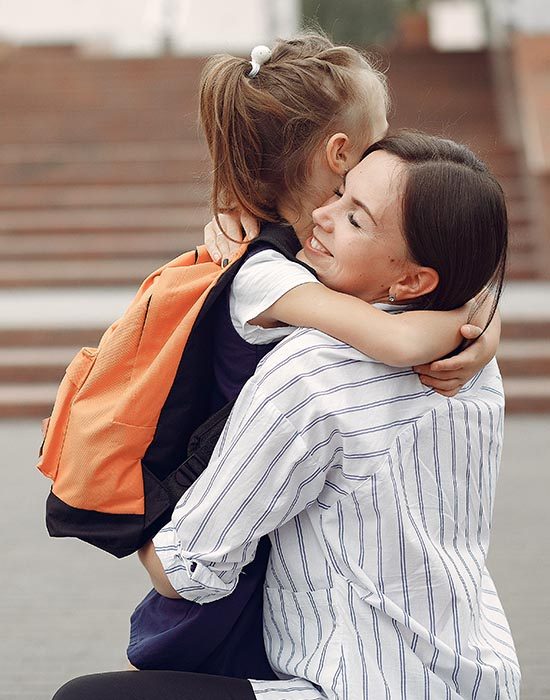




A head start – The secret to school readiness
School readiness can be actively facilitated with a little forward planning. During the early years academic learning cannot be compartmentalized from their social and emotional well-being. Enabling and supporting him/her to playfully explore the world around, helps them build connections in their brain thereby ensuring in-depth learning. Curating meaningful experiences and conversations, develops the child’s appropriate skills required to facilitate optimal learning when they start school.
- making healthy nutritious food and drink choices, especially water
- being able to follow simple directions & instructions – Can you get me “The Gruffalo” book
- dressing and feeding themselves, and using the toilet
- showing interest in their fascination and curiosity to learn— “what is that you are gazing upon? Oh, ants crawling in a straight line!”
- vocal about likes, dislikes, feelings, and emotions — “I am excited about the visit to the zoo today!”
- being active every day—run, jump, dance, hop and skip
- asking questions (encourage talking wait for the answers) – “Have you seen grandma’s glasses?”
- exploring the outdoors (look at nature together) – Aadya come see the many colors in the sky – orange, blue, yellow, dark red”
- praise and encourage effort (celebrate abilities and strengths) – “Oh I see you are growing up! Now you can eat all by yourself without spilling”
- developing a love of books, stories, and songs – “The caterpillar also had a tummy ache… Remember? So, what did it do?
- being creative and exploring messy play (paint, playdough etc.) How about letting them free with some vehicle, paint and a white runway sheet/cloth!!!”
- turn-taking, helping, and sharing together at home – Son could you help grandma find her glasses”
Each child is unique and develops in their own way. A little prep and heads up for infants and toddlers before school has a long lasting and positive impact on their development. Parents are their child’s most important and on-going educator—support and encourage them
“The formal portion of education that happens at school is just the tip of the iceberg. The real deal begins at home”
Additionally, the parents and caregivers at home need to keep in mind that they need to develop a sense of enjoyment and love for learning in their little ones. So, if we really want to give them a head start for school, readying them with a sense of their own competence and ability to make choices, stands undisputed.
They need to savor the joy and expansive learning of childhood!
The skills needed at school and how to prepare your toddler at home for it
Research findings has identified three determinants of later achievement in school:
- Literacy/Language and Mathematics
School curriculum is eventually about numbers and words. Deficit in early literacy, numbers & sequencing limits comprehension which in turn results in impeding the learning curve at school. Work on your child’s:
- Receptive language (understanding):Comprehension of spoken language (understanding the teacher’s instructions and the talks of peers)
- Expressive language (using language):Producing speech or language that can be understood by others (while talking to teachers and friends).
- Articulation: The ability to clearly pronounce individual sounds in words and correlate. (to talk clearly with others with sense)
- Analytical skills (problem solving and comparing): Understanding stories and able to relate to various contexts to it.
- Adjectives: The fat cat,
- Number association: The hungry caterpillar ate 5 oranges,
- Everyday sound: the cow says “moo”
- Weather: It was a bright sunny day,
- Sequence: first fox then comes owl and last come the snake
Tip – Facilitate:
Not just rote learning: Developing quantity association w.r.t numeric. can be done while eating his favorite cookies.
Common adjectives: more, less, big, small, angry sad, near far and so on…
The right phonetic for each letter: garden has the right phonetic sound for letter “g” and not giraffe



2. Dimensions of Social and Emotional Competence – Children who can organize their behavior in a manner consistent with classroom expectations and engage with persistence on learning tasks exhibit higher levels of achievement in school. These are paramount skills to excel not only during school years but life as a whole –
Competencies linked empirically to school success comprises of:
- Social Competence:
- Mingling with fellow classmates and teachers
- Demonstrate basic manners – use of words like: may I? Thank You
- Ability to play independently as well with other kids
- Capacity to identify problems and try coming up with solutions – “I have spilled water, let me grab a tissue to wipe it.”
- Anticipatory planning considering consequences of various suggestive solutions – “the spilled water can get my painting wet, let me remove the paper first.”
- Emotional Competence:
-
- The ability to recognize and regulate emotions, with minimum adult intervention. This further facilitates at keeping a self-check on any sign or act of aggression.
- Focus on tasks and sustain Involvement
- The capacity to participate cooperatively in classroom activities. Accept others’ differences while at play or work.
Coping with the new school environment, and adhering to the rules
Tip- Encourage your child to develop relationships with other (unfamiliar) children of a similar age in your locality and arrange suitable ‘play dates’ to help hone on both their relationship building and emotional regulation.
3. Cognitive Functioning
This covers functional areas of planning, predicting, focused attention and problem solving which are vital for success at school. It broadly consists of:
- Academic Competence: Child’s capacity to assimilate new information in the school. Basic number sense, names of the common objects around, identify animals, types of vehicles and so on.
- Executive functioning:Higher order reasoning and thinking skills. E.g. Identifying and replicating patterns.
- Planning and sequencing:The sequential multi-step task/activity performance to achieve a well-defined result. g.
“Take out your aprons and wrap them around, fetch your brush and paint, get some water in a cup and then begin to paint.”
Tip:
Get their minds thinking:
- In a zoo, there are sign boards in front of all animals but danger boards in front of only a few. Let them wonder why.
- You can also pose some open-ended challenges for your toddlers. Can you stack these books and boxes and containers without letting them fall?
In case you notice difficulties with school readiness (if the child is reluctant to follow instructions, not able to grasp things despite multiple practice or has some other learning issues) it is recommended that you consult an expert or reach out to us for guidance.
Let us build a better tomorrow…


SHARE
Share on facebook
Facebook
Share on twitter
Twitter
Share on linkedin
LinkedIn
Share on whatsapp
WhatsApp
Last Chapter
Next chapter