
Early Learning & Development
Characteristic of Effective Learning
Chapter 3.3
Share on facebook
Share on twitter
Share on linkedin
Share on whatsapp
The interactions are unique to every family and reflects in the characteristics of the child
Children are born with an innate ability to learn and grow. A newborn reaches out to explore and interact with people and surroundings to make sense of the world it is in. The extent of his/her learning is directly proportional to the quality of the environment & relationship with the caregivers.
Characteristics of effective learning offers suggestions as to how parents can support their child’s learning through meaningful interaction and provision of appropriate resources within the environment.
Let’s Reflect
Contrary to popular belief, the Characteristics of Effective Learning are not about what children ‘do’, but more about what the parent ‘does’.
It is about the attitude of ‘how’ they learn rather than ‘what’ they learn. If positive habits are formed in the early years, children will be able to apply these learning styles throughout their lives.
Characteristics of Effective Holistic Learning
Engagement (Playing & Exploring):
The environment is the “third teacher”. A rich, inquisitive environment sparks the child’s natural curiosity. Th environment needs to be exciting, to enable independent learning
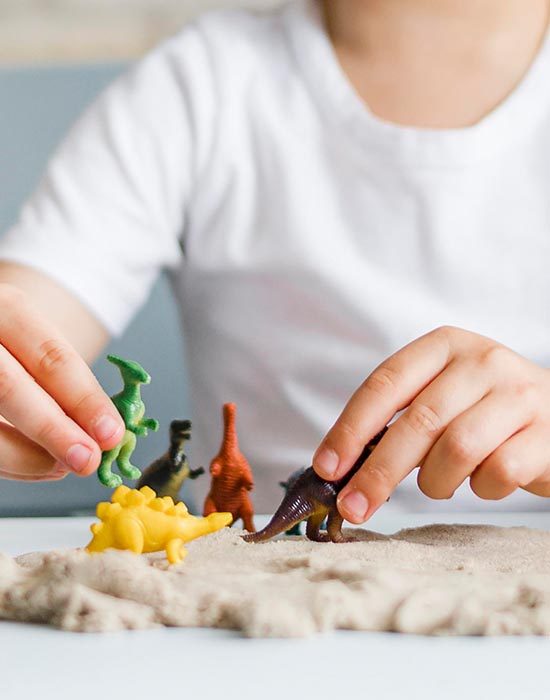
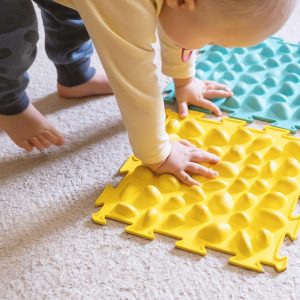
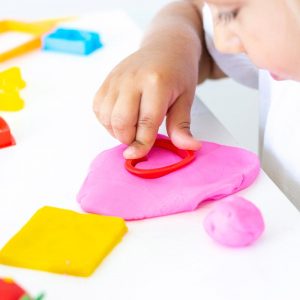
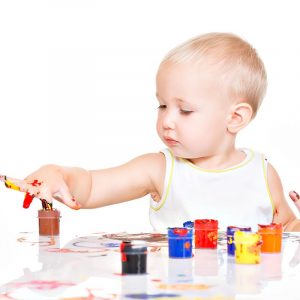
- Discover & Scout: Children use their senses to explore the world around them. They need long periods of uninterrupted play and challenging resources to be able to foster play, creativity, and imagination. Open-ended play is a good way to stimulate young minds.
- Playing with what they know: Acting out experiences through play, is the child’s way of putting into practice “what they know”. Thereby, bringing to life endless role-plays and infusing the magic of their imagination.’
- Being willing to have a go: Learning via numerous trial and errors, is underpinned by the characteristic of taking risks and having a ‘can-do’ This opens doorways to ample opportunities to explore & learn.
In an environment sensitive to needs of the child and positive parental interaction, it is important to let the child chose their goals to play



What Parents can do:
– Lead with example. Show interest in discovering new things and encourage the same to them while at play. Display curiosity/attention/interest matching that of your child.
E.g.: “Elephant without a trunk? How can that be? I need to read this book to find out!”
– Guide children overcome hurdles without over leading them
E.g.: “You need to push it hard, harder to squeeze out the left-over paste from the tube”
– Be empathetic towards their naïve ideas and emotions while at play
E.g.: The balloon bursts and the baby whines. “You got scared of the loud noise! Let’s stay away from the balloons”
– Enact role plays through objects and stories to instigate imagination and creativity in them.
E.g.: Building a cave out of cushions and blankets. “Look this is the cave for The Gruffalo & The Gruffalo’s Child”
– Stir them up to take up new activities and face challenges if any. Remember to constantly support their courage both verbally and via gestures.
E.g.: While a toddler attempts to eat on her own. “You need to hold the spoon like this (gesture) and carefully bring it closer to your mouth”
– Do keep a mental note to talk about the process and take away new activities.
E.g.: What s/he did? How s/he did? what s/he felt? what has s/he learnt? What was exciting? Did s/he enjoy it? Is s/he willing to do it again? Etc. etc.
– Wherever possible, emphasize on the fact that “practice makes a man perfect”
E.g.: Preschooler made a castle out of paper cups and tried to aim it with a ball from a distance. “Ooops you were very close, let’s try again.”
Motivation (Active Learning)
The more control and input you’re able to provide your child, with respect to his/her learning environment, activities, and style, the more engaged and motivated the child will become to learn.
- Voluntary Interest & participation: Fascinated by new findings, children display of interest whole-heartedly
- Never give up attitude: Performs multiple attempts tirelessly and is persistent in self-exploration
- Celebrate the achievements aimed for: Happiness has no bounds every time they are successful. Displays a sense of pride on successful attempts. Along with new skills and burgeoning independence comes a whole new attitude: I want to be in charge of me!
What Parents can do:
– Give the child the opportunity to make choices. This will instill self-confidence and decision making.
E.g.: “What do you want to have for breakfast today… Oats with applesauce or banana shake?” Difficult choice for the 2-year-old who loves fruits!
– Constant communication helps children understand their goals, make their own plans, assess themselves and celebrate success.
E.g.: “Okay you gotta crawl under the table and then hop over the mat to reach your favorite cookies”
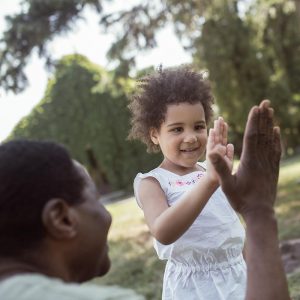
– You are the shadow who notices every small progress and highlights their development to get them going for more. Praise them about persistence, ideas, problem-solving and so on.
E.g.: “Hey! you are free from diapers now, just like big people! Let’s facetime dadi-dadi to tell them how grown up you are and after that there is a special little treat for you!”
– Children learn and develop faster when they do it on their own instead of being spoon fed.
E.g.: 10-month-old Purab has made several attempts to get a grip of his new sippy cup before succeeding it!
– Keep feeding their curiosity by coming up with challenging activities of their interest.
E.g.: Introducing textures to infants & toddlers: A mesh, a sticky dough or glue, a hard surface, a soft pillow, a grainy salt, spongy, rough surface and so on…
– Be aware of your child’s deep interest areas. You need to keep a close watch for that. Interests do not develop overnight. One needs to constantly work with young minds to help them grow and sustain interest.
E.g.: From watching the balcony plants as an infant, Rehan graduated to being allowed to water them (under supervision) as a toddler, soon as he grasped his initial words around them- leaf, flower, bud, branch, grow. It’s been a gradual but intriguing journey…



Thinking (Creating & Thinking Critically)
Comes up with ideas to approach things/problems, implements them and reviews and even does course correction if needed!!
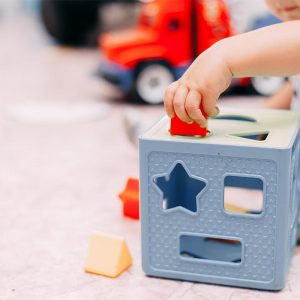
- Finding their own way to do things: Children will develop their own play and find their’ own ways into doing things.
- Connecting Links: Attempts to connect, by linking their knowledge to make predictions and test their ideas.
- Have a thought process of their own: They figure out their ways to solve real life problems and revamping strategies if needed.
What Parents can do:
– Use wherever possible: how/let’s try/idea/plan/fin out/figure out/look out
E.g.: “Let’s together figure out how to assemble this new play tent of yours!”
– Pretend to be not knowing and thinking hard, show curiosity and then eureka! thinking hard gives you the answer
E.g.: “Where is the little mouse hiding in the picture (look and find book)? Can you help me find it?”
– What Else/What more/Can we are some food for thoughts to set young minds racing for ideas!
E.g.: “Oh, the clock is round. What other objects do you see around which is round?”
– Always acknowledge their efforts/enthusiasm and ideas and respect in-order to keep their enthusiasm going unhindered.
E.g.: Arya: I have an idea! Let’s make the tail with the playdough mama!”
Mama: That’s a wonderful thought! Let’s do it and see how it turns out!”
– Work together, explore possibilities, carry out trial and error, and discuss outcomes. Carry out all this while following their lead.
E.g.: Let’s find the key to this lock! Which one should we begin with? Okay this one with 3 ridges… nope, this isn’t going in, maybe it’s too broad for this lock… Ok let’s insert this one with a longer blade, click! There it goes. Go ahead twist it once more…
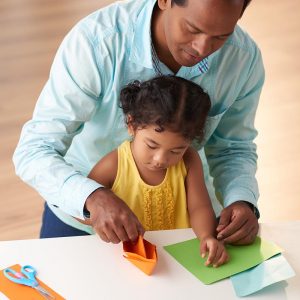
– While modeling examples explain your approach, strategies, reasoning, through process to get their minds rolling in those directions.
E.g.: While teaching your preschooler to build a basic version of airplane, you could keep describing your actions as follows:
“Let’s begin by folding the paper in half vertically, like this.
Next unfold the paper and fold each of the top corners into the center line.
Fold the top edges into the center line.
Fold the plane in half toward yourself.
Fold the wings down, and now let’s match the top edges up with the bottom edge of the body.
Add double stick tape here, to the inside of the body.
And here goes a plane, let’s zip it away….”
Enabling spaces where they can think, relate, create, and explore whole-heartedly and unabashedly.
To be Noted:
- Whilst preparing activities ensure they provide ample opportunities for them to nurture their imagination, ideas, and skills
- Let them touch, feel and fiddle with the materials before commencing the activity.
- Try setting flexible routines into their day, for them to predict and make connections of their experiences
- Try curating activities that further probe their ideation or curiosity towards likeable topics
SHARE
Share on facebook
Facebook
Share on twitter
Twitter
Share on linkedin
LinkedIn
Share on whatsapp
WhatsApp
Last Chapter
Next chapter