
Early Learning & Development
Sensory Systems is essential to support academic learning
Chapter 3.6
Share on facebook
Share on twitter
Share on linkedin
Share on whatsapp
What a child’s brain NATURALLY needs for optimal learning & development?
Pyramid of Learning displays a clear picture of how the sensory systems are truly the foundation for many other areas of development. It helps to understand that for young ones to develop a healthy Brain Architecture a strong foundation of the central nervous system. Sensory Systems and sensory based play are important early on in life for the little ones to attend, learn, and behave!
Let’s Reflect
Parents often ponder on the question “Where to begin with?”
Thus, the ‘Pyramid of Learning’ (by Trott & Taylor) is a way of looking at the whole child. This information helps to drill down the underlying characteristics which in turn will help parents to understand where the child is in terms of need for developmental support.
This is based on a ‘bottom up’ approach meaning it is the base upon which the more complex skills develop.
The Central Nervous System…
…forms the base of the pyramid (Tier 1) takes in any sensory input (both from within the body and outer environment) for an individual to process, organize and respond to the stimuli. As it works in tandem with the sensory information the sensory systems happen to be tier2.
Nervous system acts like transducers to the realm of the mind.
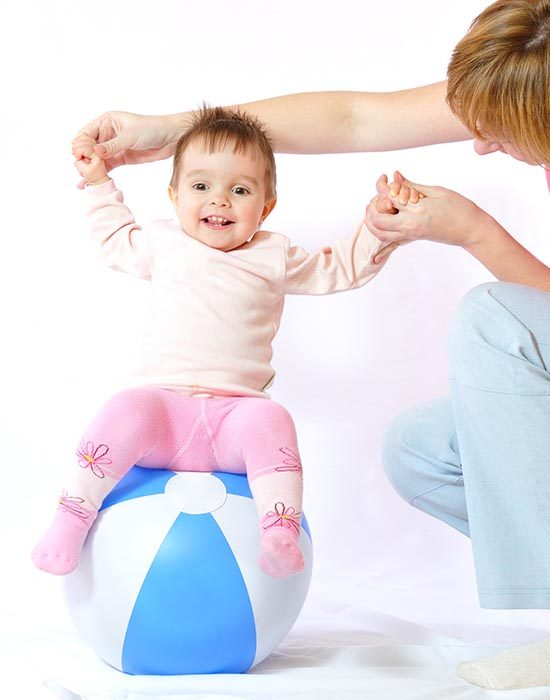
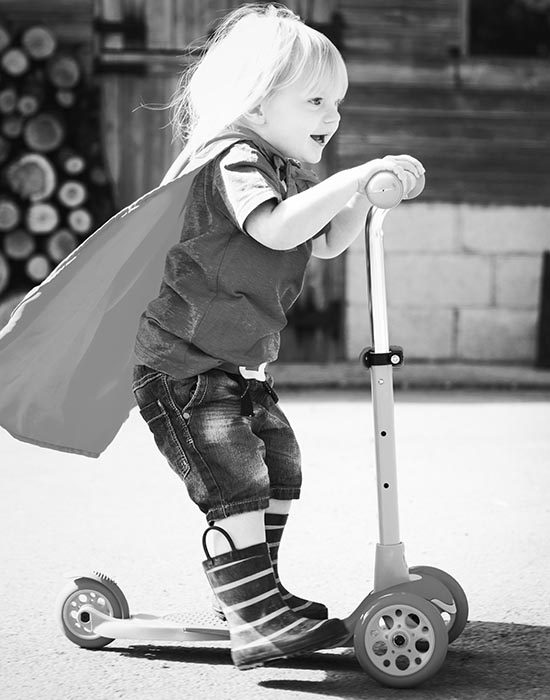
Sensory Systems (tier 2)
The interplay between the mind and the body is triggered by experiences of the senses. Based on the interpretation of the stimuli received from the central nervous system, ‘Primary Senses’ formulate perception of the world. Hence, Quality of ‘sensory systems’ is closely linked to adequate functioning of the central nervous system. Following are the seven senses that forms the base of the pyramid:
- Olfactory (smell)
- Visual (vision)
- Auditory (hearing)
- Gustatory (taste)
- Tactile (touch)
- Vestibular (balance)
- Proprioception (knowing where one’s body is in space)
Eg: Lemons are sour (taste), flowers smell (olfactory) lovely, keeping track of a moving ball (visual), throwing a ball without having to look at the arm (Proprioception)
Sensory Motor Development (tier 3)
The child’s ability to gain use and co-ordination of both left and right sides of the body efficiently, relies upon sound foundation of the sensory systems. ‘Motor Memory’ develops which makes daily tasks and learning a breeze.
- Body scheme (body awareness through movement), together with knowing position words and understanding of left and right enables the child to follow simple directions.
- Reflex maturity (Apt reflex activity). Lack of reflex integration leads to delay in motor skills thereby also impairing the occupational performance of the child. Necessary for:
- Eye-hand co-ordination necessary to roll, use of hands smoothly at midline,
- Distribution of muscle tone needed for strength and balance transitioning between quadruped to sitting to kneeling to standing and vice versa…
- Anti-gravity control: rolling by raising hands and feet up together against the gravity.
- Ability to screen input (Aptitude to filter incoming sensory stimuli to focus attention towards the important one.) The buzzing sound of the ac or the honking on the rod outside should not affect the child’ play or other activity.
- Postural security (confidence in maintaining certain postures to prevent falling). The child may be inclined to walk up on his/her toes rather than flat feet. Our slouching while sitting on a chair. Necessary to avoid difficulty with stairs, curbs, bus steps and managing uneven terrain.
- Awareness of two sides of the body (bilateral integration). Necessary for solid foundation for using both sides of the body for different movements. E.g.: while cutting a pear with scissors depends on the ability of hands to work in tandem and at the same time eyes keep a check on what is happening
- Motor planning (ability to conceive, plan and carry out one’s movement). Writing requires isolated and precise movement of individual parts. E.g.: Slowly transition between tall and one-half kneel
Below are some of otherwise everyday simple activities that can be affected in case of underdeveloped sensory motor skills:
– Turn head side to side, raise head up & down, or “roll” neck without moving knees or hands
– Use arms to push a ball back and forth
– Uses their own hands to place/remove stickers on knees or feet
– Use legs to kick suspended ball
– Ability to side sit and manipulate objects with both hands: string beads into a thread; toss a ball
– Ability to Reach- Use free arm to encourage reaching and other movement/manipulation
– Creeping on Hands & Knees over obstacles such cushions, pillows or under a table, chair
– Use hands to complete tasks placed on vertical surface
– Hop from one foot to another
– Stand with back to wall and legs apart; touch right foot to left hand, then left foot to right hand
– Walk while holding a basket full of objects; pause and turn head side to side and up/down


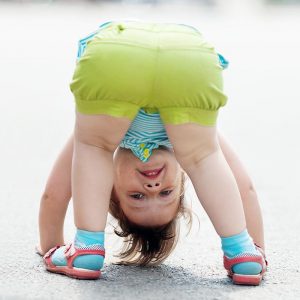


Perceptual Motor Development (tier 4)
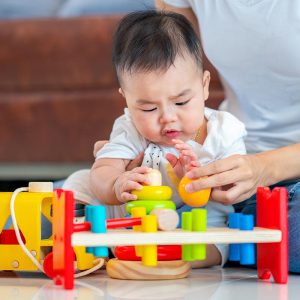
The developing ability of the child to engage with the environment with the help of their sensory(vision, auditory and tactile abilities) and emerging motor skills.
Yes, a Lot happens in their little bodies… at such a rapid pace!
There is a mutual dependency between perception (process of taking in, organizing, and interpreting sensory information) and the ability to control the body’s movements including the movement of the eyes. This hones the child’s intellectual skills and co-ordination thereby resulting in a positive body image.
Perceptual Motor skills include:
- Body Awareness: Ability to locate one’s body parts and understands their functions
- Spatial Awareness: Being aware of the space occupied by one’s body and the ability to position or manoeuvre it
- Directional Awareness: Ability to differentiate between up & down; lef & right; front & back; top or bottom
- Temporal Awareness: Recognises of time passing, sequence of events, and the prediction of speed, or pace of arriving object
Adequate perceptual motor skills enable children to enjoy better coordination, greater body awareness, stronger intellectual skills, and a more positive self-image. Difficulties in reading and writing can be a direct result of poor perceptual motor development.
Parents need to keep an eye on the following abilities of their developing young child:
– Auditory language skills (hearing and speaking age appropriately) are necessary for attention, processing and following directions as well as for reading and comprehension.
– Visual-spatial perception (to meaningfully comprehend the seen information). Critical for development of visual memory skills as well as remembering things visually (sequentially) : sizing, organization, letter orientation (b vs d), depth perception, expressive arts, music, dance
– Attention centre functions (Ability to process and retain information) like imitating using body parts or objects, pointing, identifying
– Eye-hand coordination (Processing of visual input to guide movement of hands) like lacing, hammering, catching moving objects
– Spatial Activities like: moving, comparing, exploring through: walking, rolling, jumping, catching
– Postural adjustment (feed forward activation of muscles in anticipation of destabilized forces by the movement: Ability to adjust their crawling or walking in response to the rigidity, slipperiness, or slant of surfaces, balancing activities on trampolines or tracking moving objects
Eg: When a child runs to catch a ball, the child must gauge the speed and distance of the ball as it travels in-flight. The child uses its senses (visual-spatial awareness) to judge where the ball will land or the time it will take for the ball to reach its destination.
Cognition Intellect Activities (tier 5)
Such as performing daily tasks (dressing, eating, toiletry, bathing etc) or attending formal school learning etc. depends on the potential to perceive & organize sensory inputs and integrate them with bodily movement including the eye movement (tier 4).
- Academic learning
- Daily living activities (such as eating, toileting, bathing)
- Behaviours
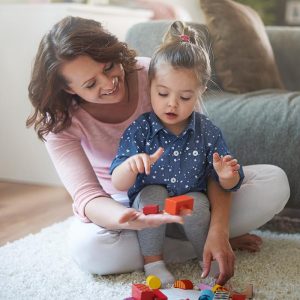
Eg: A toddler begins with a simple 4 block jigsaw puzzle. It comprehends (cognition) the image and starts putting it together (tier 4).
SHARE
Share on facebook
Facebook
Share on twitter
Twitter
Share on linkedin
LinkedIn
Share on whatsapp
WhatsApp
Last Chapter
Next chapter