
Early Learning & Development
Nurturing the ‘Whole Child’
Chapter 3.8
Share on facebook
Share on twitter
Share on linkedin
Share on whatsapp
Development is viewed as the result of an interactive, transactional process between the growing, changing individual and his or her experiences in the social and physical worlds (Butcher & Plomin, 2008; NAEYC; Petrill, Pike, Price, & Plomin, 2004).
A child is to be prepared for life beyond education. S/He needs to be enriched with skills that enables them to cope with the ups and downs of growing up, be skilled and vigilant at work thereby ensuring a happy and successful life. Therefore, the requirement of holistic education, where the focus is on the personal development of the individual child.
Humans develop in stages across a variety of interdependent domains – physical, social, cognitive, emotional, and moral. Individual variation in development has majorly two dimensions:
- The inevitable variations around the average or typical path of development i.e. each child has its own distinctive rate and manner of growth
- The uniqueness of each child developing in a unique social and community environment leading to individual personalities, temperament, physical constitution, learning style, family, and experiential background.
Let’s Reflect
Every child cultivates its own unique strength, talent, and interest, hence individual variation is not only to be expected but also valued.
What does it mean to educate the the ‘Whole Child’
Rigid group norms do not reflect what is known about real differences in individual development and learning during the early years. Too many children and youth who cannot adapt to the standards are being left behind.
Education with a holistic perspective is about development of the whole human being. Development of every child’s intellectual, emotional, social, physical, artistic, creative, and spiritual potentials. It seeks to engage the child in the teaching/learning process.
The quest for holistic education requires that educational experiences and environments be adapted to the developmental path of the individual, rather than the individual adapted to the environment. The child is not merely a future citizen or employee in training, but an intricate and delicate web of vital forces and environmental influences.

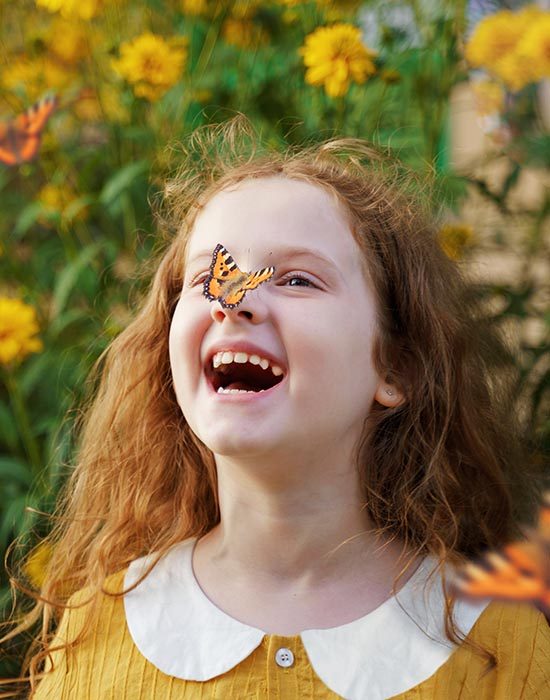
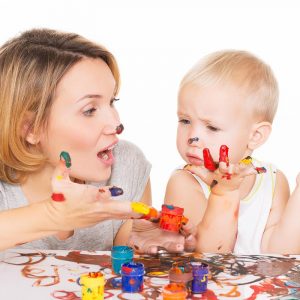
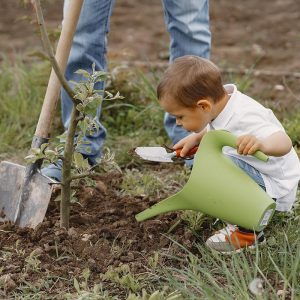
The Four core qualities that characterize a holistic education (Ron Miller, 2008):
- Encourages experiential learning: Involves discussion, questioning, experimentation, and active engagement in a holistic learning environment and gives negligible weightage to grading, testing, labelling, and comparing. Thereby making learning more meaningful and relevant —it matters to their lives.
- Preaches compassion: Personal relationships are as important as academic subject matter. These learning environments strive to cultivate a sense of community and belonging and qualities of safety, respect, caring, and even love.
- Path to Self-Actualization: There is a responsibility towards inner growth of the child; that is, for the feelings, aspirations, ideas, and questions that each student brings to the learning process. Education is no longer viewed as the transmission of information; instead, it is a journey inward as well as outward into the world.
- Expresses an “ecological consciousness”: It recognizes that everything in the world exists in context; that is, in relationship to inclusive communities. This involves a deep respect for the integrity of the biosphere, if not a sense of reverence for nature.
Attention to the full range of children’s capabilities could help more children succeed in school, thereby narrowing the achievement gap.
Rather than measuring intelligence as a score of some test, Theory of Multiple Intelligences was developed by Howard Gardner that identifies eight different intelligences as opposed to a single score on an intelligence test. This theory considers the variation among children and teaching to their strengths.
Eg. Rishabh trying to teach numbers and counting to its 3 and 4.5-year-old children.
Instead of adopting the norm of evaluating them on their mathematical & linguistic intelligence, Rishabh charts out varied opportunities for his children to grasp the concept as per their individual strengths and interests.
Logical/mathematical: He engages them in solving real-world problems with numbers, such as “We have nine slices of orange and I ate two of them. How many are left?
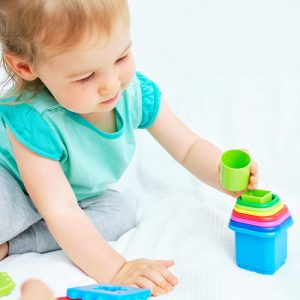
Linguistic: He picks up the blocks and builds a tower. Counting loud and clear as he picks each block and places each on top of the other.
Musical: Bedtime routine song “5 little monkeys jumping on the bed” thereby engaging them playfully.
Naturalist: During outdoor play time, Rishabh works with children in collecting the fallen flowers in the park. Children arrange the flowers as per color, size and maintain a count in each category, and determine which has more or fewer flowers.
Spatial: Dad along with children takes up the task of sorting LEGO as per for children to count and categorize. He ensures a verbal connect with them, supplying the counting words whenever needed.
Bodily/kinesthetic: It’s time for hurdle race; Time to hop once, twirl twice, jump thrice and run straight. There goes math and play hand in hand!!
Interpersonal: Family time: Dad organizes math games such as fishing. Each member needs to fish. The one with maximum fishes wins.
Intrapersonal: Working one-on-one; asks 3-year-old to count the objects and place it on the matching number card.
He increases the difficulty level for the elder one. Adding and subtracting on fingers.
To conclude seeing children as individuals with multiple intelligences does not mean that every child must be taught differently. Instead, individual variation among children requires parents to try out various teaching techniques to cater to the abilities of the child.

SHARE
Share on facebook
Facebook
Share on twitter
Twitter
Share on linkedin
LinkedIn
Share on whatsapp
WhatsApp
Last Chapter
Next chapter