
Formative Years
Significance of Early Environment
Chapter 1.1
Share on facebook
Share on twitter
Share on linkedin
Share on whatsapp
Mrs Pandit recollected the bittersweet moment when she got a promotion from her company. It meant higher pay, but it also meant shifting to a new city. They had to leave Delhi, their hometown and shift to Bengaluru in just two months.
She remembered how concerned she was about adjusting in Bengaluru, most importantly will her five-year-old son, Keshav be able to cope? Bengaluru was very different from Delhi, its culture, its people, its language, its food, everything was drastically opposite.
Adding to her worry, Keshav would have to stay with a nanny for a certain part of the day. The nanny only spoke Kannada and English. Five-year-old Keshav was not proficient in either. She wondered how Keshav would communicate his needs. It seemed tricky!
To her surprise, Keshav adjusted to Bengaluru better than her. He picked up the language within months from his nanny while Mrs Pandit struggled with just speaking basics. Soon enough, Keshav and the nanny had full-blown conversations in Kannada, while Mrs Pandit struggled to keep up.
Let’s Reflect
How did Keshav learn Kannada so fast even while having no background? Do kids really have a superior ability to learn than adults? What stimulates their learning?
This article will cover the answers to these questions about your child’s learning, development, and more!!
Your brain VS Your child’s brain
Grown-ups can assimilate knowledge but can never compete with a child’s brain in discovering and mastering new skills.
For instance, A young child can easily learn up to 3-4 languages with the right use of grammar, syntax and pronunciation, if he is exposed to a language-rich environment during the productive ‘window’ of opportunity (birth to 5 years). The same learning would take much more effort and a longer duration for any adult.
You guessed it right! Therefore, Keshav learnt Kannada faster than his mother!
Now coming to how are the foundations of learning laid in a child’s mind. What happens first?
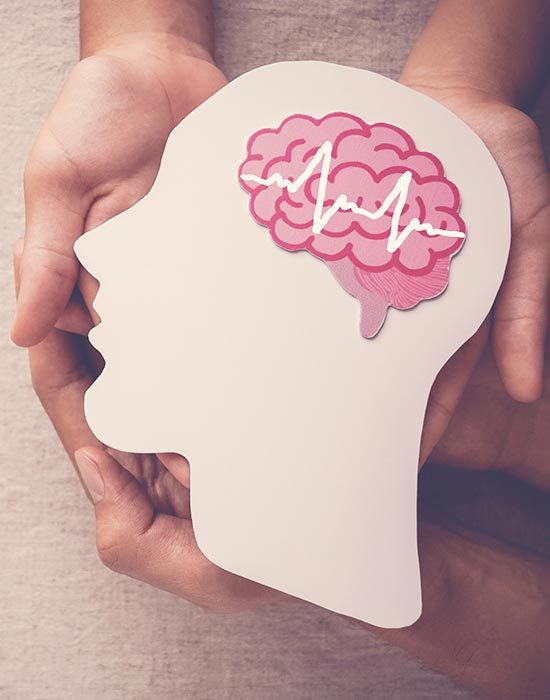
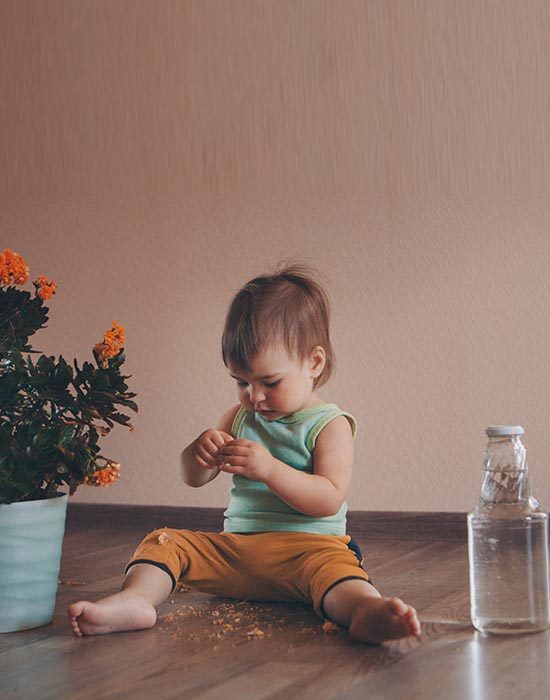

The Lord blesses you with a baby. Congratulations on your small bundle of joy!
Your baby, at this point, can let out a cry within a few seconds of birth, kick-starting the lungs, which then helps him to breathe on his own. Soon, he learns other skills like how to use his mouth for his feed, cry to inform us that he is uncomfortable and to recognize your voice.
Fast forward few months…
Your child learns the required life skills such as talking, walking and understanding the world around him. Your child further grows to read, write, jump, skip and so much more
Growth is an ongoing process, but what guides it?
It is guided by the needs of his body and the experiences in a safe, secure and stimulating environment. The child progresses through the various stages of development in his life and learns to be self-sufficient.
Is it a smooth ride to self-sufficiency?
No, it is not! Children are undoubtedly vulnerable in their early years. However, their learning and grasping skills are extremely responsive coupled with intense curiosity to explore, experiment and master change.
What is important to remember is
First, the human offspring, at birth, is like a delicate model, who must be handled with the utmost care, both physically and emotionally. The experiences that the child gains in these formative years are the building blocks for productive adult life.
Second, the environment plays a very important role in your child’s development even as early as the first few days. Your child needs a safe, stimulating and positive environment to grow and develop.
What is my role as a parent in this?
VERY IMPORTANT… Children’s positive interactions with their parents and caregivers are central in exploring his physical, social and emotional world.
A report by National Research Council and Institute of Medicine concludes: From birth to age 5, children rapidly develop foundational capabilities on which subsequent development builds. In addition to their astounding linguistic and cognitive gains, a remarkable progress in their emotional, social, regulatory, and moral capacities manifests.
All these critical dimensions of early development are intertwined, and each requires your focused attention.
What is holistic development and wellbeing?
Holistic development indicates all round development of a child — physical, language, motor, social, cognitive, emotional, literacy, socio-emotional and general knowledge. It ensures the child is developing in all aspects of life.
How important is this holistic development?
Holistic development and wellbeing of your child are so significant that it’s one of the most crucial objectives of ECCE (Early Childhood Care & Education) which had been shadowed until recently.
What happens when my child has a positive environment to grow, interact and explore?
A positively stimulating and responsive environment can set the infants’ brain in a positive tangent leading them towards a progressive future.
For instance, A child could be artistically inclined genetically, but he can improve his artistic skills only with experience/ practise. This example illustrates: How formations/developments that occur, are based on the child’s response and the interaction between genetics, environment and experience.
At the same time, opportunities lost during the valuable period from birth to the age of eight are opportunities lost in later life. Hostile surroundings can have serious detrimental effects on the cognitive, behavioural, and emotional development of the child.
SHARE
Share on facebook
Facebook
Share on twitter
Twitter
Share on linkedin
LinkedIn
Share on whatsapp
WhatsApp
Next chapter