
INFANT – PSED
Emotional Development in Infants
Chapter 4.4
Share on facebook
Share on twitter
Share on linkedin
Share on whatsapp
5 month old Prisha gets startled by a big teddy her parents got for her.
The emotion may be triggered from outside but the feeling belongs to Prisha. As an adult, Prisha’s feeling seems minor but her feeling evoked anxiety which was real to her. This real feeling should be acknowledged and accepted. This in turn teaches the little one to value their own emotions and feelings. This reassurance helps babies to calm themselves and act in socially acceptable ways.
Let’s Reflect
When parents help their little one recognize his/her own feelings and cope with them, they are contributing to their child’s inner sense of self-direction and competence.
Infants do have emotions from the first moments of life.
However, these might not be very reformed. Emotions related to newborns are all about immediate experiences & sensations that can lead to a stirred up or calmed down responses, and therefore it is hard to label their feelings.
Young infants have emotional responses that are not very refined. In the course of their first year, stirred-up states begin to differentiate themselves in a few months. starting with expressions of comfort and discomfort, and emerging into a wide variety of emotions including fear, joy, and frustration.
Memory and the ability to understand and anticipate are the route to evolvement of emotional expression through the cognitive development that gradually comes by during the first two years.
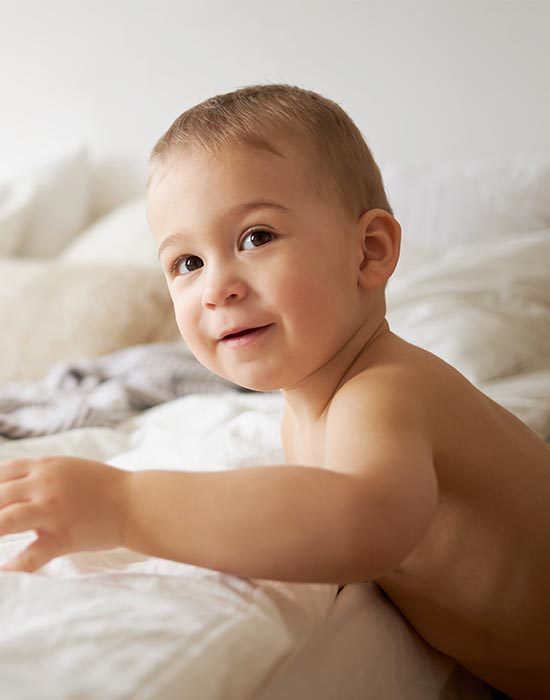
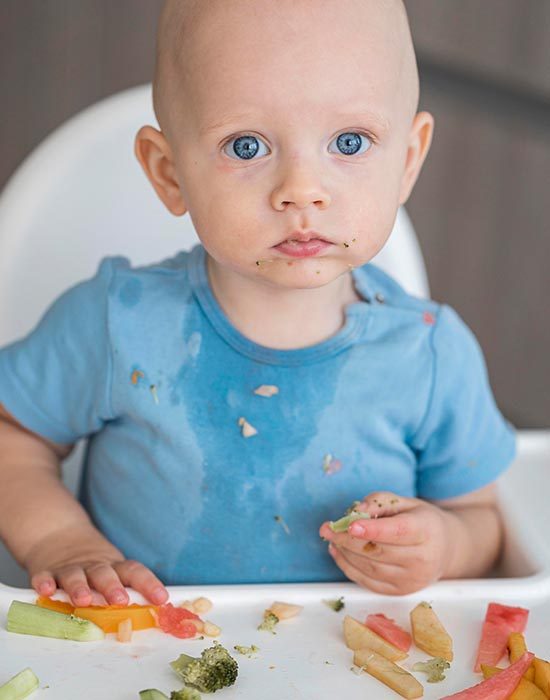

The first year is marked by:
- Tremendous growth in self-awareness and awareness of others. Infants will observe themselves in mirrors and notice other’s physical characteristics. They explore their own body, observing their hands or reaching out for their toes; they may also explore the face and body parts of others around.
- Babies show interest in other children, particularly siblings, by watching them and tracking their behaviour. Their spontaneous smiles and enjoyable interactions with peers, is evident in their gestures, facial expressions, and the sounds they take out. As they become more confident of themselves, they may reach out to touch other children or grab their toys. Infants begin to take turns with parents during play (as in peek-a- boo), thereby, laying a foundation for turn taking in social setups.
Development in the social and emotional domains is intricately linked
Social Competence is a child’s ability to:
- Recognize and regulate his/her emotions,
- Establish and maintain positive relationships,
- Make responsible decisions, and
- Solve social problems constructively.
Consequently, they are often referred to as one concept, social-emotional development.
When infants establish warm and responsive relationships with adults—the foundation of social development—they are more likely to develop important emotional skills such as:
– identifying feelings
– learning to regulate their emotions and
– to express them appropriately.
In turn, these emotional skills pave the way for the development of interpersonal problem solving, an essential social skill. The following example illustrates the interaction of social and emotional development.
The toy dropped out from the baby’s cot, and the whining started. Dad quickly comes by and picks up the toy and not only hands it to her daughter, but indulges in play with her too. Thereby, calming her down and ultimately making her baby burst into squeals of happiness.
Here,
– losing and unable to reach an object of interest – disturbs the baby as she doesn’t know how to get it back.
– Dad coming to her rescue – assures and comforts her that her needs are met
As a result she subconsciously absorbs the fact that even though things are not always in her control, yet making effort or asking for help can help her get hold of the situation.


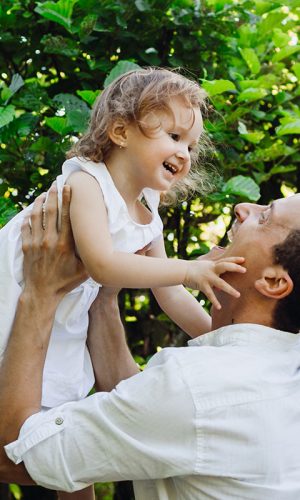
Allowing and encouraging your baby to express his/her feelings — both positive and negative — immensely supports his/her emotional development.
How Parents can Support:
Word it out for them:
“Oh looks like you missed me while I was away in the kitchen. Here, look I got some yummy yellow fruit for you. It is called a Mango!”
Help them Calm on their Own:
The baby tries to reach out to dad. “Oh, you are looking for my attention aren’t you. I am going to finish my work quickly. Till then why don’t you hold on to little Jo (her bunny).
Apart from self-regulation such behaviour sends out a very important message to your baby. The fact that you are attentive towards his or her needs and feelings, and want to be there for him/her. The feeling of being loved and taken care of.
SHARE
Share on facebook
Facebook
Share on twitter
Twitter
Share on linkedin
LinkedIn
Share on whatsapp
WhatsApp
Last Chapter
Next chapter