
INFANT – PSED
Positive Relations with Infants
Chapter 4.6
Share on facebook
Share on twitter
Share on linkedin
Share on whatsapp
Trisha is 8-months-old, just started on her fours and enjoys quieter activities, both indoors and outdoors. Her innate curiosity, and newly found mobility drives her exploration. She looks for appreciation from parents for any success achieved; be it holding her sippy cup, or helping herself with some finger food, or making noise with the spoon and the tumbler. Seeing another child within the vicinity makes her feel threatened about her belonging. In her defence she gets aggressive with them.
Parents are aware of this behaviour of hers, and are in constant lookout for ways of helping her to communicate more positively. The parents are determined to “do something about it”, for Trisha to communicate in a way that doesn’t involve hurting others.
On close observation over a couple of days helped her parents draw a pattern! – This usually happens with kids who are younger to her and mostly when it involves her food or other belongings. So, with the help of a counsellor they implemented certain actions which eased her discomfort around other kids and eventually led to dissolution of aggressiveness as a whole.
Let’s Reflect
Parents are their child’s first and most enduring educators. They have a deep impact on their child’s development and learning. Young children learn to be strong and independent from a base of loving and secure relationships with their parents.
In reference to above example…
– The parents are not harsh on Trisha for her behaviour.
– They are aware of the fact that she needs help in managing her emotions and in turn communicating them.
– Not knowing how to help Trisha, parents reach out for professional help to effectively tackle the situation.
– Keen observations helps in identifying the trigger points and narrowing them down to the area of concern – how she reacts and what happens next.
In the entire process they empathize and respect Trisha’s feelings and at the same time help her out through it.
Gradually Trisha learns how to channelize and vocalize her emotions and begins to actually enjoy the company of fellow kids.
Caring for children under three, involves more than just going by instinct or by what seems to work
Now let’s look at the 10 principles that come from the work of Magda Gerber who began formulating them as early as the 1970s:
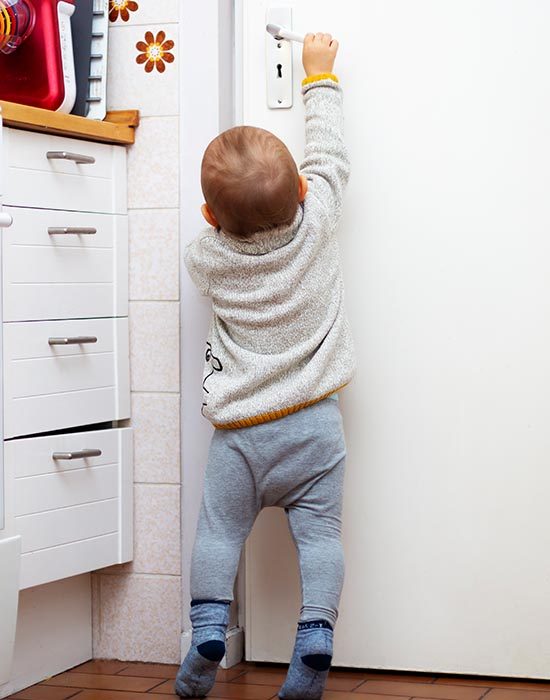
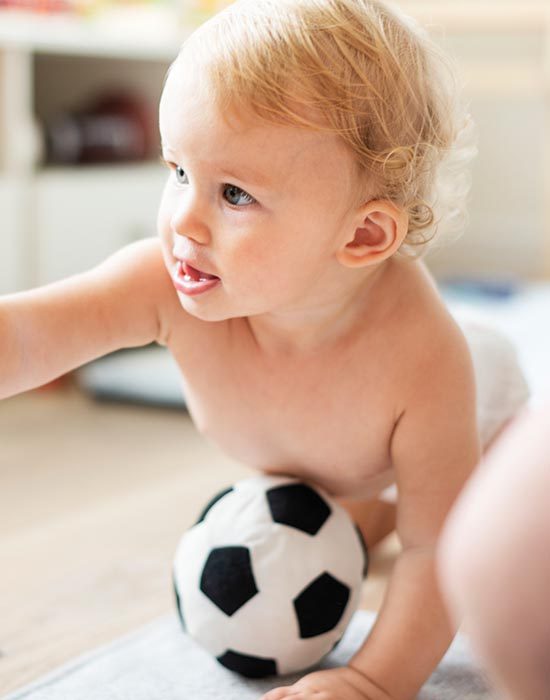



10 Principles…
1. Involve infants in things that concern them.
Don’t work around them or distract them to get the job done faster.
Eg: Consider one-one interaction with your baby during diaper change; an essential activity of daily routine. By initiating a conversation with the baby and explaining to her what you are going to do becomes an “educational experience,” which increases your infant’s attention span, body awareness, and cooperation.
A number of experiences like these gives the newborn an education in human relations from which he/she can build their whole outlook towards life and people.
2. Invest in quality time, when you are totally available to individual infants.
On one hand quality time is easy to give, but often not understood or valued. Parents just sitting on the floor where the baby is playing sometimes feel as though they are not doing their job. They want to play the role of teachers, which they interpret as “teaching something.” It is very hard for most adults to be around babies and not be directing. Being receptive and responsive is a skill most adults need to learn; it doesn’t seem to come naturally.
Another kind of quality time—perhaps the most commonly understood kind—is shared activity. The initiating mode moves back and forth between adult and child during play times as the two enjoy each other’s company.
In case you miss the moment of reciprocation in perusal of a distraction (a ting on your phone, or laundry on your mind) the baby instantly catches the feeling.
Even though babies can’t talk yet or understand your words, they instantly know when your attention is divided or even when something else is on your mind. The baby acknowledges the fact, and takes into account that his/her repeated attempts to connect are being ignored and feels rejected.
The Right Amount of Quality Time: An interesting aspect of quality time is that a little goes a long way. No one wants (or can stand) intense interaction all the time. An important skill to develop is reading a baby’s cues that say, “I’ve had enough! Please leave me alone.” Some younger babies say it by turning away—or even going to sleep. Similarly, no adult can be expected to be completely present and responsive to others all day, every day. Children have to learn to live in a busy world of people. They are bound to be ignored or worked around sometimes.
The point is that there is a difference between quality time and other kinds of time and that all children deserve and need some quality time in their lives.
3. Learn each child’s unique ways of communicating (cries, words, movements, gestures, facial expressions, body positions) and teach yours.
Don’t underestimate your child’s ability to communicate even though their verbal language skills may be non-existent or minimal.
It is not about endless chatter, instead whatever you say should have meaning and backed up by action. “I am going to give you a fruit to taste today. This is called a banana. Let me mash it up for you”
Ensure that your child listens and not tunes out. So, talk naturally (No repetitions or baby talks!), wait for his/her response and then reciprocate in accordance to it. Let the communication go beyond words.
Clear communication is important: Young children should see adults using words that match their nonverbal communication. If the face and body movements say one thing and the words say something else, children are receiving double messages, which gets in the way of true communication. They not only have problems deciding which one to believe, but also, they model after the adult and thus learn to give double messages themselves.
4. Invest time and energy to build a total person
Don’t focus on cognitive development alone or look at it as separate from total development.
Recent brain research supports the goal of building a total person instead of concentrating on cognitive development alone.
Catalogues and stores are full of toys, equipment, and gadgets advertised as making babies smarter.
And, yes, it can promote cognitive development. But be careful about falling into the trap of thinking that you can stimulate cognitive development without working on physical, social, and emotional development at the same time. It isn’t the clever little toys that you provide or the so-called learning activities you do with the children that make a difference. It’s the day-to-day living, the relationships, the experiences, the diapering, the feedings, the toilet training, and the free play and exploration that contribute to intellectual development. And those same experiences help the child grow physically, socially, and emotionally as well.
Instead of simply scattering around toys to provide an “educational experience” to your infant during bath times, try engaging in meaningful conversations experiences rich in sensory input –
Visual: The gushing of water from the tap,
Auditory: You singing a lullaby or simply having a chit chat
Tactile: the flow of water from the baby’s hands and body
Now you see the limited experience a toy provides as compared with what your baby will enjoy with her respectful, responsive, reciprocal parent without something overhead to distract him/her?





5. Respect infants as worthy people
Don’t treat them as objects or cute little empty-headed people to be manipulated.
Babies are often carried around like objects and often placed in his/her stroller without a word. This act is not respectful.
Imagine a nurse, just asked you to lie down and inserted a needle, and then left. Until you realize the difference, the natural tendency is to pick up the child without any sort of interaction with him/her.
So from now on, before changing those soiled diapers, make it a point to communicate about your actions and be sensitive towards his/her gestures.
Following are some examples of less respectful ways to respond to Brinda who whined, as she had spilt her favourite applesauce.
“Stop that screaming—that’s nothing to get so upset about—you were almost finished anyway.” Not respecting Brinda’s right to have and/or express feelings.
“Poor little Brinda, let’s go play with the doggie that you like so much—look, did you see him bark—bow-wow!” This distraction led Brinda’s feelings that were going inside her unattended. Worse she might start associating frustration, sorrow, anger with adult attention.
6. Be honest about your feelings around infants
Don’t pretend to feel something that you don’t and vise-versa.
Scene:
Kabir has just started crawling and while playing with his friend, he hit him with the toy. Mother has him firmly but gently by the arm, her expression changes from calm to anger, and she takes his other arm as well. Looking him right in the eyes, she says clearly, but with emotion in her voice, “I don’t like that, Kabir.”
She then lets him go, stands up, turns her back, and walks away. When she is a few steps away, she gives a quick glance back to see what he is doing. He hasn’t moved, so she walks to the kitchen to get some snacks. She keeps an eye out to make sure he doesn’t return to hitting his friend. By the time she comes back, she is calm, and finds Kabir busy banging his drums.
The mother clearly expressed her feelings to his son, without blaming, judging or belittling Kabir. She verbally communicated the message that his misbehaviour is unacceptable, and this was enough to stop him from continuing the action.
Also, she didn’t put on a show, which in turn would have encouraged Kabir to do it again for his own entertainment.
7. Model the behavior you want to teach. Don’t Preach…
In the above stated scene consider Kabir again approached his friend with the intention to hit, once the mother turns and walks away. The parent kneels on the floor before the two children. Her face is calm; her movements are slow and careful. She holds Kabir’s hands mid-air and sternly tells him “you cannot hit”
Children look for adult intervention in times of conflict. It is frightening for them to have no adult around to protect violent actions.
In the above stated scenario: Kabir (the aggressor) needed a non-judgemental and gentle approach towards his violent behavior.
On the other hand, his friend (the victim) needed acknowledgement of his distress.
Note: Display of sympathy (by feeling sorry) and all attention, would have done Kabir’s friend more harm than good. This way kids mistakenly learn that being victimized pays off in adult love and attention.
8. Recognize problems as learning opportunities, and let infants try to solve their own
Don’t rescue them, constantly make life easy for them, or try to protect them from all problems.
10 months old Reva crawls under her activity table. Unable to sit up straight she frightfully breaks into a meltdown. Watching this whole show, dad soothes her down and guides her out of the table with his actions and words.
Perturbed by Reva’s howl he could have hurriedly picked up the table. Instead he calmly guided her to make her way out. This came as a big reassurance to Reva of her abilities and boosted her confidence by manifolds.




9. Build security by teaching trust.
-
For babies learning to predict what will happen is an important part of building trust. Always being happy isn’t.
When the parent has to leave the child and step out, He/she can:
-Sneak out without their child’s knowledge. This is to avoid the loud wails and protests the child is most likely to create.
– Inform,and explain her that they have to go, but will be back before it is her park time. The infant grows on the fact that as long as his/her parents haven’t said good-bye, they are still around. The baby rests assured with the knowledge that his/her parents do not lie or trick him. They are honest even if it means temporary unhappiness at the child’s end.
To conclude: While providing security, support, and empathy, the parent can accept the baby’s right to be unhappy on account of not breaking each other’s trust.
10. Be concerned about the quality of development in each stage.
Don’t rush infants to reach developmental milestones.
Perfecting skills in children are far more important than pushing them for the next milestone. Infants themselves will strive for the newer milestone once they are thorough with the current one.
A child’s development cannot be rushed upon. Every child is born with an in-built time-table that decides just when he/she will strive for a particular milestone.
Eg: In the effort to make the child stand and then walk whilst he/she has started crawling we’re taking away their experience to enjoy this once in a lifetime phase in life. Parents should on the other hand enable opportunities to let their child have a closer look at low lying objects and help keep his/her sense of curiosity going.
Point to note: Perfecting skills your child is currently working on, is imperative than pushing your child to the subsequent one. The upgrade will naturally happen once the child has practised and mastered her/his current skills.
SHARE
Share on facebook
Facebook
Share on twitter
Twitter
Share on linkedin
LinkedIn
Share on whatsapp
WhatsApp
Last Chapter
Next chapter