
Toddlers – PSED
Positive Relations with Toddlers
Chapter 5.6
Share on facebook
Share on twitter
Share on linkedin
Share on whatsapp
It was a usual evening at the park for Samay (30-month-old). Her mother Divya was intently watching him, happily building a sand castle with his friend Rohit. It had been barely 15 minutes since they came to the park when Samay was all itchy, so Divya insisted him to head home and wash up.
Divya :“ If we do not put water and some lotion, we have to go see doctor aunty.” So the choice is yours.
Samay: But I want to play more. Let it be all itchy.
Divya: Bent down to Samay’s level and quoted his patent line: I have an idea! Let’s invite Rohit home tomorrow evening with his parents and you both can build as big a castle as you want with the play dough.
Samay: Smiled: Okay Mom. and they happily treaded back home.
Let’s Reflect
Shift in focus of the relationship between the parent and the child.
First year is all about developing attachment amidst day-to-day care routines – feeding, diaper changing, napping, bathing. Toddlerhood is when the child gets mobile and starts uttering words; thereby inviting the process of socializing. Year one and two is all about parents’ attempts to mould their child’s social behaviour which starts taking shape by the child’s third birthday!
Toddlerhood is marked by the advent of newfound assertiveness
Toddlers strive to know about ““who I am? and where do I fit in the world?”.
It is the phase when the child begins to be resistant and wants to do things independently. Parental support towards their child’s developing sense of autonomy, has many positive cognitive and social outcomes.
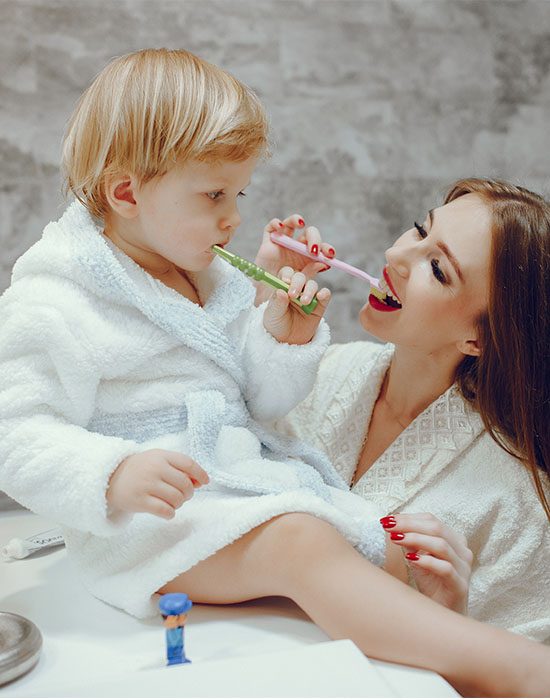
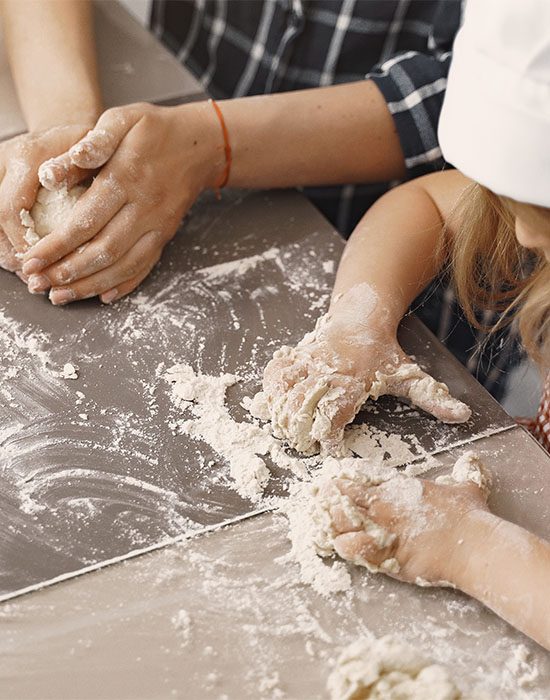


Parents teach and model skills:
1. To recognize and express feelings in culturally appropriate ways through
- Effective communication with peers/adults and responding cooperatively and compliantly. Exerting adaptive level of social assertiveness.
Eg: After savoring a yummy laddoo, Harsh ran to wash his hands.
Grandmother: Would you like one more laddoo dear?
Harsh (Sad tone): I want more, but feed me? I(ndicating with gestures how he doesn’t like his hands getting sticky).
- Self-regulation i.e. resist the temptation to misbehave, violate rules and find ways to tolerate frustration and stay focused towards the task at hand. (not rejected by others for crying, screaming, or expressing anger in ways that are too violent and uncontrolled.)
Eg: Ved was trying to open his tumbler. His multiple attempts had been unsuccessful. He threw the tumbler in anger. Mother pitches in and asks him to relax. Shows him the right way to open it. She then explains to Ved that it is okay to get upset, but throwing the tumbler did not help in opening it. Approaching for help can.
- Self-directedness & cognitive competence in social and play interactions
Eg: Riya wanted to play dinosaurs but she does not have any. Suddenly while playing with other toys she goes and gets her playdough. Then she calls for her mama and asks for help to make ‘dinosaurs’.
2. Supporting your child’s independence:
By inviting the child to participate in decision making, parents foster self-regulatory skills and intrinsic motivation in children to accomplish tasks set by adults, peers, or themselves.
Eg: 2.5 yrs old Advit was trying to solve a 60-piece Spiderman puzzle for the first time. He did not know where to begin with’ and was on the verge of abandoning it. His parents kept reminding him how adeptly he solves his 36-piece puzzle. Motivated, Advit started sorting the puzzle pieces – “this is his face, then here are the parts of the web, the grey ones must be the buildings”. After which he tried connecting them and soon got engrossed. His parents were equally exhilarated and congratulated him for his efforts.
3. Providing developmentally appropriate support:
It promotes your child’s ability to problem solve as well as learn from others and work cooperatively on home or school tasks.
Eg: It is perfectly okay for a toddler to scribble/paint to his/her heart’s content, without worrying about any boundaries or formations. They are still in the process of fine-motor development and might be holding the crayon with their fists instead of fingers.
4. Attentive but Non-directive
Parent child interactions that provide some guidance, but they also allow the child the freedom to be expressive, initiating, and self-directed.
Eg: Aah, my pen rolled under the sofa, can you help me Rajat? Feeling proud of being asked for help by his mother, 28-month-old Rajat, quickly gets his bat and ducks under the sofa to try and reach the pen.
5. Observation & Guidance:
Interactions that are monitored and responses that are matched to children’s developmental abilities and interests can foster:
- Continued interest in a current activity
- Comfortable exploration of its potential dimensions, and
- Mastery motivation.
Eg: You have been trying to put on your jacket’s zipper. Come let me show you how to do it. Raghav tried the technique her mother had shown him and his happiness had no boundaries. Since then he was the official zipper of the house!





Every big or small interaction you have with your child is an opportunity to develop positive relationships
Few things that should be put into practice as parents:
- Making eye contact with your child.
Eg: Constant exchange of eye-contact and facial gestures about the thrill of swinging sends an important message to your child: “you’re important to me” - Using pleasant, calming voices and simple language.
Eg: What a bright sunny day it is! - Having plenty of one-to-one engagements
Eg: Evening walks are a great way to strike conversations with your curious little one. - Kneeling down to their level for a face-to-face interaction
Eg: The mother knelt down to her son’s level in order to give him company with an amusing view of tadpoles in the park. - Provide warm, responsive physical contact. Dad hugged her little princes and held her close every day he came back from work.
- Follow your child’s lead and interest during playtimes
Eg: Little Jenny was banging her play drums, Mumma got her instruments from the kitchen and the duo had a gala musical evening. - Redirecting, is the best way to recuperate the child during times of challenging behavior.
Eg: Neel was inconsolable as he wanted to have an ice-cream. Grandma, quickly juiced out an orange and asked him if he would like the juice or popsicle? - Always acknowledge the child for their accomplishments and efforts.
Eg: You ate a bowl of fruits by yourself. Good job! - Listen attentively to what your child has to say, and encourage him/her to listen to others.
Eg: Anay held his bottle up and pointed to the fridge. Mother: “You want some cold water? Here, you go!”
Warm, and loving response from parents sets in a sense of saftey and security in their child. Which in turn gives the child the confidence to explore and experience. More the positive experiences are, the higher is the trajectory of growth
SHARE
Share on facebook
Facebook
Share on twitter
Twitter
Share on linkedin
LinkedIn
Share on whatsapp
WhatsApp
Last Chapter
Next chapter