
Toddlers – Literacy
Early Literacy for Toddlers
Chapter 5.11
Share on facebook
Share on twitter
Share on linkedin
Share on whatsapp
Once, Vivaan (2.5 – years – old) picked up the “5 little monkeys jumping on the bed” song.
He tried to sing it in varied lyrics:
5 little balls, bouncing on the floor!
5 little chocos left on my plate!
3 little kittens, sitting on the bench!
1 little baby, crying in the plane!
And his creative lyrics were on an upswing for good couple of months.
Let’s Reflect
It isn’t necessary to “teach” very young children.
The bond you create through books, music and playing will support your toddler’s learning for a lifetime. Early language and literacy skills are learned best through everyday moments with your child – when you talk to them and they communicate back to you, and by hearing stories read and songs sung aloud, exploring books and other written materials like magazines, newspapers, menus, pamphlets, sign-boards.
Areas and ways parents Pitch-In:
1. Sing:
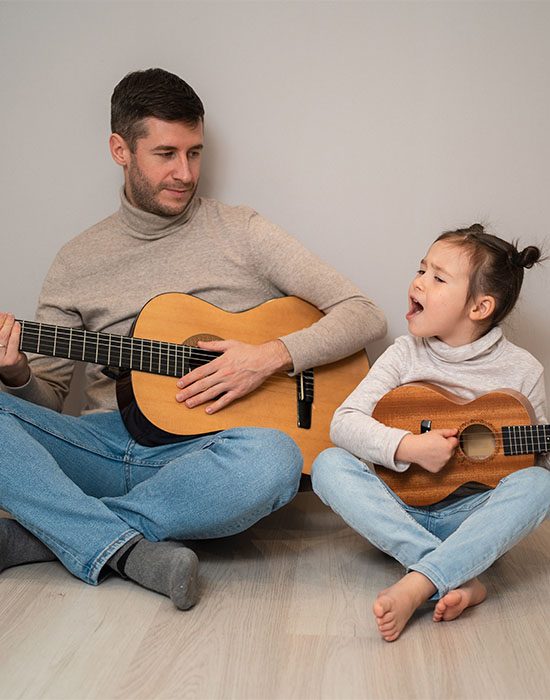
Make up rhyming songs about your child, listen to music, dance & play instruments!
Songs are a fun and playful way to introduce new words. Sing and play music to foster your son’s love of words, sounds, rhythm, and rhyme. Look for songs that encourage dancing, marching, bouncing, and spinning. Try out different kinds of beats so that your child can experiment with moving his body in different ways: fast or slow, big or small, quiet or loud movements.
Songs, like The Itsy Bitsy Spider, teach storytelling skills. Adding actions to songs builds comprehension skills.
Also, singing slows down language so your child can hear the smaller sounds in words.



2. Write:
It is all about developing pre-writing skills
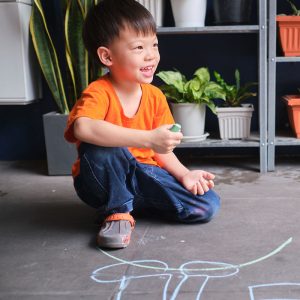
Pre-writing skills are necessary for the child’s ability to hold and use a pencil efficiently, thereby ensuring legible writing. Encouraging activities which helps in strengthening fine motor skills of the fingers and wrist is critical for the child’s writing, colouring and copying abilities.
Following is the sequence of lines and strokes a toddler need to master before actually learning to write alphabets:
– Vertical Line – (Age 2 imitates, age 3 copies/masters)
– Horizontal Line – (Age 2 1/2 imitates, age 3 copies/masters)
– Circle Shape – (Age 2 1/2 imitates, 3 copies/masters)
Improve writing readiness (pre-writing) skills:
Hand dominance:
Encourage and help your toddler consistently use the same hand in precision task performance such as brushing teeth, picking and eating finger food etc
Pencil Grasp:
The ability to skilfully hold a pencil in order to manoeuvre desired pencil movement, encourage participation in activities that involve grasping and manipulating small objects such using chunky crayons, chalks, puzzles, opening containers, threading or toys that hook, snap, button & buckle.
Hand and finger strength:
It is necessary to build muscle power for controlled movement of the pencil. Allow activities like scrunching, paper, using tweezers, play dough, pegs. Sensory play activities (e.g. rice play, finger painting) to assist the development of tactile awareness.
Hand-eye coordination:
One needs to process the information received from the eyes to control, guide and direct the hands while performing a task. Activities such as throwing and catching and reaching across the body to pick up items help to sharpen the skill.
Upper limb strength:
For good pencil control, shoulders enable the strength and stability required for controlled hand movement. Play activities such as climbing ladders, ride-on equipment, tunnels, pounding & hammering toys helps to develop upper limb strength.
Always praise and encourage your child during fine motor activities, especially if they are persistent.
3. Read:
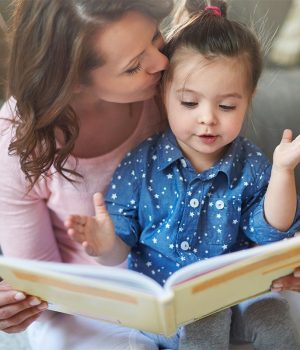
Reading is the single most important activity for preparing children to read on their own and for building all early literacy skills.
Follow his/her lead:
Here are some common happenings while you try to read to your toddler:
– S/he may just want to flip through the pages or go back and forth between a page or two.
– In the midst of listening to a story, your child may get up and play with other toys Although it may seem s/he is no longer interested, s/he probably wants you to keep reading.
Watch your toddler to decide how long to read and when to take a break.
Let your child help while “reading” the book:
– Your toddler may insist on holding the book and turning the pages. This helps him/her learn how a book works.
– Your toddler may babble as s/he “reads” the words on each page. Let him/her read to you in whatever way she likes.
– S/he might point to the pictures and may want you to say what they are.
Children who enjoy books will want to learn how to read. Some ways to get you inculcate reading habit early on:
– Let your child choose his or her own books
– Visit the library/bookstore with your toddler
– Point to words in books while reading aloud
– Read predictable books & have your child say the repeating phrases
– Read books over and over again to build comprehension skills
– Point out & read print everywhere– signs, menus, food labels, books, magazines
Make sure you and your child are in a good mood when reading; stop if your child loses interest and try again later.


4. Play
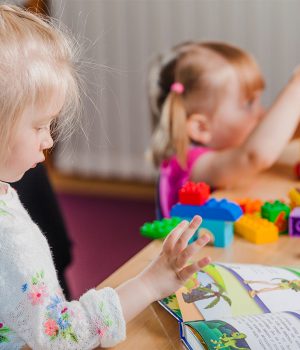
Playing with your child is indeed a great bonding exercise, but it is also one of the best ways for toddlers to learn language, develop literacy skills and build fine & gross motor skills.
Follow your child’s lead to enhance the playing experience. Put away distractions, get down on the floor and make a lot of eye contact while playing with your child.
- Time for some drama – Act out books & stories with dress-up clothes, puppets, stuffed animals & toys
- Play with toys for pretending & building– blocks, transportation toys, dolls, dress-up clothes, sand & water toys, puppets.
- Take a Stroll – Walk around your house or neighborhood with your toddler. Point out and name different objects. Encourage your child to repeat the words after you. Ask your child where he wants to go next and follow his lead. Develop curiosity to see if s/he points to “ask” you what an object is.
- Play Treasure Hunt: Begin with objects which are within sight like – my pillow, my glasses or get your shoe. As his/her receptive language (the words s/he understands) grows, you can ask your child to get a familiar object that is not in sight: Can you find your police car? Or do you know where my red cap is? This is a great way to help your toddler learn new words and to listen and follow directions.
- Get your child letter pegs/blocks for him/her to arrange and rearrange to his/her heart’s content. Let him/her stack the letters up and knock them down again. It is all a part of imbibing literacy.
- Let your child play with and “read” all kinds of written material—magazines, newspapers, catalogs, take-out menus.
5. Talk
The more you talk to your child (in any preferred language), the more words he or she will learn. Young children need to hear words many times before understanding the meaning of the word and how to use it.
Be mindful to use positive language and talk –
– About you & your child’s feelings
– About the pictures in books & how different characters feel
– Over dinner, tell stories about your day
– About letters, shapes & how things are alike & different
– Explain the order in which you do things– first, second & third
– To introduce new words: So, chat with your toddler—in the car, at the playground, during bath time—is very important.
– To put his actions into words: Yes, that’s a sparrow. Look it just flew away.
– About the pictures on each page, instead of reading the actual words in the book. Helps the child develop a better understanding of what is happening in the story. E.g. mama bear is now tired. she is now going to bed. Good Night mama bear.
While reading –
– Share books with noisy sounds & make them together- “moo”, “beep”, “crash”
– Instead of replacing unfamiliar words in books with ones your child already knows, read the word & explain what it means
– Ask questions about the story while reading
– “Read” the world around you. Point out stop signs, open/closed signs, your street sign, billboards, cereal boxes
Each child is unique and develops at his/her own pace. There are plenty of steps parents can take to ensure their child reaches his or her full potential when it comes to literacy skills.


SHARE
Share on facebook
Facebook
Share on twitter
Twitter
Share on linkedin
LinkedIn
Share on whatsapp
WhatsApp
Last Chapter
Next chapter