
Preschoolers – PSED
Positive Relations with Preschoolers
Chapter 6.6
Share on facebook
Share on twitter
Share on linkedin
Share on whatsapp
The ages 3-5 are called the wondrous years!!!
– Look Mom, Dad I am a super speed Catboy!
– Dad came first in shower and cries inconsolably.
– Mom, you are looking so beautiful, and quickly plants a kiss on her cheeks!
– My tummy aches last time I had juice. I am not going to drink it anymore.
Let’s Reflect
What to expect from a preschooler?
Owing to considerable development in the language, problem-solving skills and social skills, pre-schoolers are experimenters, scientists, artists. This surge in the confidence and self-esteem motivates them to explore the environment around and in the process further sharpen their cognitive, communicative, socio-emotional and behavioural skills.
Full of ‘what’, ‘why’, ‘where’, ‘who’ and ‘how’ questions.
Take their questions seriously and give them proper reasoning. You might actually be surprised at their grasping and understanding power!
Let’s look at an Eg:
Tara: Mom, where does the sun go when the clouds come?
Answer 1: Aah! you will not understand, you’re too small for this.
Answer 2: Sweetie, we cannot see the sun because it is hiding behind the clouds. If you look at the sky for a while you can see the sun while the cloud crosses by it.
Patiently and in simple words explaining real answers:
- Shall help your child understand the world around.
- Reiterates on the message that s/he is important for you, and furthers strengthens the bond of trust between the two of you.
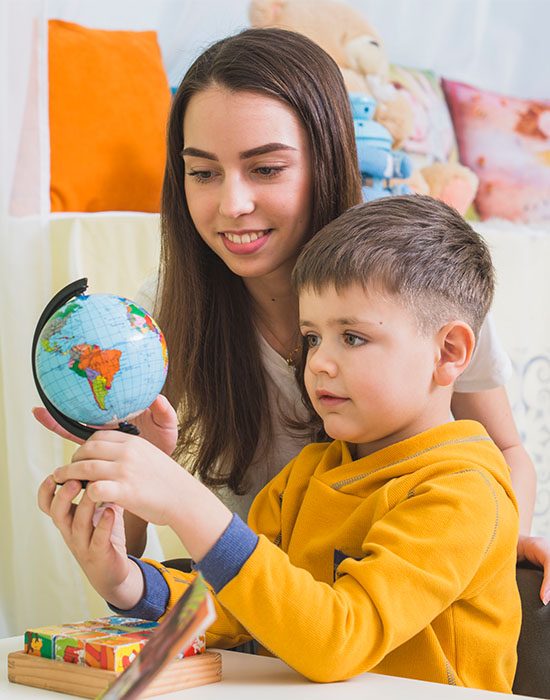
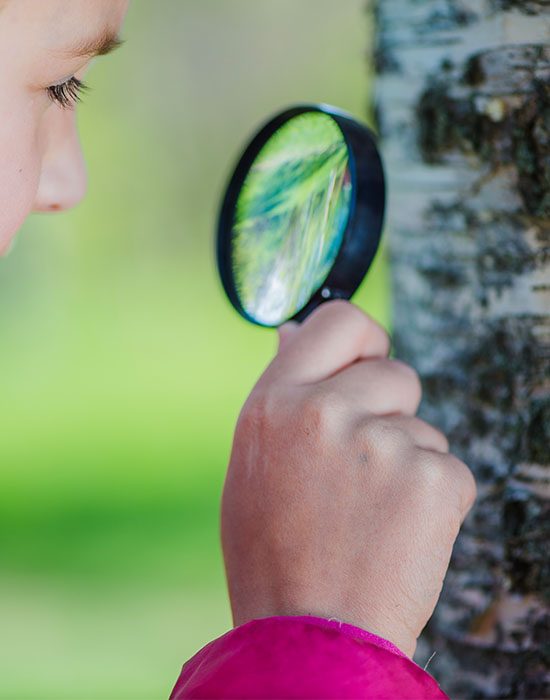



Pre-schoolers are refining their ways to control their bodies, emotions and mind
Do not be surprised if your little one comes up and asks you
“Mama are you happy, sad, upset, angry?”
It’s nanu’s Happy Birthday! Let’s give him a surprise gift! chirps the 4 year old excitedly
They are trying hard to make friends and engage with the world.
By now, s/he can perceive, understand/reflect and act as per the emotion of the people around. Emotional development is a necessity for being socially active. However, the little one is at the threshold, and still needs guidance to channelize his/her emotions.
Thus, parental interactions play a critical role in shaping their pre-schoolers emotional well-being. Tune-in to your child’s feelings, help them find words for big emotions, appreciate and encourage their positive behaviour.
They want what they want
Their brain is developing at the highest speed it ever would, which might sometimes get emotionally overwhelming for them. Point to not is that amidst all this, they still worry about their disapproval.
This is my room, do not come into my toy room!
I don’t love grandma! I don’t want to play with her!
Take a deep breath, and let the hurt go, because punishments can only worsen their emotional disbalance.
Of course, you need to tell your child what he is saying is wrong, but in a manner to help them calm. Act out of love and empathize with his/her disappointment and anger.
I know you are upset because I am not able to play with you, but I promise I will join you post lunch. Let me know if I can then come to your room?
Okay, so then do not ask her to make you juice or help you sort out your LEGO.
Setting limits will help them maintain their emotional equilibrium and self-discipline. With time this will become a sub-conscious practice without the need for your intervention or regulation.
For them, responsibility is joyful and not a burden
Your pre-schooler might want to step into each new responsibility. Being acknowledged and trusted as able to carry out chores independently gives an unfathomed boost to his/her self-esteem.
Either: Before we hit the park, I need you to help me clean up the toys, while I squeeze out some fresh juice. So, when we are back, we can get to treat ourselves with a refreshing juice.
OR: Your room is a mess, clean it up, I will not take you to the park.
Focus on helping your child take charge of their life, and support him in all his endeavours. Even if it means a little more time or a little more mess.

SHARE
Share on facebook
Facebook
Share on twitter
Twitter
Share on linkedin
LinkedIn
Share on whatsapp
WhatsApp
Last Chapter
Next chapter