
Preschoolers – Literacy
Early Literacy for Preschoolers
Chapter 6.11
Share on facebook
Share on twitter
Share on linkedin
Share on whatsapp
While on a car ride little Navya points to a billboard having the add of her favourite biscuit Oreo. Her mother kept wondering how does she know, she is not well-versed with alphabets yet! Then in the supermarket also, she quickly fetched oreo biscuits.
Well whenever the biscuit was given the word ‘Oreo’ was used. Since Navya loved those biscuits, each time she intently watched the wrapper open. This made her familiar with the spelling and the wrapper design. Hence, even though she cannot read yet, she remembers what she saw in real life and can relate to the advertisement on the billboard!
Let’s Reflect
Before your child begins to write, she needs to develop the ability to speak, listen, watch, understand and scribble. The child needs to develop a sense of connection between letters on a page and spoken sounds.
Parents need to infuse fun ways of organically seeping in sounds into their child’s system.
This requires a lot of:
- Conversation: everyday routines and interaction is a store of ample opportunities.
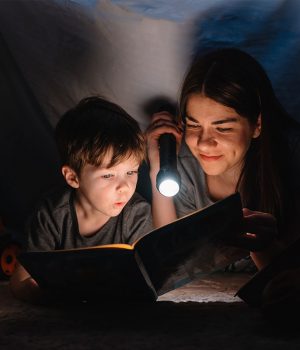
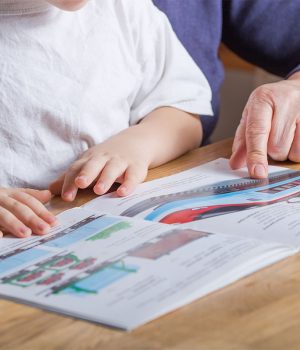
- Read aloud: This helps in registering the words in the minds Also, sliding your finger under the words helps them visually get a picture of the sound being made. Point at picture in the story to be story starters
- Singing rhymes with movements is a fun way to get your child up words.
Meaning-Related skills in Emergent Literacy
- Support vocabulary development in order for children to make sense of what they hear.
The more words a child knows, the easier it will be for him to understand what he is reading.
Eg: A child could hear the sentence “The pasta is delicious,” but if he doesn’t know what ‘delicious’ is or understand ‘pasta’, the sentence will have no meaning for him.
Vocabulary development begins as children are exposed to words, and then learn to understand familiar, everyday words in conversation and daily routines. You’ll know children are starting to understand words when they react to hearing them.
Eg: The child quickly recognizes a “ladybug” as he had made it in an activity a few days ago!


2. Story comprehension comes way before the child is able to read, write and tell stories on his own.
Once the child gains an understanding of his/her own personal life – As soon as he wakes up, he wishes every one good morning, brushes his teeth, then mama serves him breakfast and then it is time to play. Then over time, s/he will start to understand sequences of events in books, understand the plot, or point to a story.
Reading aloud to your child, gives him/her an understanding of how stories unfold; and that every story has some characters, a beginning and an ending.
3. Drawing inferences is an indication of the child’s appreciation of the stories s/he hears and will eventually read.
You know your child is developing the skill once s/he starts relating the events in the story to his/her own life experiences. Comes up with problem-solving or reasoning skills to fill gaps for what is not written or shown through text or illustrations.
Eg: Grandpa pig loves to play with peppa just like my grandfather loves to play with me.
Here the word ‘love’ was nowhere in the text or image, but the child came up with it as a ‘filler’ for the expression he thought was explicitly missing.
Code-Related skills in Emergent Literacy
Start early and go easy. Even though it may seem your child is not paying attention but the reality is, his mind is absorbing every new sound being heard by him.
Print Awareness: This involves:
- Understands that black pictures(print) in the book has a meaning to it.
- Print is different from other images (illustrations) that might be in the book.
- A left to right order is followed while reading print
- Print is a collection of words which in turn are made up of letters in the alphabet
Alphabet Recognition: Skill includes:
- pointing to letters,
- recognizing letters in logos (for example, referring to the Hyundai’s logo as the big “H”), and
- Singing the ABC’s.
Sound Awareness:
Understanding that letters correspond to certain sounds in order to be able to sound out words and spell. Listening to others speech, listening and imitating silly sounds, rhyming words are some of the ways that makes the child familiar with sound and letter association. Eg: Old Mc Donald had a farm… the classic rhyme and song.
Letter-Sound knowledge:
On attaining sound awareness the child is ready to associate each letter to its respective sound. Yes, Phonetics it is! For Eg: s/he might know that Monkey starts with letter M and makes ‘mmm’ sound.
These skills start to develop as your child gets familiar with using books, point to pictures. recognizes book covers, points out words and engages in scribbling.
SHARE
Share on facebook
Facebook
Share on twitter
Twitter
Share on linkedin
LinkedIn
Share on whatsapp
WhatsApp
Last Chapter
Next chapter