
Kindergartner – Physical Development
Kinds of Motor Development
Chapter 7.8
Share on facebook
Share on twitter
Share on linkedin
Share on whatsapp
On a daily basis, children must engage in physical activity that leads to the progressive development of motor skills. Some of this activity leads to skill in functional tasks such as running, jumping, kicking, and throwing and other motor activity leads to the acquisition of fine motor skills that involve eye-hand coordination. Therefore, for efficiency and effectiveness in body movement, all the parts of the body must work together harmoniously through physical activities and in this instance, sensory modalities like vision, touch, feel, some into play. It is time, which the so-called frivolous play experiences of children can be viewed in the light of their potential educational value (Abass, 2001).
Let’s Reflect
It is vital that parents and other caregivers introduce any activity or healthy food in a positive and cheerful way; as the key is to promote a healthy view on physical development of the child.
Types of Motor Development
1. Neuromuscular Skill Development:
Evidence indicates that typically developing children should be able to master most, if not all fundamental movement skills by 6 years of age.
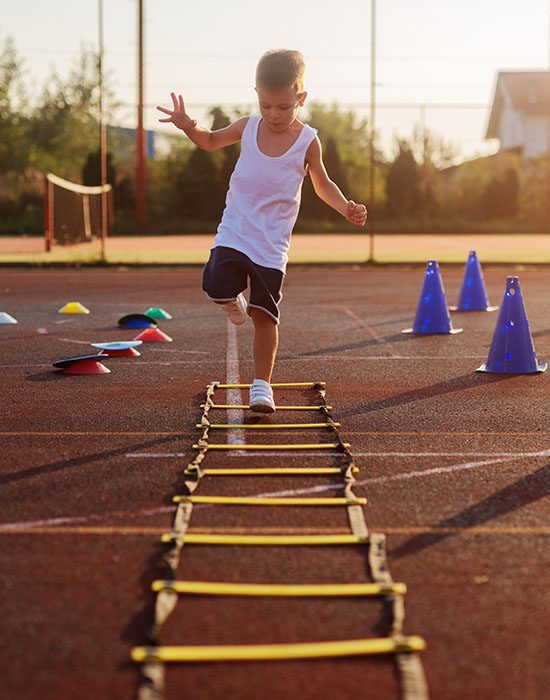
Fundamental movement skills are considered the building blocks to more complex, sport-specific skills which do not develop naturally over time and are often categorized into three categories:
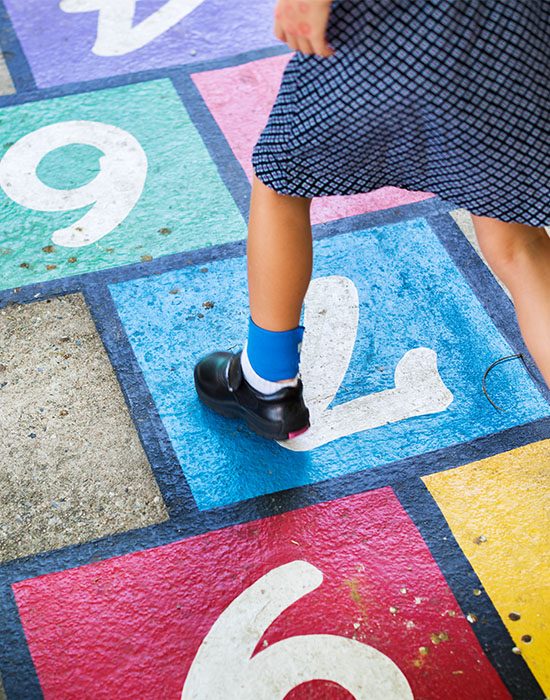
- Locomotion (Eg: running, hopping, and skipping),
- Object control (Eg: throwing, catching and kicking) and
- Stability (Eg: landing, turning and bracing).
Having stepped into formal school, primary graders are expected to be developmentally ready; i.e. the ability to produce controlled movement in terms of form, skill and accuracy, through coordinated muscle activity. These require more complex combinations of muscle movements and selection of the “best” ways of performing in a wide variety of activities (games, sports and dance experiences). Multi-limb functional movements are achieved when there is a seamless trained movement of multiple muscles, all controlled by the central nervous system.
Neuromuscular skill development plays a major role in determining the onset and extent of development of the movement repertoire of the child.
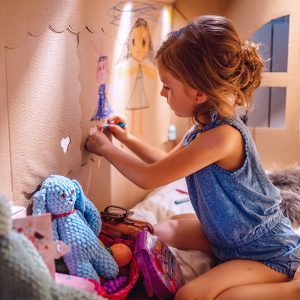
2. Physical and Motor Fitness Development
In children physical activity serves as a stimulus to growth (Sibley & Etnier 2003).
Fitness development is the result of planned activity; this includes regular exercise, sleep and rest, eating, and play or recreation, and the maintenance of emotional well-being. Higher levels of physical activity in childhood contributes to weight management, improved cardiometabolic parameters, neuromuscular development and mental health.
The muscles of Kindergartners and their bodies grow in strength, size, and tonus through exercise and vigorous physical activity. Taking part in vigorous activities contributes to organic development and a sense of general wellbeing. Children at this age need about 60 minutes of vigorous big-muscle activity a day in order to be in good health.
3. Perceptual-Motor Development
Children must be perceptually ready for reading and other forms of school work before they can benefit to any great extent from schools.
Straight after birth interaction with the environment begins. Perceptual-Motor Development is dependent on the child’s ability to harmoniously integrate his/her senses(perceptions) and motor skills.
- That effective and efficient movement is dependent upon accurate perceptions of the environment e.g.: puzzles and games that promote awareness of space, time, and direction.
- That the development of one’s perceptual abilities is dependent partly on movement. E.g.- only when the child walks on a rocky road, or a grass or ice, or water will get a sensory perception about the object and will act accordingly in future.
Not all children are at the same perceptual ability level upon entering the first grade.
Hence, the movement experiences of pre-school and primary grade children play an important role in the development of their perceptual abilities. It is a process controlled by both maturation and experiences; each child develops these abilities at his or her own individual rate.
4. Motor Learning
Motor development must be put into proper perspective in the education of children, for it plays an integral part of their total growth and developments.
Spending time developing your child is actually important?
During early childhood, indeed development eventually happens on its own, but s/he is not fully developed without some planned practice.
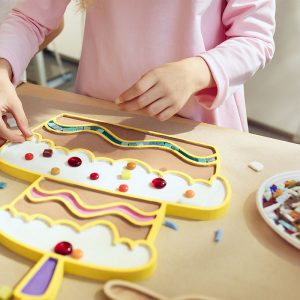
Eg: In order to expect your child to write well, you need to focus on developing fine motor skills before ever asking your child to write. It is that important!
SHARE
Share on facebook
Facebook
Share on twitter
Twitter
Share on linkedin
LinkedIn
Share on whatsapp
WhatsApp
Last Chapter
Next chapter