
INFANT – Literacy
Best Practices to Boost the Literacy Quotient in Infants
Chapter 4.13
Share on facebook
Share on twitter
Share on linkedin
Share on whatsapp
As per researches Early literacy is dependent upon the importance of early interactions that are responsive and interactive.
Early shared interactions, such as sharing attention, sharing feelings, and sharing intentions, are significant to the development of language and later literacy. Infants who had a wide range of gestures and sounds and began understanding and using words early became preschoolers who showed clear and stable emergent literacy skills.
Let’s Reflect
Literacy provides the window to the world ensuring all children cease the potential for future success. Hence, invest in your child early, right from birth.
Introducing literacy is important, but at this nascent stage ‘how we do what we do’ is critical
By focusing on picture book sharing, you can assist your child with observing and exploring written language.
These lead to progressively more verbal and nonverbal emergent literacy behaviours – defined as shared gaze (looking at pictures with caregivers); facial expressions indicating understanding of book content; attempts to turn pages and hold the book; memory of story content (predicting upcoming events); and participation in labelling objects or actions within the story.
However, not all children will show the same interest in books! Giving them time is important. Let them observe and explore books independently.
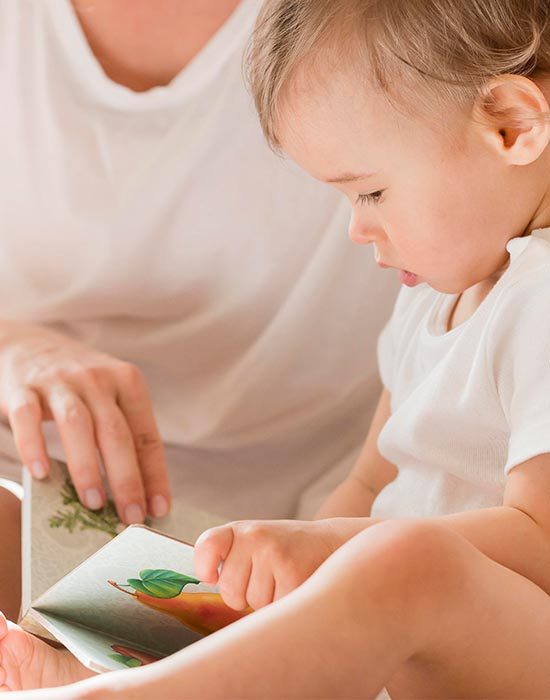



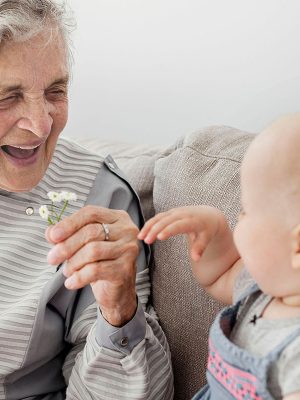
Right from your baby’s first year, make sure that the roots of literacy go deep by doing some other fun things:
- Play with language – really enjoy the sounds that babies make and try imitating his/her language. Exaggerate words, names and noises and go in for lots of rhythm and repetition.
- Sing and dance – enjoy all kinds of songs, music, clapping, stamping and dancing with your baby. Use songs, noises and rhythms in the stories you tell or read.
- Share rhymes and poetry – sing or recite verses that have good rhymes, funny words and tongue-twisters. You can also go for bits of songs, poems, chants and hymns you remember.
These may seem strange things to do, but this is how young children’s develop their love of language and their understanding of how it works.
Give meaning to the interactions your infant has with books and stories.
“Emergent literacy” experiences begin to build in infants an appreciation of what the idea of reading is all about. Instead of focusing on alphabet, provide experiences that constructs concepts and lead (on the literacy continuum) to the eventual joy of reading itself.
Exploring and playing with books, singing nursery rhymes, listening to stories, recognizing words, and scribbling are truly the building blocks for language and literacy development.
Some suggestions to incorporate literacy into your newborn’s world:
- Introduce cardboard or cloth books with brightly colored pictures. Try to select books that reflect the child’s own experiences such as books about daily life, family members, animals, or food (National Association for the Education of Young Children (NAEYC), 1997).
- Read books that have rhyme, rhythm, or repetition such as nursery rhymes since the sound of the language is especially important to infants who cannot yet focus on pictures very well (McMahon, 1996).
- Help increase vocabulary by playing “What’s that?” or “Where’s the ball?” when reading books together (NAEYC, 1997).
- Point out words on signs at the park, at the zoo, when walking or driving. Explain what the words mean as you name them (NAEYC, 1997).
- If the infant becomes restless or fussy while reading, put the book away so that the child does not develop a negative association to reading (McMahon, 1996).
It is never too early to begin reading to a child (McMahon, 1996). By reading to infants, parents can help their children develop an understanding about print at an early age as infants learn to make connections between words and meaning (NAEYC, 1997). By engaging children at an early age in reading and allowing children to observe those around them engaged in reading activities, parents can help foster a lifelong passion for reading that leads to benefits in all areas of development as the children grow older.
Early Literacy Behaviours
Book Handling Behaviours:
It is related to baby’s physical manipulation or handling of books, such as
Most babies (about 6 to 12 months)
– Play with books, so books should be sturdy cardboard
– Put them in their mouths, chew them
– Open and close them
– Bang on them
– Look at the pictures briefly
– May look at the book with an adult for a short time
Looking and Recognizing Behaviours:
It is related to how baby pays attention to and interact with pictures in books, displays recognition of pictures:
– gazing at pictures
– smiling at a favourite picture
– pointing to pictures of familiar objects.
Having said that, remember that development cannot be hurried. Take your cues from the young child. Overstimulating environments and adult expectations that exceed infant or toddler capabilities get in the way of healthy growth. In confusing and overwhelming settings, young children become stressed.

SHARE
Share on facebook
Facebook
Share on twitter
Twitter
Share on linkedin
LinkedIn
Share on whatsapp
WhatsApp
Last Chapter
Next chapter