
Toddlers – PSED
Emotional Development in Toddlers
Chapter 5.4
Share on facebook
Share on twitter
Share on linkedin
Share on whatsapp
Divya watched Varun sobbing for her mother at the playdate. Divya immediately recalled her initial days of separation. How her dad used to hand over mumma’s dupatta to make her feel safe. She demonstrates a similar act to comfort Dhruv. Quickly fetches some bangles an makes tinkles sound just like her mothers. Hearing this, dhruv looks towards her and approaches her to make similar sounds. The teacher praised Divya “What a caring friend you are”
In the second and third year of life, toddlers begin to name their own and other’s emotions, and they demonstrate empathy by noticing how adults or peers feel and try to comfort them.
This phase is all about intense but short-lived feelings.
Let’s Reflect
Toddlers express pride, embarrassment, shame, and empathy; adults need to support toddlers’ efforts to learn to use coping techniques to deal with everyday frustrations. They also begin to test limits and strive for independence. They notice when others are looking at them, and they often exaggerate movements or act silly when they are being watched.
Owing to limited vocabulary, toddlers do not yet know appropriate ways of expressing what’s going within.
Emotional Development is the development of a child’s ability to recognize and regulate his/her emotions, establish and maintain positive relationships, make responsible decisions, and solve social problems constructively. Also called social competence.
Once, the child starts walking, they will take on a whole new adventurous approach to life.
With so much to discover and learn, don’t expect him/her to sit still. During times, a toddler is expected to stay stationary (e.g a car seat or while dining out), try keeping their hands and minds busy by reading a fun book or playing a silly game.
Interaction with the environment leads to exploration of emotions. This can be a very difficult stage for adults as children experience complex emotions but have not yet figured out healthy versus unhealthy expression.



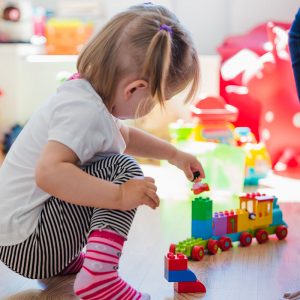

Self-regulation
A toddler is working on his/her ability to understand and manage emotions and behaviour in response to others’ feelings or other happenings in the environment. This phase is usually associated with following emotional characteristics of self -regulation.
– Feels shy on being given attention.
Eg: whose favorite fruit is mango?
– Takes immense pride on self-achievements
Eg: is able to pedal his tricycle
– Empathy; Gets troubled on seeing other kid cry
Eg: Rohan kept watching the crying kid on the road until our car was far away.
– Concept of “mine” has taken strong ground.
Eg: Approaches Jai for sand play at the park. As Jai lays hand on his shovel, she quickly grabs it from him.
– They observe and imitate another child’s behavior or activity but prefers to play on his own.
Eg: Little Mina is intently watching other kids playing in the park. Seeing her excitement her mother nudges her to join them. But she prefers get on a swing and be by herself.
With development of the sense of individuality comes the struggle for independence.
Unable to comprehend – why they can’t have what they want, when they want often leads to frustration. This is the root cause of their defiant behaviour popularly known as “terrible twos”:
– Throws tantrums: Yell, hit, bite, cry when things don’t happen their way.
Eg: “Was trying to reach for the jar on the table but couldn’t.”
– My Way: Are bossy about what they want to do.
Eg: “Wants to hold grandma’s glasses!”
– Difficult Transitions: Hard to stop one thing and move over to next or wait the right time
Eg: It’s time to close down, but Ria does not want to come out of the pool, and therefore throws a tantrum.
Things Parents could do to support their little ones’ big emotions:
A toddler needs lots of reassurance, support from you to be able to recognize and express the range feelings they are undergoing. Enabling an open and safe environment is critical to healthy emotional development.
Throughout the day make time for one-on-one interaction with your child, even if it is a quick hug, smile, or positive word. Toddlers get their cues from their parents; your positive words and actions can go a long way towards making your toddler feel safe and secure.
1. Build Emotional Intelligence:
Begin by together identifying and discussing emotions helps the young child to understand their own as well as others’ emotions. Help them label their own emotions:
Eg: “The ball that hit you was hard, you got hurt and therefore, it’s paining”.
Ask questions about what others might feel. Once they start recognizing their own feelings, find opportunities to reflect upon the effect of his/her behaviour on others’.
Eg: “You did not share your chocolate with dad. How do you think he must me feeling? Can you look at his face and tell?
2. Play:
It is the most seamless way to make them familiar of real and play emotions.
- Use puppets/stuffed toys to project and label emotions:
Eg. when a monkey takes away the boy’ s banana, you could say…“The boy was very hungry! What will he now do?”
- Relating your child’s situation to a story to make him/her understand emotions s/he might be experiencing. Stories whether told or read provide ample opportunities to discuss the connection between behavior and emotion.
Eg: Santa brought surprise gifts for all the animals. Help them understand the stated emotions of each animal by explain or enacting the same. “The shy rabbit jumped with joy! and the elephant thanked him with his trunk like this”




3. Maintain your Calm:
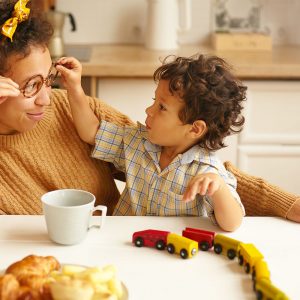
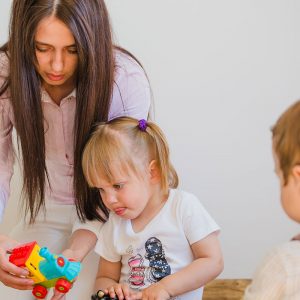
Little ones learn how to regulate their emotions by watching how you manage yours when the going gets difficult. Hence, you need to keep your cool, and model appropriate behaviour.
“I would love to help with your new puzzle, but then I would get late for work. Can you please go ask dad for help instead?”
4. Always appraise the positives:
On the threshold to follow directions and rules, toddlers need lot of positive feedback and calm reminders. Remember to praise them each time they successfully abide.
“You did not leave the refrigerator open. I am happy you remembered the instruction!”
Avoid using “don’ts” while setting behaviour expectations. Instead focus on – what they can and should do.
Eg: Instead of saying “you cannot hit!”, you could rephrase “Let’s try to be gentle so that she doesn’t get hurt”
5. Empathize and channelize strong Emotions:
Firstly, offer comfort your child by letting him/her know that it is okay to have strong feelings. During times of aggressive behaviour, show him/her what more acceptable thing s/he can do instead.
Eg: If she throws around her toys in a fit, hand her a soft ball. Ask her to do as she pleases with until she calms down.
Some kids might just want to hold you tightly, while others might need a distraction. You need to “tune in” in order to help them manage their feelings.
When you practise display of patience, gentleness, and care for others through your everyday interactions, you are helping your child to learn to treat others the same way.
SHARE
Share on facebook
Facebook
Share on twitter
Twitter
Share on linkedin
LinkedIn
Share on whatsapp
WhatsApp
Last Chapter
Next chapter