
INFANT – PSED
Enabling Environments for Infants
Chapter 4.5
Share on facebook
Share on twitter
Share on linkedin
Share on whatsapp
Arya is candidly lying on his back on a cosy rug, when his grandpa rolls over a soft ball towards him. He quickly rolls on his sides, gets on to his fours and grabs it. Squeezing the ball several times and then putting it in a basket having more balls. He then turns the basket letting all balls scatter in different directions and watches it with wonder!
On the other hand, Kush (of the same age as Arya) is on a swing. Each time the swing stops he lets out a cry for his nanny to come and give a push. This fussing happens each time Arya is confined to spaces, be it crib, stroller, or a swing.
Let’s Reflect
Opportunity to experience the environment were poles apart:
Arya was able to move around and explore his environment on his own, which encouraged him to stay engrossed. On the other hand, Kush was able to only see what was there in his environment and was dependent on his nanny to interact with the environment and to stay connected to it.
What is enabling environment?
The surroundings of young children (i.e. both emotional & physical collectively) also known as environment plays a vital role in supporting and extending their personal, social and emotional development.
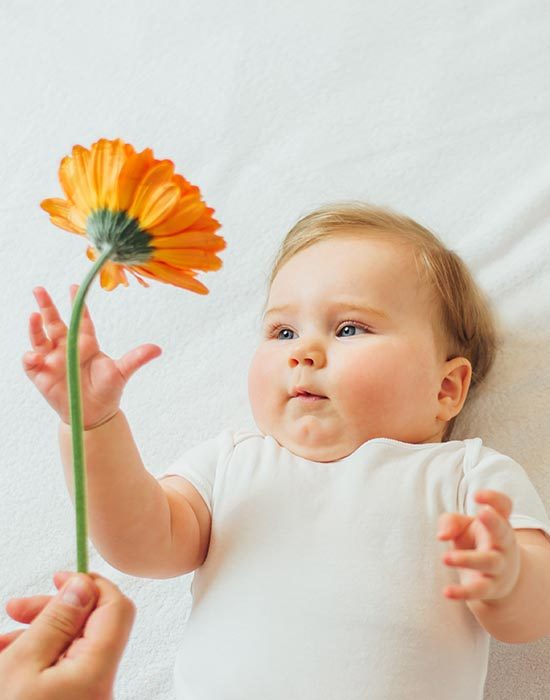
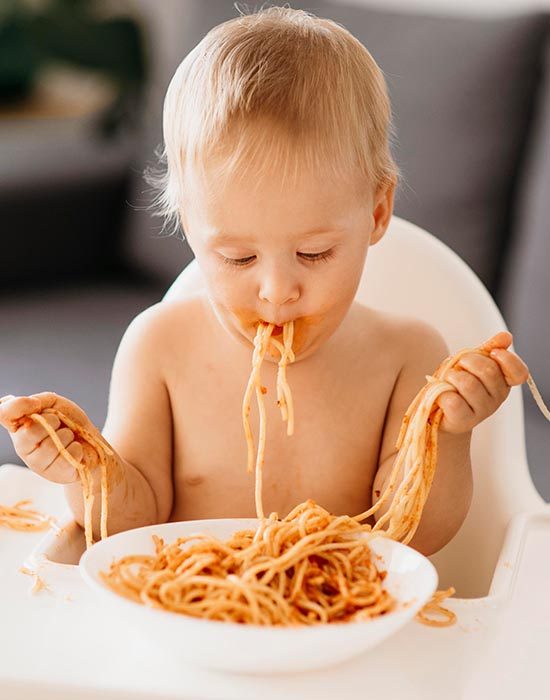



The three broad constituents of Enabling Environment are:
- Space (both indoor & outdoor) should ideally be both rich, varied, secure & safe.
Infants and young children are individuals with a unique composition and abilities. From the earliest days, infants use all their senses to explore their surroundings in order to make sense of the world around them. Therefore, for optimal learning & development, their environment should have appropriate resources and ample opportunities to stimulate their senses.
For the child to explore and learn with confidence:
– Planning of their space is to be done in accordance with the inferences drawn out of observation of your child’s current interests, development and learnings.
– Planned experiences and activities are both supporting and challenging in-order to maintain an upward trajectory of growth and development
- Characteristics of Effective Learning:
Although there will be daily events (such as mealtimes, bath times) that have to happen at certain times, there should be a flexibility about what happens during the rest of the day.
Infants should be allowed all the time he or she needs to enjoy the experience of being under one, rather than being constantly encouraged to ‘move on’ to being two.
This leads to a higher level of learning owing to the deep involvement the infants will have in investigating resources and exploring situations. A flexible approach to time management which takes account of the needs and interests of the children rather than a fixed routine which must be followed minute by minute will lead to better outcomes for everyone; children and adults.
- Knowledge of the “unique child” and “positive relationships”:
Strong positive relationships are based on mutual care and respect in order to enhance your child’s sense of wellbeing and emotional resilience
Parents need to
– ensure that the environment is warm and accepting
– understand where their child is coming from and support their emotions
Once the child feels assured & valued, he/she is confident to venture out and explore new experiences and freely express themselves.
Now how do you prepare your child to take sensible risks?
Well before taking risks it is important for them to get into a habit to introspect the following question(s):
Will it make me feel good?
– Swinging in my dad’s arms is so comforting
Which people can help them?
– Aah! I see this person with a big smile every day. Let me draw her attention by fluttering my hands and cooing at her!
How can I keep myself safe?
– Holding on to my blanket when mummy is not around makes me feel safe!
How to identify and avoid possible danger?
– There was a loud noise! Let me cry for help
Why am I making this choice/decision?
– Sucking my thumb helps me soothe my stress in a new environment.
All these leads to the curation of Enabling Physical Environment:
– Simulating and challenging opportunities keeping in mind the holistic development of your child.
– Opportunities to acquire an aptitude for both risk-taking and staying safe
– Resources that are diverse and lead to multiple possibilities. Some of which might be familiar whilst some might be new and reflect the diversity of the wider community




Some out of many examples of effective Practices:
- Curating varied cozy nesting spaces for infants for them to get a view of things and people beyond their room. E.g: The changing colors of the sky, grandpa reading the newspaper, sister juggling with her toys and so on.
- Get down on the floor to see how the room looks from the perspective of a baby. Ensure enough space for the baby to move, stretch, explore and roll. Use of open shelves or baskets is both inviting and easily accessible.
- Maintain a reservoir of resources including picture books and story books that brings to their notice a range of emotions/experiences/festivals/lifestyles, places and so on.
- Encourage role plays using diverse resources, objects.
- Arrange for playdates for them to collaborate and make their way through with peers.
- Word it out for your baby.. Whether he wants another friend’s toy or wants to have what is there on your plate, or wishes to join the game a group of kids are engrossed in. E.g.: You are reaching for my tie. Do you also wanna come for the meeting?
- Make use of every instance you find worthy of appreciating and celebrating their joys and achievements. E.g: Oh you know what an apple is! Great!
- Allowing ample time and keeping calm whilst your child makes that nth attempt to accomplish a task; e.g. trying to flip a board book.
- Avoid mundane and make activities fun and joyful. E.g.: “Abracadabra where did the sock go?”
- As much as young children look for independence, there are times they can get extremely clingy and search for physical reassurance. Parent(s) should be around the child to comfort whenever the need arises for physical/emotional support. E.g.: In crowded market areas.
- Once the child gets into the groove of independent playing, entice them to come and find you. This not only encourages them to move and explore but also, gives a sense of reassurance about your presence during times when you are out of physical contact or sight.
SHARE
Share on facebook
Facebook
Share on twitter
Twitter
Share on linkedin
LinkedIn
Share on whatsapp
WhatsApp
Last Chapter
Next chapter