
Developmentally Appropriate Practice
Ensuring Conducive Early Environment
Chapter 2.5
Share on facebook
Share on twitter
Share on linkedin
Share on whatsapp
We have already established that Developmentally Appropriate Practice (DAP) is an amalgamation of extensive research on child development & learning and critical insights drawn out of educational effectiveness in early care and education.
Children construct their understanding of the surrounding world through interactions with other adults and peers. Therefore, the character of the parents and communities’ is critical towards the development of kids right from their infancy through primary grades.
Anamika practices DAP with her 5 year old by bringing about slight changes in the daily activities, routines and environment of her kid. However this wasn’t easy and she had begun with such development enhancing practices from day 1 of her son’s birth. She did her homework. She began with observing her son-Drooling started, taking everything in mouth, it’s teething time or he loves problem-solving with a simple 8-pcs puzzle, let’s extend it to 30pcs. She was aware!
Let’s Reflect
But how can we set up an environment at home that works on the ground rules/principles of DAP? Probably we can learn from Anamika.



She also did the following
- She talked about first, next and last. As children thrive on routines and sequences, she wanted to teach the words to him. Get up, brush, eat, play, bath, be in pyjamas, story time, park time, lullabies, sleep. She intentionally began adding the words ‘next’ and ‘after’. “In the morning we brush, what comes next?” To teach the concept of time visually to her son, she got a sand clock. “All sand on one side means next activity for the day”
- She and her husband made sure to encourage and acknowledge their son’s needs and wishes early on. When a 3-year-old Atharv wished to learn cycling, his father attached support wheels, got him a helmet and taught him. He fell multiple times initially but the father taught over and over. As the kid grew up, he was able to ride without support earlier than other kids. The parents were proud.
- The other day, there was a water spill on the table and Atharv got a newspaper to clean. It didn’t get dry properly. The mother made sure to give constructive feedback. “Honey, I appreciate your effort but use a cloth instead for the remaining water. It will absorb more water.”
- She also self-modeled pleasant behavior while greeting guests to make him pick up their culture.
- She would often question Atharv to get his little brain working “Where would you like to go on Sunday?” She tried and made learning fun by introducing variety. Like while teaching him the alphabet, it was not just a pencil and paper but using fingertip tracing in sand, finger painting, using Q-tips, using play-dough or using blocks possibilities etc.
- She practiced the fact that to teach her kid, she needs to be as curious as him and co-construct. So she introduced him to new asanas in Yoga as a part of the morning exercise
- She very well accepted that to make him move out of his comfort zone, she had to make it challenging for him. So after their illustrated story book session, she would read the newspaper in front of him only to hear “What’s written here, mama?” and then she would split up easy words and sounds for his better learning.
- While he already knew to clap and roll his hands, adhering to importance of ‘midline shift’, she tied colourful pom-poms on his hands and made him twist, roll and clap them along with waist movements for his day care event.
With such carefully crafted everyday developmentally appropriate practices (DAP), she was indeed raising an all-rounder!
Early childhood settings are mostly the first experience of community interaction. Hence, parents should give it a thorough research before zeroing one of them down. Just like Anamika did.
“We see how early childhood experiences are so important to lifelong outcomes, how the early environment literally becomes embedded in the brain of the kid and changes its architecture. This calls for being extra sensitive”-Andrew S. Garner
Some quick handy tips-
1. Create opportunities to interact, play, collaborate. This not only enhances their developmental skills, but also enables a context for children to extend their skills, build on one another’s ideas and co-operate to problem solve.
“Honey, we painted the sky with blue and coloured the sun yellow. Let’s see what happens when we mix the two colours. Will be fun!”
2. Inculcate a sense of responsibility and self-regulation through planned activities.
Mom: We need to wash hands straight after coming from the park
Pranav: Why Mom?
Mom: Look, your hands are soiled. I showed you some insects in the park. They can go into your tummy when you eat with these hands
Pranav: And then my tummy will ache… Let us wash hands mama!
3. Right from the earliest years closely monitor, anticipate, prevent and redirect disrespectful behavior. In fact, be wary of disrespecting your partner even if unintentionally in front of kids.
Diksha: (upset and throws her toys around).
Mom: (picks them up and puts it out of reach)
Diksha: (Wants them back the next day)
Mom: (trying to show that wrong behavior has consequences) Sorry honey they got hurt, so they need to rest
4. Set ‘appropriate limits’ on a child’s behavior and apply them consistently. Gradually the child learns to be accountable to themselves and to others for his/her behavior.
Jasmine: (pushes her friend in the park)
Dad: Apologize to your friend. And then let’s go home
Jasmine: But I want to play more
Dad: Okay, but next time if you push or hurt someone again, you will not get to come here at all.


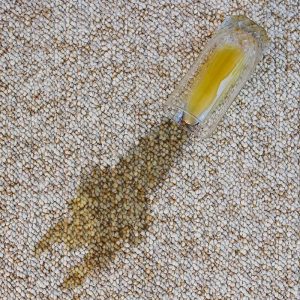

5. Always acknowledge your child’s feelings’ and frustrations and respond with empathy. Respect them in ways that the child understands and gets comforted. Demonstrate and guide them through skills necessary to resolve their own problems.
Mom: Oh dear! You spilled your favorite orange juice
Vinay: Yes mom, I’m sorry. I am sad now
Mom: So, will you be careful next time, honey.
Vinay: Yes Mom
Mom: Now do not be sad. Let’s get some more oranges from the fruit shop and squeeze out some fresh juice!
6. Ensure a safe, healthy and nourishing environment. Daily schedules must include fresh air, fulfill physiological needs for motor & sensory activation via exercises, adequate rest and nourishing meals.
(Father and daughter go cycling)
Rima: Yippe! It’s weekend fun!
Dad: Yes and we shall stop at the nearby garden to smell the flowers and watch the butterflies.
Rima: And the dew drops too, Dad?
Dad: Yes of course darling. And when we return, we will have a warm healthy bowl of porridge. Yum! It keeps our tummy?
Rima: Happy!!
7. Greet new interests with subtle environmental changes. An environment where parents take steps and make efforts to accept new interests of their children is the most thriving one. You can do so using books, décor, toys etc.
“You wanted to go skating, right Prisha? Look, I have got two pairs-one for you and one for myself. Let us get rolling!”
In conclusion
Do keep in mind that the environment needs to be dynamic with routines changing orderly so that the overall daily schedule should be predictable and comprehensible by the child. This allows the child to anticipate transition and s/he is mentally prepared for it. Play It smooth…
SHARE
Share on facebook
Facebook
Share on twitter
Twitter
Share on linkedin
LinkedIn
Share on whatsapp
WhatsApp
Last Chapter
Next chapter