
Formative Years
Fostering Positive Attitude
Chapter 1.3
Share on facebook
Share on twitter
Share on linkedin
Share on whatsapp
Its 6 pm in the evening, Dhruv comes rushing home after a fun game of hide and seek with his friends. 30 months old Dhruv knows that as the sun has set, he must return home. He knows its evening and Daddy would be back home soon. He can also tell that it is time for watching his favourite show and eating mummy’s tasty snacks. So, he rushes to help mummy set the table.
Let’s Reflect
How has Dhruv learnt his father is coming home and his favourite show would be on? How is Dhruv predicting the days’ activities when he cannot still read a clock?
The answer to the questions put simply is:
Your child is the architect of their own brain, piecing together the puzzle and reacting to the outside world.
Do’nt fret, this article will explain what it means and more but first let’s begin with a simple question!
Do you believe you have a long-lasting impact on the lives of your children?
Yes! So, let us make it positive!
How do I do that you ask?
You guessed it right, by fostering positive attitudes!
What will this do?
Development of a whole child
One of the guiding principles for the development of the “whole child” focuses on unfolding and progression of learning of the child. This is seen to be more important than the product.
What helps my child to learn better?
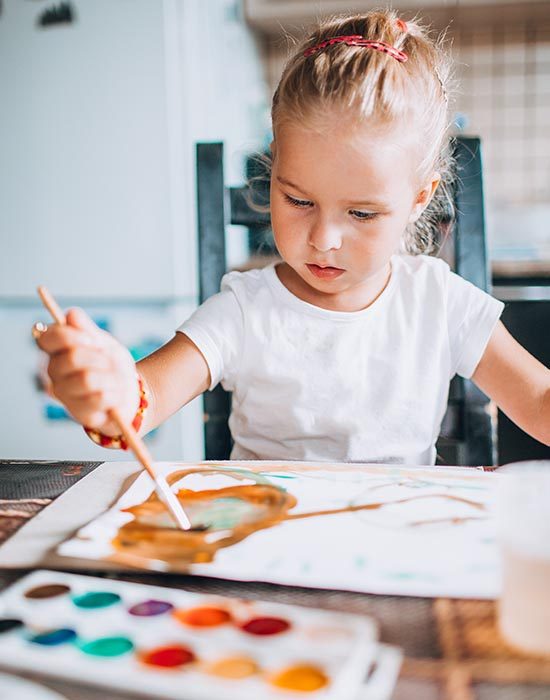
Curiosity is one of the fundamentals of learning. Children are born with the interest to explore irrespective of an adult intervention. Letting them unearth the ways of life for themselves is one of the best ways to promote their sense of discovery, learning and independence. This process of exploration has a Domino Effect!



What is the Domino Effect?
A domino effect or chain reaction is the cumulative effect produced when one event sets off a chain of similar events. Putting it simply — it is a falling row of dominoes.
Applying the same to your child’s development, what happens at one stage of development influences the next and so on and so forth. A simple movement of the body which allows the baby to understand cause and effect enables him/her to switch over to more complex ideas through mastering his body.
For example, your child first learns to balance, then walk and eventually hops, run, skips and jump.
What happens after curiosity is developed?
Once the ball to discovery is set rolling, the child will always be keen to experiment. They will:
- naturally learn through their mistakes
- strive for achievement
- interact & share with other children
- develop an understanding of complex concepts of disagreement, and ways to deal with one’s feelings.
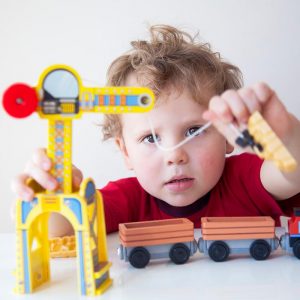
Say, for instance, as simple as opening or closing the lid of the kitchen containers. It could be very fascinating and amusing to them. So, they will keep trying to open the jar by turning it in all possible directions or using force to pop it open.
This will help them understand the cause and effect while seeking guidance from adults or siblings. This goes on until they finally succeed in the task independently.
Sometimes…
In cases where children who do not meet the developmental milestones, early interventions can make a huge difference to their quality of life. With the help of experts, parents have high possibilities to channelize the energy of the child towards overcoming the potential problems/delays in speech, behaviour, social interaction, motor skills etc.
For instance, some therapies can mould the fine motor skills for better grip and movement as per age. Many activities, like working with clay, working pencil mazes, and threading beads, will increase dexterity and build fine motor skills.
You might have questions like what is my role as a parent? Why do these early years matter so much in developing these positive attitudes?
Our next articles answer these questions and more, so read on…
SHARE
Share on facebook
Facebook
Share on twitter
Twitter
Share on linkedin
LinkedIn
Share on whatsapp
WhatsApp
Last chapter
Next chapter