
Early Learning & Development
Intentional Teachings
Chapter 3.9
Share on facebook
Share on twitter
Share on linkedin
Share on whatsapp
Learning and development is a continuous process wherein children surpass their current abilities into acquiring new skills by broadening their horizon of ability and knowledge.
Intentional Teaching: invokes the following image in our mind:
“The educator (parents) using a structured formal approach to impart knowledge and skills and the children learning them primarily through rote and repetition.”
Let’s Reflect
However, as per the early years concept “intentional teaching” is all about being deliberate, thoughtful, and purposeful in course of imparting age appropriate knowledge and skills to your child.
Here, children’s interests and agendas are taken as ‘the starting point for an ongoing piece of rich learning. This interest may come from the child and/or can be picked up by the parent whilst sensitively responding to the child’s emerging interest.
Around the area of interest are some of the ways the parent can help their child to build upon an understanding around their area of interest is by:
– Making suggestions,
– providing relevant materials and tasks,
– engaging in meaningful conversations’
During play, parents can take up the role of the researchers:
Closely observing their child, helps them decide how to extend their learning both in the moment and by planning varied play environments. Parents must figure out how to quietly intervene to help their child connect contexts to both everyday happenings as well as academic content. This leads to further cognitive, social, and emotional development.
By strategically enhancing play and probing questions that challenges the child’s thought process, parents create meaningful learning opportunities to assist them draw an understanding between their observations, ideas, and decision-making.
Besides curating stimulating and imaginative learning environments and ensuring that their child has adequate time to play, parents also need to:





1. Know their child:
Each child has its own set of– needs, strengths, interests, and desires. Engaging in ongoing conversation not only enables the parent to know about the child’s skills but also allows them to better understand the necessary requisites for their child’s continued growth. They are then able to curate environment that facilitates opportunities for their child to engage and be challenged.
2. Reflect on his/her ‘gaze’: It is important to have realistic expectations for your child.
Intentional teaching is not about intentionally parent deciding one fine moment that let me “teach” my child “this”.
It is more than just your ‘gaze’ i.e. it is all about:
- what you as parents view your child’s perspectives and therefore
- in what way you respond to and
- how you respond when working with your child.
Parents need to be stay aware and updated about pedagogical strategies, an understanding of how children learn, and knowledge of their child’s individual learning capabilities and processes. Parents also need to recognize their child’s intentions and be in tune with his/her interests so that curriculum is co-constructed rather than parent determined. Co-construction involves more than just learning alongside and from your child – it requires parents to support their child with deep-level conversations to critique understandings.
3. Are knowledgeable and articulate about what they want to achieve with and for their child:
For being intentional in their teachings parents needs to have a clear sense of what they hope to achieve. Being intentional usually originates in parents’ aspirations for their child – knowing what valued learning they are aiming for their child to imbibe. Parents then need to support or scaffold their child towards those learning outcomes. This means ‘incorporating challenging and achievable goals via playful activities, routine household chores and maintaining ongoing interactions with their child. Parents can take a step further to purposefully setting up the environment, provide materials, and make numerous decisions for their child to meet the desired learning goals.
Intentional teaching is a dynamic process of decision-making that is a mix of both planned experiences and spontaneous responses to the child’s emerging inquiries. Parenting actions and interactions must be constantly adjusted to adapt to child’s responses and current level of competence in ways that promote parents’ aspirations and learning intentions.
4. Select teaching strategies that match the goals they have for their child’s learning:
Intentional pedagogies
- Develop your knowledge of how children typically develop:
Parents should stay aware and updated with various pedagogical strategies, an understanding of how children learn, and knowledge of children’s individual learning capabilities and processes. Parents should try and stay in tune with the child’s intentions and interests for determining the goals of achievements. This helps to co-construct the learning out comings rather it being parent-driven - Consider a range of play opportunities beyond your child’s free play:
You could consider modelled play (for example, participating in role play) and purposefully-framed play (such as using play resources to introduce key concepts, issues or ideas), as well as adult-initiated and adult-guided experiences. - Select pedagogies by drawing on your deep knowledge of your child’s experiences, interests, and learning and development.
Blend teaching, learning and play by being involved in your child’s learning and infusing your expertise and knowledge to it. Aim for subtle co-construction and challenging of ideas through open questions and allow pedagogies and interactions to develop organically and intuitively as you engage with your child and his/her thoughts, imagination, focus and intentions.


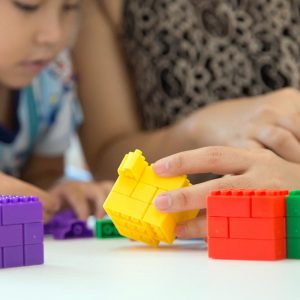


5. Create opportunities for sustained shared thinking:
Sustained shared thinking is about encouraging opportunities for your child to think deeply about what they do. This helps in extending their thinking skills and their understanding of the learning that has occurred. By changing the questions that they ask – from ‘what is this?’ to ‘why do you think’ – parents increase the opportunities for sustained shared thinking to occur.
Intentional parents might:
- sensitively observe their child and intentionally plan to deepen, extend, and sustain his/her interests through provocations, tools and resources, documentation and dialogue
- organize and maintain the physical environment to ensure access to appropriate resources and optimal support for positive experiences
- create specific challenges and plan interactions designed to extend your child’s capabilities and higher order thinking skills
- participate in child-initiated play activities and develop complex imaginative role play narratives with him/her
- model and demonstrate skills as well as providing specific direction or instruction
6. Use their assessments of your child’s learning to inform future action:
Parents from time to time adopt should get a knowhow of their child’s learnings. This is instrumental:
- To analyze their current competencies and in determining the further plan of learnings. Parents can engage in informal assessment as they observe, listen, and interact with their child. After accomplishment of each level of skill or understanding parents (focusing on intentional teaching) thoughtfully curate further course of action for their child to achieve next set of developmentally appropriate goals
- To gain an understanding as to how their child engages in and relates to a particular type of learning process. This is decisive in determining whether to continue or to adopt alternative pedagogical approaches. Sometimes it may require for you to step back, reflect and plan what might seem more appropriate and matches the child’s style of learning to achieve desired results.
SHARE
Share on facebook
Facebook
Share on twitter
Twitter
Share on linkedin
LinkedIn
Share on whatsapp
WhatsApp
Last Chapter
Next chapter