
INFANT – PSED
Personal Development In Infants
Chapter 4.2
Share on facebook
Share on twitter
Share on linkedin
Share on whatsapp
Mom leaves for some outdoor errand. She kisses her 7-month-old Mehul and promises to be back soon. Mehul gets into uncontrollable whining. His dad “I understand you’re upset because mom has gone away for a while. Even I am missing her.” The baby looks up and then starts sobbing again. Dad fetches Holly, his favourite stuffed toy Giraffe
Mehul calms down and reaches for Holly and holds him close. Sobbing stops and Mehul relaxes. His dad gets a box of other toy animals. Mehul crawls over to the box and tips it over. Finds the rest of the giraffe family and soon is engrossed in his world of play.
Let’s Reflect
Mehul’s dad helped him cope with separation. He gave words to his feelings, and empathised with him.. Instead of being pushy, he let him find solace within his familiar belongings.
This way, he not only made his bond stronger with his little boy, but also enabled him to develop “trust” that going away from his mother is permanent. She will return back to shower him with all the love!
What is Attachment?
‘Attachment’ is a complex, on-going process which evolves with the child’s age. However, w.r.t to the context of early years, in essence it involves closeness and responsiveness to infants.
Research indicates, warm, positive interactions stabilize connections in the child’s brain, leading to strong neural pathways. The



Attachment Behavior
An affectionate bond between the two that endures through space and time and serves to join them emotionally.
Infants are regulated to promote attachments for themselves. For example:
– A newborn’s cry is hard to ignore…
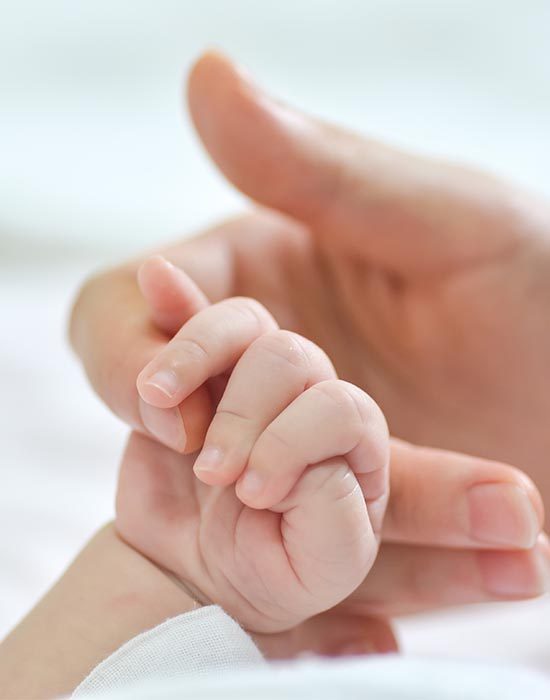
– Touch their tiny finger, and most likely you will have them curled around yours.
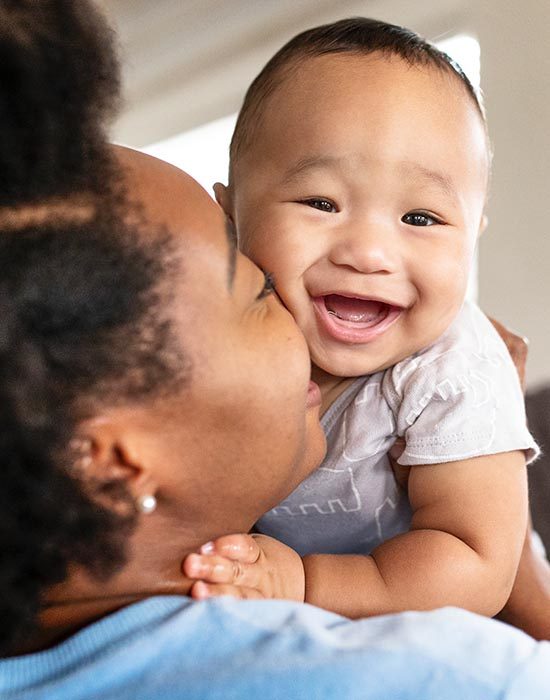
This feeling of closeness, usually gets initiated right from the first time the mother/father holds their new-born. In an ideal situation, parents and the new-born soon get acquainted and fall in love in practically no-time. For an infant it is usually the mother with whom the baby forms the first and primary attachment.
Child with a secure attachment, learns to rely on his/her parents for safety and comfort and uses these important attachment relationships as bases from which to explore and learn about the world.
Significance of Attachment
Infants are not yet proficient enough to look after their nourishment and care. They are dependent for their sheer survival. Secure attachment is nature’s way of ensuring that at least one person (usually, but not always, their mother) is consistently responsive and sensitive to their physical and emotional needs.
Through these mutually responsive behaviours, which include touching, fondling, eye contact, as well as feeding, infants and adults form an extremely close relationship.
Behind the Scenes:
Once babies can distinguish their mother from other people, two new worries begin:
– First, at about 8 to 10 months of age, babies begin to fear strangers.
– By 10-12 months of age the baby knows who his/her mother is and fears losing her.
Both of these fears indicate the infant’s ability to discriminate and recognize difference and therefore are obvious signs of mental growth.
Building Resilience early on
It may be insightful to know that there is an interplay between dependency, mental development, and trust in the process of attachment.
When an 18-month-old child is clinging to his mother and crying for her not to go (obvious dependent behavior), he is also saying “I know I need you” (a mental function). . Fear is the baby’s naive understanding that objects gone from sight still exist. They are unable to foresee that a separation is only temporary.
Babies and children are vulnerable and become resilient and confident if they have support from parents and other secondary attachments.
Saying Good-Bye? Does a baby even understand what it means?
Infants gain courage to explore and participate (fostering mental and social skills) by using their parents as a home or trust base. Checking in on the babies periodically provides renewed energy to move out and continue exploration.
It is important when the parent is about to leave that he or she does not sneak away. By saying good-bye, the parent helps the child appreciate that the departure is predictable. Gradually the child learns that coming back is also part of saying good-bye.



What Parents Can Do to Support Personal Development in their babies?
Tickle their senses:
Your 6-month-old has just begun on his solids. Letting them hold, feel, squish, play with their food is indeed messy and seem to be taking hours of feeding time, but hey, it’s extremely critical in building their independence and sense of achievement and self-awareness. They are getting to touch and savour things which they have only seen going into adults’ mouths!!
Who Am I?:
Let mirrors be their teacher. Try and place mirrors (with safety precautions of course!) placed on the floor or hand-held, and engage your baby with it. Point to his hair, eyes, nose etc, for him/her to get familiarised with his/her own self. This will hold their interest for long periods of time as your baby reflects on his/her own identity.
SHARE
Share on facebook
Facebook
Share on twitter
Twitter
Share on linkedin
LinkedIn
Share on whatsapp
WhatsApp
Last Chapter
Next chapter