
Toddlers – PSED
Personal Development In Toddlers
Chapter 5.2
Share on facebook
Share on twitter
Share on linkedin
Share on whatsapp
A 20-month-old Vedant, is at a birthday party. Happily playing he suddenly looks around for his parents, only to find them not being around. He gives out an anxious cry to which his mother responds “just a minute Vedant, getting some snacks for you” Hearing his mother’s familiar voice calms him down, but then he whines again as no one appears. Dad rushes to his side hurriedly carrying marshmallows for him. Mother hurriedly comes too, apologizes and offers him his favourite cookies. Vedant relaxes and happily indulges into his food. Parents whilst bestowing a warm smile also give him a tight hug, as if saying “we will always be around”. Vedant reciprocates with a kiss and snuggles closer to them.
Let’s Reflect
The Juxtaposition: Very young children are both competent and vulnerable and immensely rely upon consistent care and positive relationships from their parents.
The process of attachment is an interplay amongst dependency, mental development and trust.
No one person can provide everything a growing child needs
Attachment is a continuous, on-going process which evolves with the child’s age. However, w.r.t to the context of early years, in essence it involves closeness and responsiveness from parents.
Research indicates, warm, positive interactions stabilize connections in the child’s brain. These very early connections in the brain are the ones related to “attachment”; hence high- quality, responsive care must be provided for this critical process called attachment to thrive. However, no one person can provide everything a growing child needs and children can form close attachments with several people.
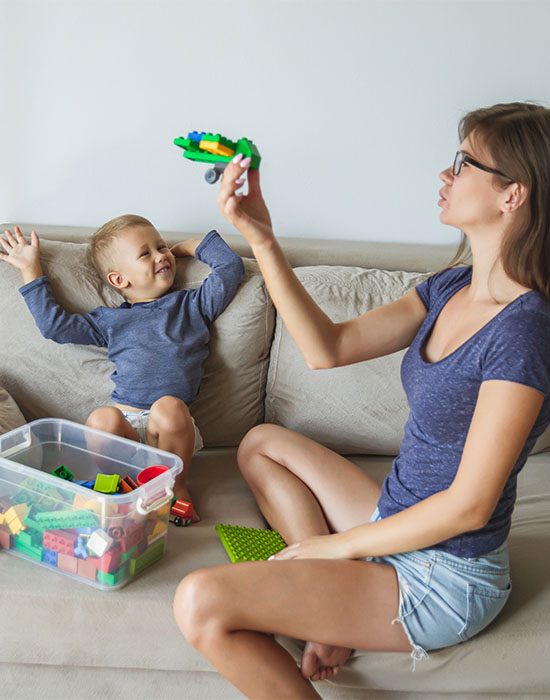




Attachment Behaviour: Leads to Foundation of Independence – A focus of the toddlerhood.
A Common Scenario:
As her mother puts on her footwear, Kavya (a toddler) clings to her mother, crying for her not to go (dependency). Internally “I need you” (a mental function) is what is going on in Kavya’s mind. Her dad distracts her with a popsicle making task and she soon gets absorbed in it. Couple of hours later her mother returns and is relieved to find her playing happily.
As her mental capacity grows, Kavya comes to an understanding that her mother’s absence is only temporary, and eventually she will be back home (from attachment comes trust).
Now she happily waves her goodbye, and gets onto her normal goofing around (From attachment also comes autonomy, or independence), knowing her mother will be back by her snack time.
The various attachment behaviors and coping skills that develop during these years, indicate how toddlers are establishing trust in others and, at the same time, becoming self-reliant.
What Parents can do to Support Personal Development in toddlers?
- Help him taste the sense of achievement:
Taking into consideration your child’s interests and preferred ways of learning, provide him/her with an array of open-ended resources such as ribbons, straws, boxes, baskets, shells etc. Let them figure out what he/she wants to do. Just remember to not miss that proud wide gleam as he brings to you a surprise gift! (wrapped the box with some shells inside!) - Boost her Independence & self-esteem:
She wants to use spoons to eat her meal by herself? Encourage her, and appreciate her efforts. Even though some bites go on to the floor instead her mouth, and time spent at the dining seems to go on forever, but just focus on the fact that it is the learning process that is important, not the end result!
SHARE
Share on facebook
Facebook
Share on twitter
Twitter
Share on linkedin
LinkedIn
Share on whatsapp
WhatsApp
Last Chapter
Next chapter