
INFANT – Physical Development
Physical Development in Infants – Implicit
Chapter 4.8
Share on facebook
Share on twitter
Share on linkedin
Share on whatsapp
From instinctively sucking anything brought near her mouth, now at 6-months of age, Jenny valiantly shifts her weight on one arm as she reaches for her mother’s dupatta. She is able to hold on it to for a couple of minutes, before she loses her balance and rolls to her back. Quickly gaining composure she just wowed at her own attempt and achievement!
Physical & Motor development is by and large notable…
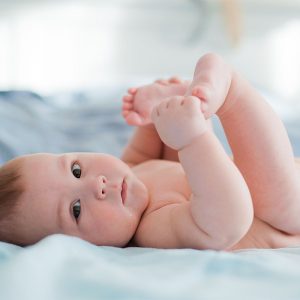
Infants can be observed making voluntary movements and refining their physical skills. For newborns, parts of the body rapidly grow at varying rates (physical development). At the same time the young child needs to keep pace in terms of co-ordinating the movements of the body which is constantly evolving (motor development).
Let’s Reflect
However, growth is not just a process of getting bigger:
It also involves maturing of the brain, and growth within it that moves from the brain stem at the base of the neck to the cortex in the frontal area. Movement gradually advances from being less reflexive and more voluntary. These abilities to use and control one’s body is what is known as “Motor Skills”.
With the development & refinement of motor skills young children are better able to clarify their needs and explore the world.
Infantry Reflexes are an indicative of brain growth.
Everyday behaviors and reflexes also provide significant insights in brain development. Moreover, advancement in neurosciences has established that by the age 3, a child’s brain is 90% the weight of that adult’s brain.
Understanding infant’s physical development can open up opportunities for parents to enhance the care they offer their new-born.
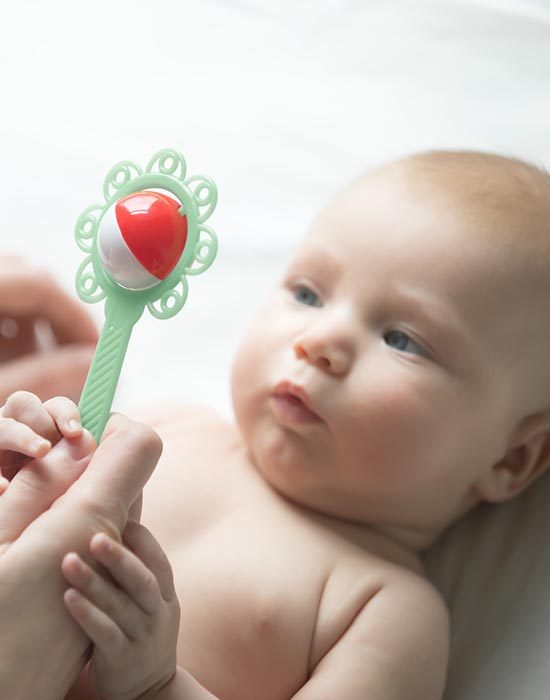
Initial movement of a newborn is mostly about reflex action
A newborn actively participates in the world and responds to his/her environment in a reflexive way. Reflexes are in-born, involuntary responses to varied stimuli.
In Infants, Reflexes serve several functions:
- Protective Reflexes: The ability to blink, swallow and clear their face for breathing.
- Precursor Reflexes: Kicking of their legs alternatively. This action is a precursor to a later skill (walking)
- Reflexes present at Birth: These reflexes are specific to new-borns and get altered or disappear as the growth happens.
- Reflexes formed after birth: Some reflexes present at birth last only for the initial few months after which they get completely faded off. New reflexes are formed instead.
Reflexes at Birth
– Rooting Head turns toward things that touch the cheek.
– Sucking Tendency to suck things that touch the lips.
– Stepping Legs move when an infant is held upright with feet touching the floor.
– Palmar grasps Hands curl around objects placed in them.
– Babinski Toes fan out if the sole of the foot is stroked.
– Moro If head support released, arms fling out and seem to grasp.
– Startle Arms fling out in response to sudden noise.
– Tonic neck (fencing) Head turns to one side and arm extends while other arm flexes.
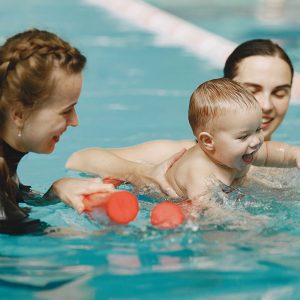
– Swimming movements occur when infants are placed in water.
Reflexes at Birth
– Reciprocal kicking If infant held outward, kicks legs alternate (bicycling).
– Neck righting if the head turns, the body follows.
– Parachute If infant is falling, arms go forward.
– If an infant is placed on the stomach, arms and legs extend in “U” position.
Reflexes thus, are not only indicators to parents about their newborn’s behaviour, but they also serve as the basis for later physical & motor developments.
SHARE
Share on facebook
Facebook
Share on twitter
Twitter
Share on linkedin
LinkedIn
Share on whatsapp
WhatsApp
Last Chapter
Next chapter