
Preschoolers – Physical Development
Physical Development in Preschoolers
Chapter 6.7
Share on facebook
Share on twitter
Share on linkedin
Share on whatsapp
4-year-old Dhir’s days are filled with moving, jumping, running, swinging, clapping and every place becomes a playground. Even the booth at a restaurant he was at with his parents became the opportunity to imagine being a sea creature in a cave! He slid around in the seat and disappeared underneath. Of course, the parents were embarrassed, but it’s the business of early childhood!
Let’s Reflect
During this phase, your child will develop increasing strength and coordination
Significant physical growth and motor development occur in the preschool years. The body becomes less round as it gets taller, stronger, and his/her muscles become more coordinated.
“Look at me/watch me/see me” is the most popular line of the preschoolers!
Wants to:
- Show you his arm and leg movements while singing a song or a jingle
- Give cues to turn around or move from left to right.
- Show you his/her hopping or rolling
There will be some new and some repeats, as your child takes immense pride in showing you acts that are joy to him/her.

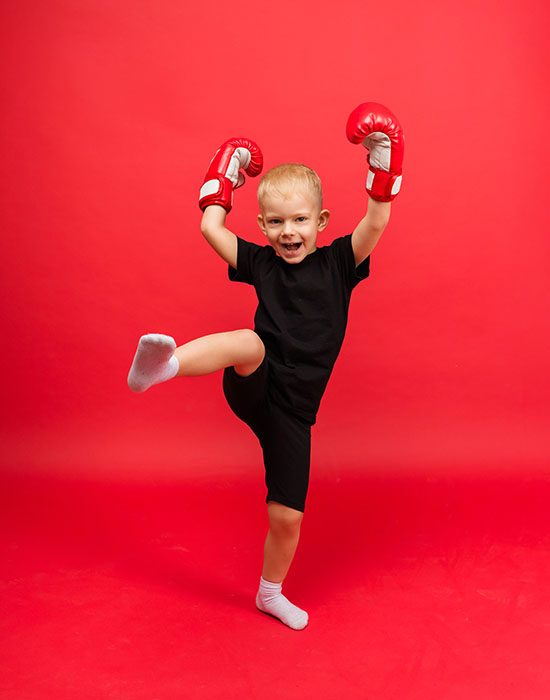
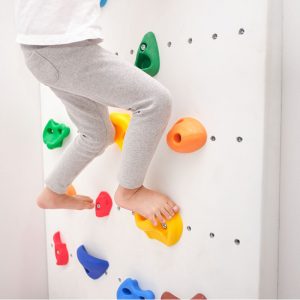
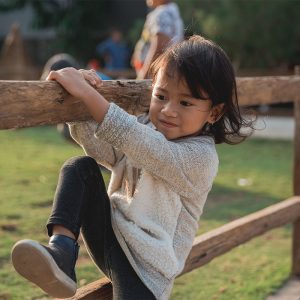
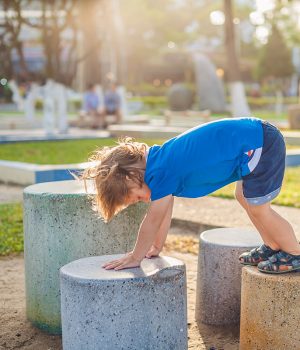
For preschoolers, play that deliberately involves mastering of motor skills is emphasized.
With the strengthening of arms and legs, the child gains increasing control over his/her muscles and with it comes the ability to refine movements. Owing to growing competence in motor skills, young children begin to show interest in more coordinated activities like skipping, balancing, and playing games that involve throwing and catching a ball.
As the leg muscles grow stronger, 3 to 4-year olds can jump and hop higher. Many can even hop on one foot for short periods of time.
Most children can throw, catch, and kick a ball; Owing to better upper body mobility, catching and throwing abilities improve in speed and accuracy.
3 to 4 years old can climb up stairs using a method of bringing both feet together on each step before proceeding to the next step. But by 5, the child attains the control to take one step at a time, just like an adult!
Besides, as the whole-body coordination improves, children of this age can now pedal and steer a tricycle (or bicycles) and some can even skate!
Note: riding a tricycle is not as simple as it might seem to an adult. It requires controlling multiple limbs, balancing, and cognition. In fact, it is quite challenging a task at this age, as the child is still in the process of coordinating complex movements.
Advances in gross motor skills help children move about and develop a sense of mastery of their environment, but it is fine motor skills that permit young children to take responsibility for their own care.
- Acquiring the ability to dress/undress independently, are able to manipulate clothing fasteners, like zippers and snaps.
- The wrist and fingers are ready to use “kid” scissors (blunt, round-edged)
- Refinement in eating skills. Adept in using forks, spoons, pouring water for themselves
- Can now be seen holding crayons in the proper way rather than just grasping with fists.
- Can carry out twisting motion, such as opening door knobs, container lids with a firmer and more confident hand movement.
- Can draw simple stick figures and copy shapes such as circles, squares, and can make large attempts at writing alphabets.
SHARE
Share on facebook
Facebook
Share on twitter
Twitter
Share on linkedin
LinkedIn
Share on whatsapp
WhatsApp
Last Chapter
Next chapter