
Learn-To-Move and Learn-Through-Movement
PHYSICAL & MOTOR DEVELOPMENT
Birth to 6 Years


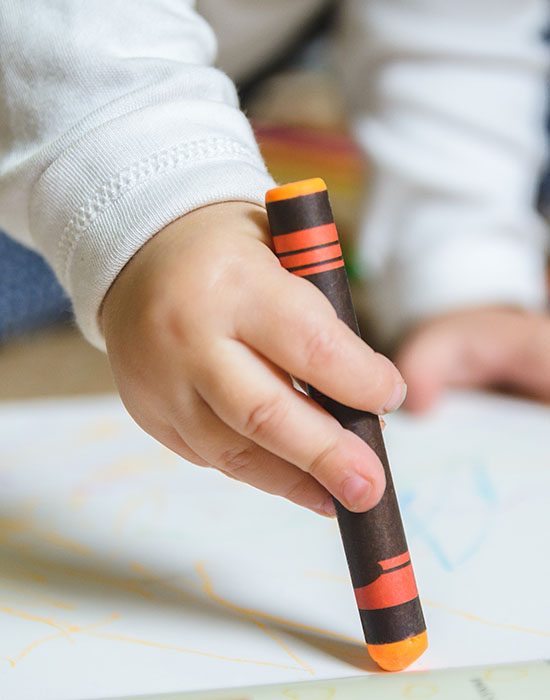
PHYSICAL & MOTOR DEVELOPMENT
Things that are annoying to you but, extremely beneficial for your baby’s development:
- A 6-12-months old, has to take everything into their mouth
- A 12-18-month-old, leaps to pick up every tiny object in sight and within reach
- A 2-year-old wants to do everything on their own, even change his/her own clothes!
- A 3-year-old is unable to kick a ball! It is a simple thing to do, right?
Kicking requires “hand-eye co-ordination” which is a part of physical development. The child under the age of 6 learns best when s/he relates physically and emotionally to material. Otherwise, normal way of functioning can be at risk in the face of physical development delay.
The acquisition of motor skills is among the most remarkable achievements in the first years of life.
Through movement (either locomotive or non-locomotive movement) children gather information that will help them acquire knowledge, also help them to express themselves and they expand ideas about themselves and the world.
When they feel safe and secure, young children use their brains, muscles, and senses to explore their surrounding world.
Infants
Toddlers
Preschoolers
Kindergartner
Birth – 1 Yr.
Infants

Instinctive
Chapter 4.8
Physical Development in Infants – Implicit
Everyday behaviors and reflexes also provide significant insights in brain development. Advancement in neurosciences has established that by the age 3, a child’s brain is 90% the weight of that adult’s brain. Understanding infant’s physical development can open up opportunities for parents to enhance the care they offer their new-born.
The Obvious
Chapter 4.9
Physical Development in Infants – Explicit
A new-born who has just mastered the art of sitting up, is still dependent on others for bringing objects within her reach to strike an engagement. Pivoting on her tummy is the first sign of your baby “being on the move”. Next, she will try to creep by pulling herself forward with her arms.
1 – 3 Yrs.
Toddlers
Backstage
Chapter 5.7
Physical Development in Toddlers
This is the phase when your toddler is naturally consumed in exploring and establishing his/her physical development. It would seem like your child is on repeat mode! Going over and over again on the skills s/he knows. This is necessary to ensure strengthening of those connections in the brain.
We Hear You!
Chapter 5.8
Supporting your Toddler’s Motor Skills
Motor skills and cognitive processes influence each other and are manifested mostly through behavioral motor modalities. Hence, apart from the maturational level of the Central Nervous System, other variables influencing motor behaviour include…
3 – 5 Yrs.
Preschoolers
Backstage
Chapter 6.7
Physical Development in Preschoolers
“Look at me/watch me/see me” is the most popular line of the preschoolers! Significant physical growth and motor development occur in the preschool years. The body becomes less round as it gets taller, stronger, and his/her muscles become more coordinated.
We Hear You!
Chapter 6.8
Supporting your Preschooler’s Motor Skills
Preschooler’s are active and energetic and often prefer to run from one place to another rather than walk. The love to play and move freely assures tremendous improvement in their cognitive and affective development. Play experiences serve as a means by which preschoolers will learn about themselves and their environment.
5 – 6 Yrs.
Kindergartner
The Gains
Chapter 7.7
Physical Development in Kindergartener
Kindergarten is a big year for learning to do new things and for gaining skills; as motor-skills become important for acceptance and leadership. The age of 5 or 6 marks the beginning of your child’s formal schooling. You might soon have trouble keeping up with your budding offspring.
Co-ordination
Chapter 7.8
Kinds of Motor Development
For efficiency and effectiveness in body movement, all the parts of the body must work together harmoniously through physical activities and in this instance, sensory modalities like vision, touch, feel, some into play. It is vital that parents and other caregivers introduce any activity or healthy food in a positive and cheerful way.