
Developmentally Appropriate Practice
Play: The Natural bent to Learning
Chapter 2.11
Share on facebook
Share on twitter
Share on linkedin
Share on whatsapp
Mamta is playing with her 5-month-old, Aniket who loves his colorful ball. “Let’s watch it roll,” Mamta suggests. She throws the ball over the floor so Aniket can see it. His little arms and legs go like egg beaters! As the ball comes near Madhav, he grabs it and begins to put it in the mouth. He fiddles and admires at the different texture & colours on the ball as if tracing a pattern. Soon, he gets tired and turns his head away. Mamta tries to draw his interest back and continues to shake it in front of his face. Aniket closes his eyes and begins to wail. “Okay, I get it. Time for a break,” says Mamta and picks him up to cuddle
Let’s Reflect
Consequences of forgetting how to engage in free spontaneous play can be profound.
Play has been a tradition for as long as mankind can remember. Unregulated, unstructured, it has been passed on from generation to generation. Even during periods of immense challenge children always find their way to be playful says psychologist and researcher Joe L. Frost. But he warns that in the face of too many structured activities, lack of outdoor play, excessive screen time, and increased academic pressure, this age-old tradition is fading.
Play is the Work of the Child
Play is a way of recreational engagement for children. The child is free to choose/create/initiate an activity. Children always exercise a certain amount of control over play, or the activity is not play at all.
There is no right or wrong way of playing. What looks simple to parents can be a challenging thing for little hands that are learning fine-tuning moves.
Complicated imaginative component lies behind their simple acts of imagination.
Play helps children hone their abilities and instills a feeling of self-worth and competence. Because it is voluntary and fun, play gradually builds focus and concentration in children thereby supporting their learning journey. It nurtures the young minds’ imagination and drives a sense of adventure and a ‘go getter’ attitude in them. Play is, therefore, a significant medium for learning and development in a child.

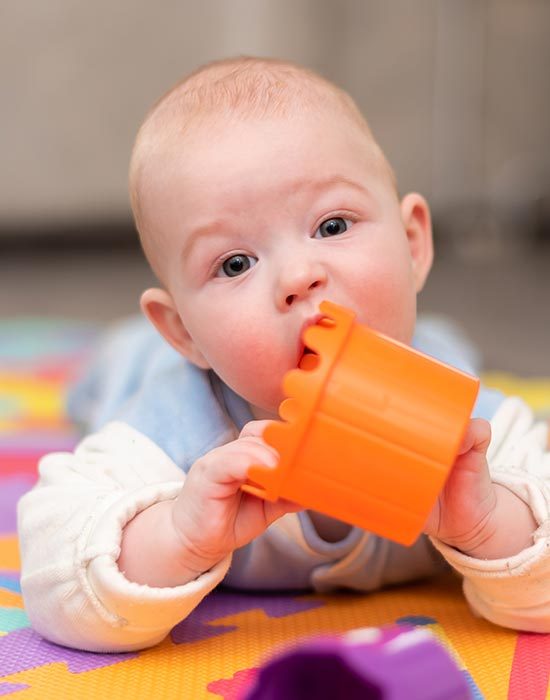


If they want to experiment, let them.
Some deep facts about otherwise ordinary play routines:
- Creativity, imagination, assimilation, motor skills, language skills are some of the key foundation aspects associated with play dough or clay, dressing up and enacting a home scenario with the doll house
- Walking on a plank (or a log or a line drawn out of painter’s tape) is an excellent way to gain balance. It further assists the child to gather control of his/her bicycle.
- Trying to carry a bunch of toys at one go, requires a certain discipline and fine tune’s the body’s movement, strength, flexibility, and coordination skills
- The simple play of sand and water organically teaches volumes about the properties of water and sand: fluid, grainy, takes the shape of the container and so much more
- Sorting a bunch of household knick-knacks as per shape, color, size, OR stacking books, pieces of blocks and letting them fall involves developing logic, motor-skills, coordination
Therefore,
The idea is to spend time doing things with them that they like, and the learning will follow. (All this without compromising on the fun quotient!) The beauty lies in observing them experiment, engage and in the process make sense of the world around. Moreover, to a certain extent, play reflects the prevailing “image of the child”; how they play and the materials they play with.
- Watercolors can be splashed and then mixed with fingers to form a new color.
- The cushions are lined up to form a bridge, they need to safely cross
- How a glass sticks to the mouth on sucking in air
- What happens on squeezing a toothpaste
- Why the pebble sunk but a paper boat floats in water?
- Where does the Sun go when Moon comes up?
- What happens on touching a stack of containers?
Simple Math for Early Years- A perfectly balanced equation!
Learning = Play
Play = Fun
Hence, Learning = Fun
During the initial days of life, every new object introduced to a child is like a piece of exploration and excavation. Therefore, they are often found doing things the unusual way.
Young children explore their surroundings through their senses — seeing, touching, hearing, smelling, and tasting. The more they explore, the more they learn.
Having said that, it needs to be noted that no two kids belonging to even the same family grow up at the same rate. Each child develops in its own way and its own pace and time.
It is not always because of teething
Infants have the habit of putting everything in their mouth. This is because they’re trying to explore through their sense of taste. It is not always because of teething. Given your baby can control his/her lips and tongue, so s/he mouths and gums objects as s/he pleases.
Until your baby is about 8 months old, s/he can’t really use her/his hands and fingers to explore objects. Even if s/he can grip, they don’t have the ability to stroke, poke, or prod. Hence, reaching out to put the object in the mouth is his/her sensor (Is it soft or hard? Can I eat it? Does it make a sound?”) They also learn what feels good and tastes good, and what doesn’t — so your child will only mouth an empty container once.
Fact check-The mouth has more nerve endings per square millimeter than any other part of the body.
Mouthing or putting things in the mouth is the baby’s way of preliminary testing or experimenting. It is not only normal, but also signals a growing interest in the world around them.



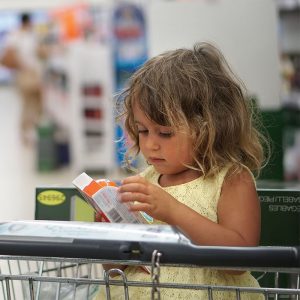
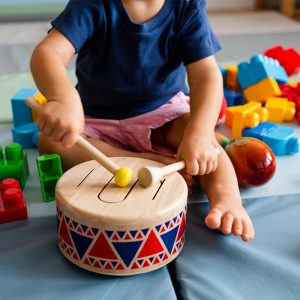
Toddlers are little investigator Agents
Kids start understanding the concept of toys and play around their second birthday. Bring them any new toy and despite you showing them how to play, the child will first observe, touch, feel, fiddle around with it for a couple of days, smell, or might even try to put in mouth to taste. After satisfactory inspection and know how, will a child engage in actual use/play of the object.
A toddler’s play varies in pace and focus. Sometimes they sweep past things quickly and move on. Other times they halt and admire, wonder, fidget with an object for hours. This means that simple activities with a toddler – like grocery shopping – might take a bit longer than you think.
“Learning is all about play and play is nothing but voluntary fun!”
This definition explicitly uncovers the necessity of play. Feeling pressured to cover the curriculum:
Recite the “Humpty Dumpty” rhyme
Parents may limit vitally important opportunities for the child’s play!! Declining opportunities of play would invariably lead to diminishing the growth of the whole child.
You love your children
And care what they learn today
If you really want them to learn
Let them free, let them play!
SHARE
Share on facebook
Facebook
Share on twitter
Twitter
Share on linkedin
LinkedIn
Share on whatsapp
WhatsApp
Last Chapter
Next chapter