
Developmentally Appropriate Practice
Raising a Kindergartener
(5 to 6 Yrs.)
Chapter 2.10
Share on facebook
Share on twitter
Share on linkedin
Share on whatsapp
The children in a playground are passing the ball to one another. Each one has to wait for their turn. Tara passes the ball to Vinny. Vinny tries to dribble the ball, before passing it on to Tanmay. Tanmay then, instead of throwing, tries to kick the ball back to Tara. Now, Tara who had been eyeing on the swing had to head back her attention towards the ball, just passed to her. So in here Tara’s executive functioning skills are in action:
- Patiently wait for her turn
- Upon her turn again, she had to focus her attention back on the ball from the swing
- Adapt to how Tanmay kicked the ball to her instead of the usual throw process that was happening.
Let’s Reflect
This is a period of opportunity, challenge and change as they make great intellectual leaps. They undergo a major shift which can shape their overall perspective towards lifelong learning.
Science tells us that brains are built not born
In the centre of this dynamic architecture are sort of skills called executive functioning and self-regulation. These are the key ingredients to life time performance. It is not just about learning language or number or learning colours. We have to work effectively with others, with distraction with multiple demands. These are the skills that contribute to productivity.
In the absence of these skills, kids can tell rules but can’t actually use them.



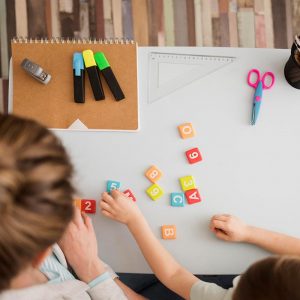
Time to work upon your child’s Self-Regulatory Skills
Self-regulation is as important as academics (Bassok and Rorem, 2014).
Researchers and educators have used the broad term self-regulation to refer to the processes involved in intentionally controlling attention, thinking, impulses, emotions, and behavior.
Self-regulation allows children to persevere with tasks even when facing difficulties in problem solving or learning, fatigue, distraction, or decreased motivation. Thus it substantially influences the cognitive and socio-emotional developmental aspects.
No-One is born with executive function skills, but nearly everyone can attain them!
Executive Function Skills are a notable development during the Kindergarten years. They help the brain to prioritise tasks, filter distractions and control impulses. Therefore, these skills contribute to the child’s productivity.
Taking the example of ‘taking turns’ mentioned in the beginning of this article
Inhibitory control: The child has to stop what he or she is doing and let the other child take control.
Working memory: But when it is your turn again, you have to remember what you are supposed to be doing.
Mental Flexibility: If children who are taking turns after you, do something unpredictable, you have to be able to adjust to what you gonna do next
Children who are struggling with these capacities, often look like children who are just not paying attention, children who are deliberately not controlling themselves. If you don’t have self-regulation then you act out and teachers put you in time out and them you miss the learning
Interdependence of Language, Literacy & Math!
The ability to identify the component nature of words and numbers predicts the ability to read (Adams, 1990; Stanovich and Siegel, 1994) and to compute (Geary, 1990, 1993).
Therefore, both oral language and literacy in general, as well as the “language of mathematics,” are important for learning (Vukovic and Lesaux, 2013).
Vocabulary and knowledge of print are both predictors of later numeracy (Purpura et al., 2011).
Similarly, growth in mathematics from kindergarten to third grade is related to both early numerical skills and phonological processing (Vukovic, 2012).
By age 6, children have been exposed to symbol representations that are both alphabetic and numerical, and they begin to gain ability to segment words into phonemes and numbers into singletons (e.g., understanding that 3 is 1 and 1 and 1)(Butterworth, 2005; Sarama and Clements, 2009; Wagner et al., 1993).

What should parents do?
As children further develop cognitively as kindergartners, their growth calls for both similar and different behavior by the adults who work with them. While the educator’s emotional support and responsiveness remain important. Following are some guideline which parents of a kindergartner can benefit from:
Makes significant intellectual leaps
Is always up to take on personal responsibility? “Let them be in-charge of checking all electronics off before leaving the house”
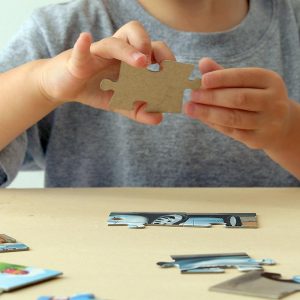
Is now able to navigate through activities independently through self-reasoning and knowledge. Can apply logic to the events and experiences
Eg. “Making jigsaw puzzles independently by taking cues from the image given.”
They learn from hands-on experiences and are now able to make connections, especially across subjects. Hence parents should focus on:
Patiently answering/explaining who/how/why/where to help them understand logic
Child: “How do seeds become plants dad?”
Try and illustrate the information wherever possible for better grasp of concepts
Parent: “How about watching it for yourself. Let’s plant on and observe for a couple of months”
Give instructions without overbearing, for them to work independently but the right way
Child: “I want to do it myself”
Ensure ample opportunities in daily routines/tasks to practice what they have learned. Giving them their due time helps the child gain in all domains: from language to science to emotional development’
Parent: Wonderful! How about growing some juicy strawberries!!”
SHARE
Share on facebook
Facebook
Share on twitter
Twitter
Share on linkedin
LinkedIn
Share on whatsapp
WhatsApp
Last Chapter
Next chapter