
Developmentally Appropriate Practice
Raising an Infant
(Birth to 1 Yr.)
Chapter 2.7
Share on facebook
Share on twitter
Share on linkedin
Share on whatsapp
Anay, all of 5-month-old had just begun to rotate. The proud parents kept objects of his likings all around his vicinity– orange deer, moisturizer bottle, his favorite kitty bib (to which he leapt everytime he was made to wear) to encourage their son’s movements.
Parents (encouraging) – Look Anay, your orange buddy is waiting to play with you. Come -on
Parents (appreciating) – Hey! That’s wonderful. You grabbed your kitty bib to put it before breakfast! Well done!
In the above scene, stimulating his senses on his own, Anay is exploring his environment and learning from his explorations. Parents were nearby to appreciate what he was doing without interfering. They added words to support Anay’s experience.
Without providing particular activities or setting predetermined outcomes, this scene was a perfect example of infant education
Let’s Reflect
Depending on how parents act towards them, babies develop expectations about themselves and others
Newborn (0-9 months) is a phase of complex and rapidly changing needs, where the child is constantly on a lookout for support and a sense of security.
Eg: When your baby extends arms, it is a non-verbal signal for the want to be picked up and held close.
Mobile Infants (8-18 months) are always on an expedition; eager to explore. Make sure you safe proof your house, as these little ones will soon be found crawling in every nook and corner.
Eg: Age old Peek-a-Boo is an excellent way to quench and sustain their curiosity.
Growth and Development
During the first year of birth, babies grow at an astounding rate:
There is development which is obvious to our eyes but parents do not have much of a control over it,
Physically, heads are large in proportion to the rest of the body. After losing 5 to 7 percent of birth weight, infants begin to gain an average of 142 to 170 grams (5 to 6 ounces) a week.
Over the next few days, infants develop their own patterns, alternating from sleep to crying to alertness and returning to sleep. Many infants sleep from three to four hours between feedings, initially requiring from 6 to 10 feedings per day.
They learn to smile – rolls over – sits up – waves – claps – picks up objects – crawls – babbles and some may even start uttering some words.
A new-born understands more than s/he is able to communicate. The bond and trust with the parents, and others around is a part of their social and emotional development. Babies enjoy music, movement, and simple games like peek-a-boo.
By the time the baby is a year old, they have tripled their birth weight and grown around 6 – 8 inches in length. If not completely walking you might also find some of them standing up and holding objects to walk around
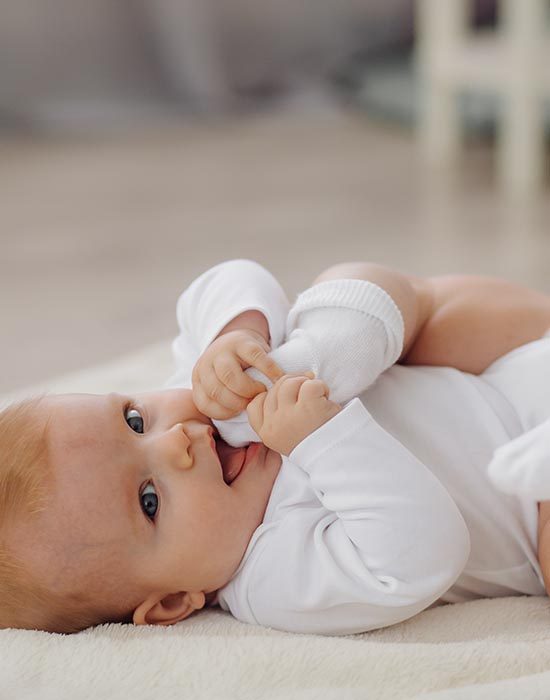
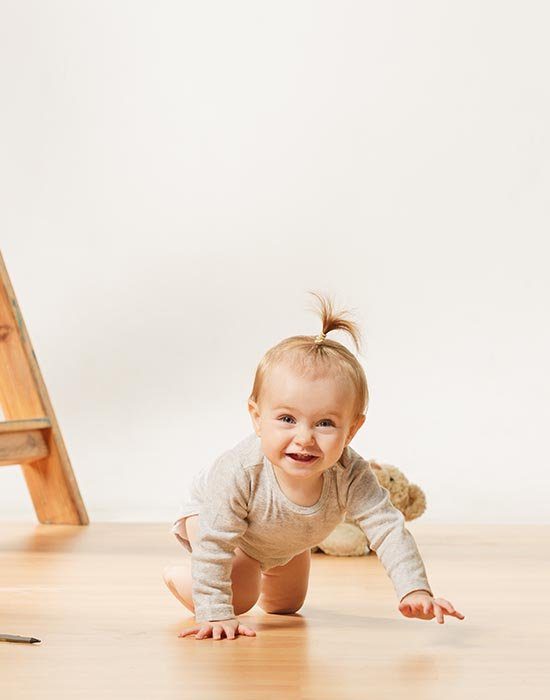


and parallelly…
There is development happening inside your baby’s brain which is not visible but as a parent, you do have a control over the quality of its development to quite an extent
Having a know-how of what your baby is absorbing and picking up in course of everyday interactions with you and other loved ones will be instrumental in helping you nurture healthy brain development – which includes his/her linguistic, cognitive and socio-emotional skills
Some facts and ideas:
1. As early as 4-6 months, babies begin to respond as per your emotional state of mind – happy, excited, sad etc
Babies can make out the variation in your facial expression and tone of voice. On seeing excitement on your face his/her hands automatically rapidly move to mirror your emotion. Similarly, if you’re gloomy your baby might freeze up and lose interest in playing.
Ups and downs are part of life. By being mindful at managing difficult feelings will help you sustain positive interactions with your baby
2. As early as 3 to 5 months of age, babies already have very big feelings.
Way before your baby indulges in his/her first words your baby has undergone a range of emotions joy, disappointment, excitement, sadness and so on.
In times of difficult situations, look for cues for how your baby is feeling. Keeping a close watch on your baby’s facial expressions, sounds and gestures, and to patterns in their reactions to different experiences, will help you respond sensitively. Knowing that his/her feelings matter also leads to building up the baby’s trust on you.
3. Babies do understand when they are being given important information
You heard it right! Your baby very well knows when you’re trying to get his/her attention for showing or telling something.
All you need to do is, make eye-contact, call out his/her name, use playfully exaggerated, high pitched tone to get your little one to focus.
4. You are the messenger to your Baby. Like literally!
Any sort of change from the routine be it a person or an experience your baby will always look for your reaction to it first and then react accordingly.
If you are going on a vacation but the change of place is new to the baby. Your happy cheerful face, reassures the baby and helps him/her settle in the new environment.
On the other hand, in case of babies, danger can come in many forms – loud noises, stark change in daily routines, too many new faces, or worry in your tone of voice or expression etc. Babies figure out what’s going on in the world by watching for your reaction. So act in ways that will best help your baby to cope for healthy development both now and in the future.




Some Positive Parenting Tips
Following are some things you as a parent, can do to help your baby during this time:
- Talk to your baby. She finds your voice calming.
- Newborns love watching your face, so make sure your interactions include plenty of facial gestures!
- Respond by moving the object closer, when you see your yet to be mobile infant wanting to reach it. This enhances his/her curiosity and the desire to keep learning.
- Read to your baby. This will help her develop and understand language and sounds.
- Sing to your baby and play music. This will help your baby develop a love for music and will help his brain development.
- Praise your baby and give her lots of loving attention.
- Spend time cuddling and holding your baby. This will help him/her feel cared for and secure.
- Play with your baby when s/he’s alert and relaxed. Watch your baby closely for signs of being tired or fussy so that s/he can take a break from playing.
- Instead of saying ‘No’, distract your baby with toys and move him/her to safe areas when he starts moving and touching things that he shouldn’t touch.
Take care of yourself physically, mentally, and emotionally. Parenting can be hard work! It is easier to enjoy your new baby and be a positive, loving parent when you are feeling good yourself.
SHARE
Share on facebook
Facebook
Share on twitter
Twitter
Share on linkedin
LinkedIn
Share on whatsapp
WhatsApp
Last Chapter
Next chapter