
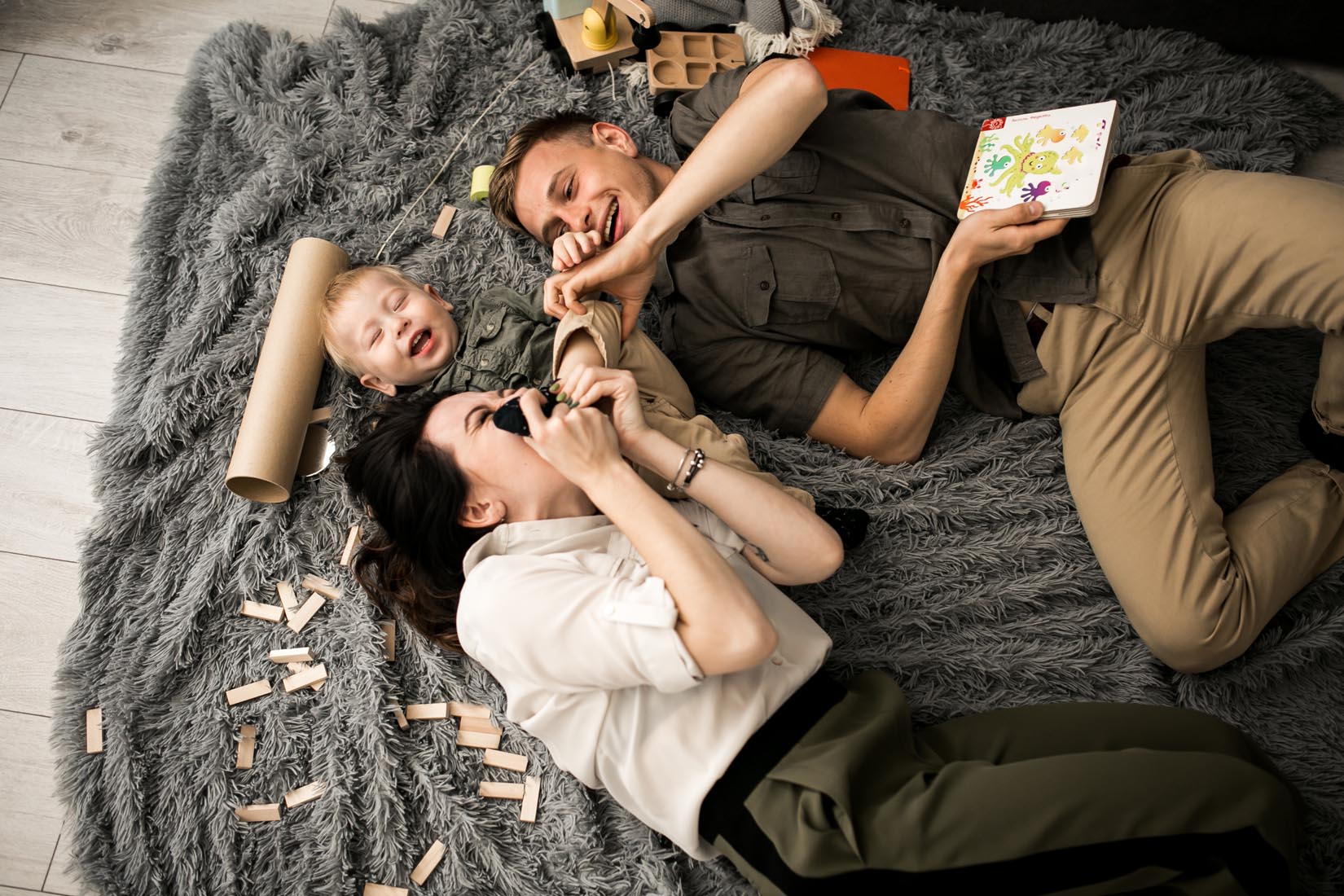
Which kid doesn’t like games?
What if we tell you that we will be suggesting some simple games that not only bring your entire family together for fun and laughter but teach some self-regulation tricks to your toddler too?
Yes, it’s all about hitting two birds with a single stone today. After all, a family that plays together, slays together!
So here we go!
Games for inducing self-regulation in toddlers (age 3-5)
- Scavenger Hunt- It is like a playground version of a peek-a-boo. You and your child take turns hiding a toy in a room of the house. While you hide, your little one has to wait, inhibit peeking and regulate excitement. He exercises all around the house and also learns team-work. When he hides, he learns to plan and use his motor skills, practice memory skills, cognitive skills and gets his creativity juices flowing to come up with new hiding locations. (At first, they might copy your exact hiding places, but after a while, they will start to innovate). Similar concepts can be taught by age appropriate treasure hunts that have a series of clues leading to a reward.
- Match-up- There are games that have flash cards that come in pairs. There is an animal figure on both the cards. From a pile of animal cards, kids have to identify and match same animal cards. The brain automatically focuses on the colour, size and shape of animals. Thus, children have to suppress that first impulse of matching same colour animals and search harder. Matching games are great for cognitive self-regulation because children are practicing holding several items of thought in mind, focusing attention, following rules (only searching for a single animal at a time is challenging!), and practicing sorting objects, taking turns, involving short-term memory, planning, prioritizing and using many other skills. It also helps in building language skills with new animal names and teaching several self-regulation skills including inhibition and cognitive switching. If not with cards, different colour sheets can also be used for match-making.
- Show ‘em moves- The game focuses on control of body and movement —a necessary self-regulation skill. So all you have to do is switch on the music and dance in your position while asking your toddler to copy you. You both can take turns too. Initially, you might have to place cushions around them to stay static in a position, but eventually, they will learn to stay intact as they grow up. Such games teach movement restriction, taking turns (always a challenge) and learning the steps of the dance. All of these activities foster self-regulation in a fun and silly way that the whole family can enjoy. One has to move with great agility and good self-control. Such games undoubtedly can’t be perfected by preschoolers, but can be introduced to control physical movement and maintain coordination.
- Stacking games- Learning to control one’s body in a space is a building block for self-regulation. Kids can be allowed to stack old books, newspapers, paper cups, old utensils etc. which causes them to learn the act of balance and movement inhibition. It is a good lesson in understanding personal space too and helps wobbly - wiggly kids a lot.
Any game that asks kids to control something is fostering self-regulation. Like a Chinese whisper, slow down, speed up, freeze game/dance, Simon Says, Red Light, Green Light, Ice and Water and similar. Playing age-appropriate board games or card games is another way that allows children a chance to practice things like taking turns, remembering rules, paying attention, shifting from one focus to another, and inhibiting impulses.
The best part of these ideas? You don’t have to buy any fancy toys! You have all that you need at home.
Keep playing, keep slaying!