
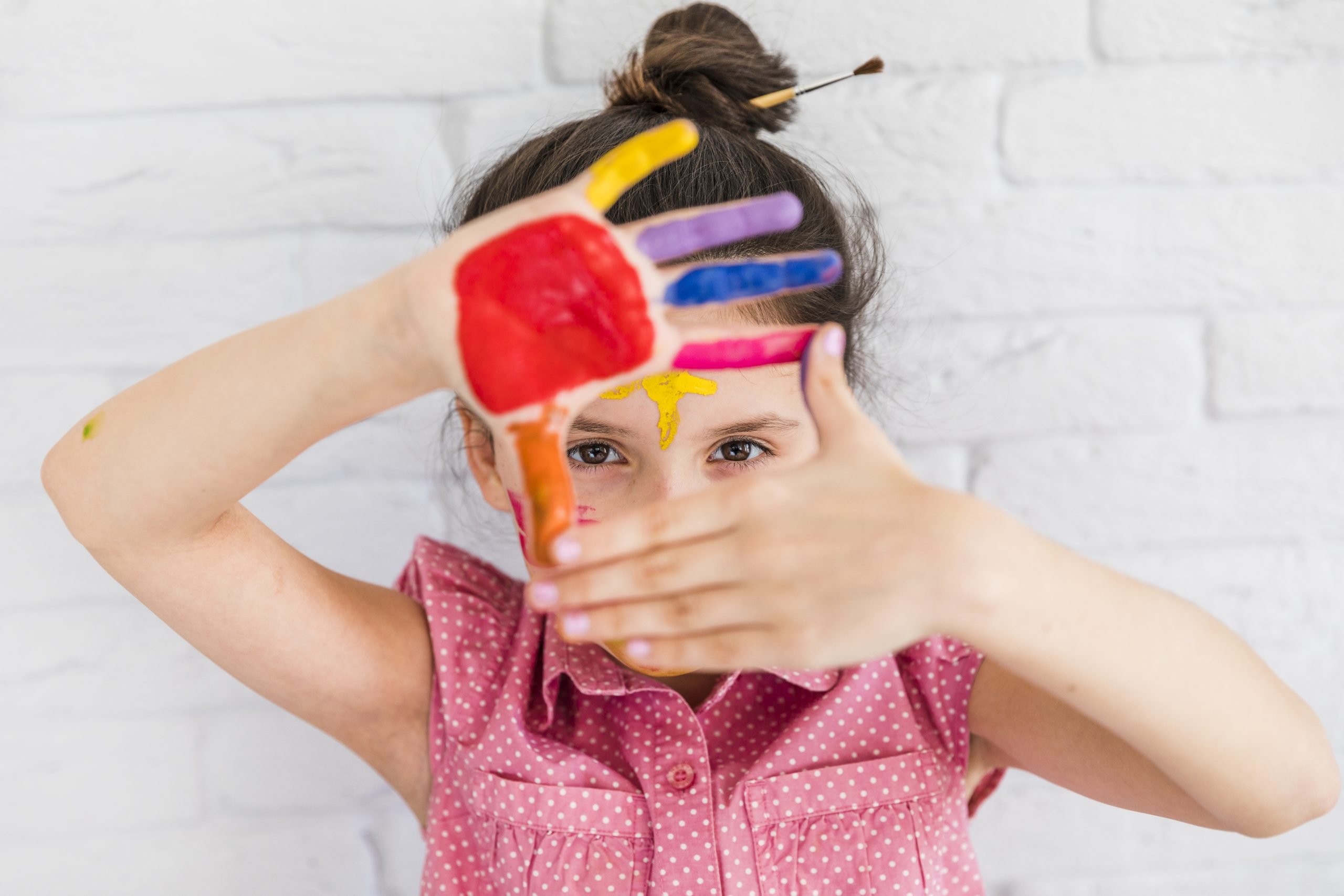
A splash of red mixed with a tinge of orange. The brush goes round and the hues of blue are painted. A dip of the finger inside the green colour bottle and woah! Tiny fingers weave creativity through imagination.
“What are you making, honey?” asked mommy
The 4 year old shrugs. He does not know yet. He just wants to paint the canvas with his thoughts and vibrant colours and let the magic spill!
For a preschooler and toddler, the world is all about possibilities, imagination and magic. By the age of three, children have officially entered Piaget’s preoperational period, the hallmark of which is the ability to use symbols and representational thought.
Children are inquisitive about the process of action happening. So for e.g. when crayons, water colors etc are introduced, a child is eager to scribble using one or multiple colors. Wonder Why?
When a new gadget comes don’t we frisk around it before making actual use of it…?
Similarly a child needs to examine and absorb the “cause and effect” of the new object before getting onto the purpose of it. So a 3 year old begins with scribbling crayons, feeling the texture, or dipping paint in water and watching the color change, mixing two colors, making random strokes and so on..
This is discovery learning even though it may be messy! Children this age begin to create with intention but are not capable of doing structured paintings as yet. However, by the time they are 5, many children start adding ‘details’ to their ideas.
With these newfound ‘superpowers’, children’s imaginations become boundless! They begin fantasizing, experimenting, and exploring. They are fascinated with magic and struggle to distinguish between fantasy and reality. Thus, it is the ideal time to support the development of divergent thinking. It basically means to generate unique solutions and connect the dots without being tied to “the” one right answer or way of doing things (convergent thinking). Supporting divergent thinking means providing activities that allow for child appropriate inquiry, reflection, wondering, curiosity, and even supported confusion. Hence divergent thinking or creative thinking are more than art; it involves inculcating the skills of unique thinking, predicting, imagining, and creating.
Children use all of their senses and the developmental domains when they create. They are influenced by how they feel, see the world, the educator/provider’s interaction with them, if they are physically ready and nurtured for the activity, and life experiences. Creativity, hence, is essential to stimulate their intellectual, cognitive, developmental horizons.
For many children, the creative spark reaches its acme by the age of six as then formal schooling leads to developmental drive towards conformity. However, supporting and fostering your child’s creativity in preschool sets the stage for its continued development in the years beyond.
Having said that, here are some quick tips to let your preschooler’s creativity float and its ideas make the noise:
- Art and craft, let it be messy: Art is a creative expression that nurtures imagination. So many colours all around to spill, splash, pour, throw, create can get any child excited and wonder what to make. Through painting, sculpture, collage, clay, drawing or any other medium, art is a way for children to work through emotions, make decisions, and express their ideas. Art activities also develop fine motor skills and hand-eye coordination. It makes the child come up with new ideas about what to create and even if they don’t have the idea, they develop concentration skills competing their ‘piece’ with all focus. Furthermore, art activities build confidence because children gain a sense of mastery over materials resulting in a new creation.
- Open ended toys: Can you make a mini house with cardboards? Or pillows and bedsheets could be used to make a tent house? Let your child use open ended home available objects to make toys. A bottle and its cap can be designed to make a moving car, a stick and a rubber band can be used to make a catapult and there are a plethora of ideas that the kids can invent if you guide them towards creating. Insinuate the idea of ‘best out of waste’ once and avoid the fancy toys. See how they come up with unique ideas with one push and you can thank us later.
- Trips, excursions, star-gazing outdoors: Have you ever laid down under the night sky with your kid gazing at the stars? Do it as it encourages fascination and creativity in young minds. Counting stars, spotting constellations, asking them the various possibilities about those ‘glowing white dots’ and hearing their innovative, innocent answers encourages them to come up with new theories. They creatively ponder over the possibilities which are very healthy. Same goes with excursions to the zoo, museum, planetarium etc.
- Dramatic play is good: Role playing, choosing a new character every now and then is a good idea for young kids to think creatively. Which character to choose, how to mimic it, how add new elements to it stimulate creative thinking. Read our series of blogs on dramatic play here (attach both links) for details.
- Weaving stories: One idea is to read bedtime stories to kids. Gradually, ask the child to make a bed time story himself while you act as the listener. Just give them one word to build a story and hear what all ideas they can come up with. This should be followed by thought provoking questions-what, why, how that the child should answer for you.
- Breaking and forming rules: If you and your child play typical ball, board, block games, do not follow the conventional rules. Ask your child to create new rules. For example why is the dough only used to make round rotis, let it make irregular animal shaped ones and you all can enjoy eating them.
Toddlers use the complete spectrum of their senses and the developmental domains when they create. They are influenced by how they feel and see the world as they have not yet learned to be guarded with their feelings and creations. Hence, they can be moulded and groomed well to be creative.
Valuing the creative process of your child means that you encourage them to experiment with a variety of ideas that pop up in their young brains. Just know when to let them free and when to supervise. Brace yourself to see how they swing their wands to execute their creative imagination and magic tricks!