
Sonali Verma is the mother of two children aged 3 and 5. Over the past few months she has noticed that whenever her children are playing, her 5 year old unknowingly hits the younger child too hard. She tried to scold her child and when that did not work, she even explained why and how she needs to control the force with which she plays. But neither of these techniques worked. Sonali then decided that the best solution was to not allow her children to play with each other.
In an age of cable TV, Nintendos, Facebook and YouTube children have started to play less outside. Research shows that a big majority of children play indoors more often than outdoors these days. It is a problem we need to address, because the consequences of failing to allow our children to play independently outside are beginning to make themselves felt.
Is this reduced outdoor play leading to more aggressive behaviour in children?
Evidence suggests that children are becoming more aggressive than they were before when the internet was not as widespread as it is now. When they play with each other, they push with too much force, which often results in the other child getting hurt. Most of the times, the act of hitting too hard is unintentional, although painful for the victim nonetheless.
Why is this happening?
Imagine if you had not thrown a ball very often in life. You would not know how much force to throw the ball with because you did not have much experience with it. It might take you practice to be able to throw it properly with an appropriate amount of force.
Given that children devote less time in active play these days and more time in front of the screen, they are not able to develop the senses in their joints and muscles (proprioceptive sense) like they used to.
What is this proprioceptive sense?
The proprioceptive sense tells us about our body position. It is stimulated every time we move. Each time we use our muscles or stretch and bend our joints. Receptors for this sense are all over our body, deep within our joints and muscles. Therefore, whenever we push, pull or lift heavy things we really stimulate this sense.
They move less and as a consequence, this proprioceptive sense does not get activated to the level it should. As a result, more and more children are starting to have trouble regulating how much force to use when pushing and pulling and even interacting with the objects and people around them.
In simpler terms, today’s children are struggling to determine how much force is too much in everyday games because their senses aren’t quite working right.
How to know if your child needs to develop their proprioceptive sense?
The child may:
- Chew on everything
- Hide in tight spots
- Love heavy blankets
- Play rough
- Crash into things on purpose
- Always try to jump on the couch or bed
- Be described as very physical or “wild”
- Over-step personal boundaries
What can parents do to fix this issue?
When we see that the way our child is playing is causing pain to other children, our first instinct might be to stop the child from playing with other children (the way Sonali did in the aforementioned example). Understandably, we don’t want any child to get hurt.
However, this will only fix the issue on the surface as our child’s proprioceptive sense will still continue to be underdeveloped.
Taking away tag the freedom to have physical games is like putting a Band-aid over a deeper issue. Let’s fix the deeper issue.
How to develop your child’s proprioceptive sense?
Paediatric occupational therapists often prescribe “heavy work” to young children who have trouble with their proprioceptive sense. This usually consists of anything that gives weighted input to the joints and muscles. These include activities in which the child needs to interact with objects where movement of force is needed. These are things that children would be naturally getting if they spent a considerable amount of time outside.
An example of this is holding grocery bags and walking. The child will learn how much force is needed to hold up heavy grocery bags (but not too heavy for them). This will develop their proprioceptive sense.
Part of what’s so incredible about proprioceptive activities is that some of them can be used quickly in a pinch and require no special toys or equipment.
Some activities your child can do in the park:
- Running
- Jumping
- Climbing a tree
- Walking backwards up a slide
- Hanging from monkey bars
- Play tug of war
- Pushing (for example on a see-saw)
- Pretending to be an animal
If it is not possible to take your child to the park frequently, you can make them do household chores with you. This will not only help them but also help finish your chores fast.
The following household chores can be done by kids:
- Carrying laundry basket
- Carrying grocery bags (could be a play version for young children)
- Moving furniture
- Carrying books
- Sweeping and mopping the house
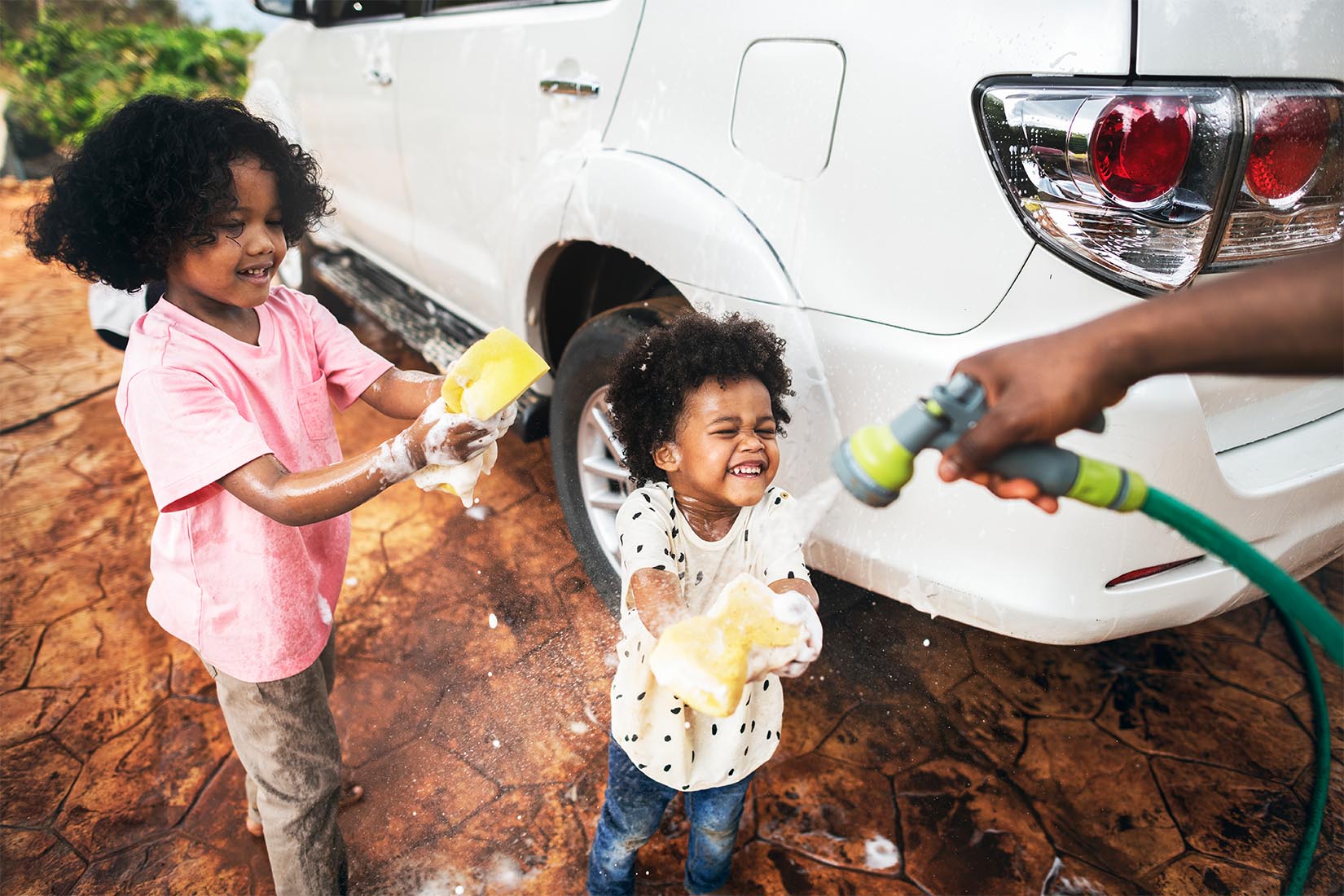
- Washing the car – carrying water-filled bucket, pulling hose, scrubbing tires
- Watering plants – carrying filled water can and carefully pouring evenly over plants
- Making the bed
- Kneading dough
Note: These proprioceptive activities will work for kids of all ages, but you may need to adjust them to fit your child’s development. For instance, an 6 year old can mop the house but your 2 year old could clean the table with a wet cloth.