
“Chores are one of the best mediums we have for teaching kids about being part of a family and about belonging, confidence, significance and teamwork.”-Lynn Lott
Parents involving their toddlers into small chores at home are often seen in the wrong light as ones ‘bringing it too soon’ or ‘depriving them of a playful childhood’ and many such things but the fact of the matter is, it has a lot of benefits:
- It builds the personality of the child early on,
- adds a healthy routine and structure to their day
- allows them to master skills of self-confidence and self-reliance
- bonding better with the family and toning down the pile of to-do-list are added perks!
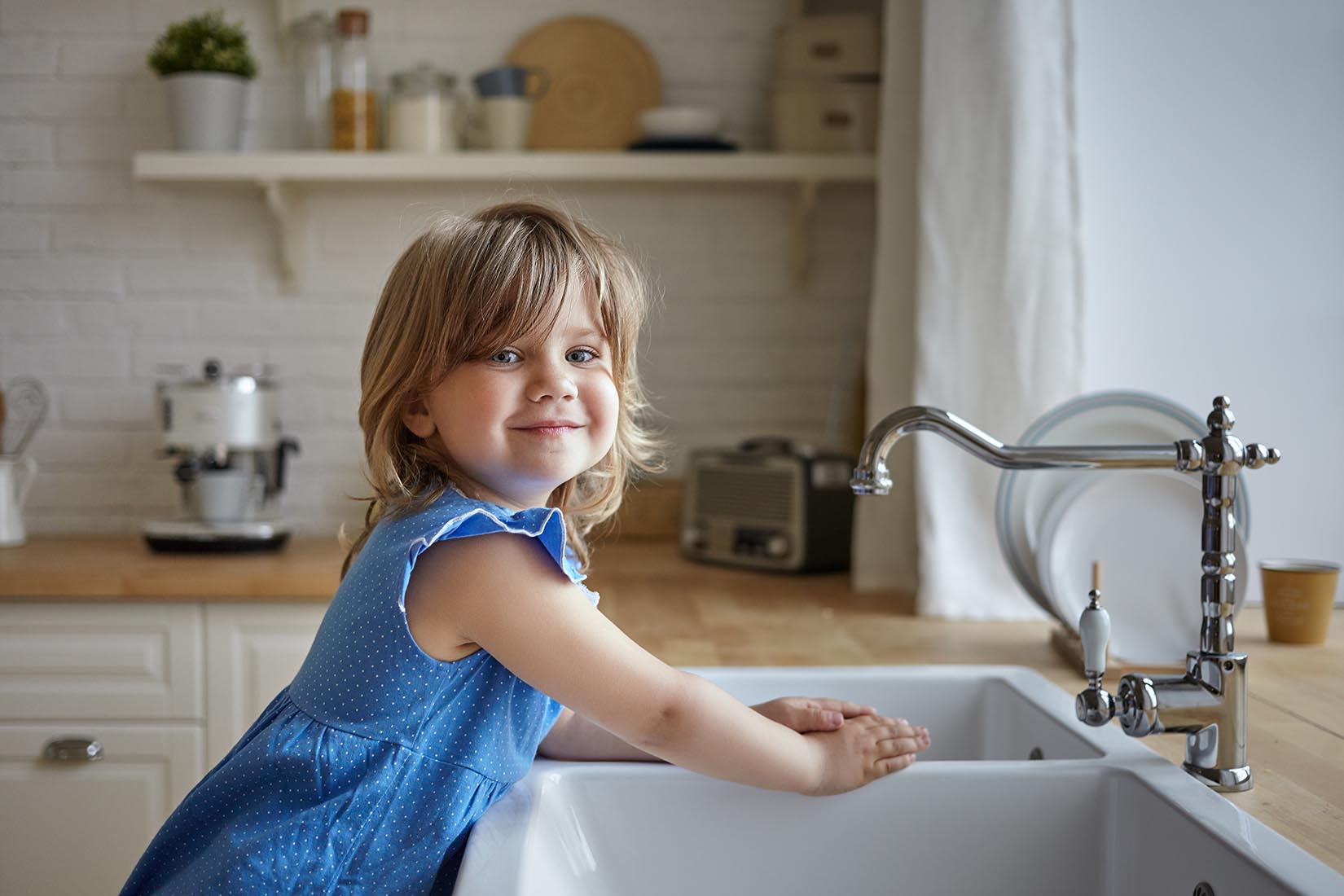
Making him/her throw the veggies down in the sink to rinse them with his/her tiny hands, keeping the fun intact by little splashing around can be a job done good for a 4 year old. Meanwhile, you can peel the potatoes next to him/her and be watchful of the actions from the corner of your careful, motherly eyes. Good idea, indeed!
Benefits of involving kids in household chores are innumerable and multifold. The self-concept (“I can do this!!”), self-esteem (“Others value and appreciate my work”), self-confidence ("I know how to do it!") and self-reliance ("I can do it again on my own") are the most important ideas that such work gives to the toddlers. Kids who help at home are more confident, resilient, and compassionate, do better in school, and grow up into more successful young adults as per numerous studies.
Plus, research by neuroscientist Kelly Lambert, Ph.D., suggests that doing tangible work with our hands (as opposed to, say, seeing something on a screen) releases feel-good brain chemicals that help protect against depression.
When you are passing on the knowledge of doing laundry, cooking a meal, uncluttering the room you are passing on life skills and not just chores...
Practically, you can begin with teaching your kid how to do it and then assign them ‘their tasks’ (call it like that so that they feel the ownership and responsibility for it). Some of these fixed tasks could be setting up napkins on the table, carrying bowls to the table, wiping up spills, putting back books when not in use and so on. The tasks should be within their developmental capacity yet make sure that the child feels proud doing them.
However, go easy while teaching them these so that they don’t give up on day 1 itself. (After all, he is just a 2 year old!) Your goal is to create a culture of collaboration so that there will be ‘team-work’ days. Refrain from saying “You spilled the water, you clean it up,” after he drops his water bottle. Instead, say, “How can I help?” And when your child does the same, thank him for his time and kindness. Similarly, keep in mind that once your child has learnt to do a particular task, he’ll do it differently from how you do it yourself. Micromanaging will do more harm than good, so just take a back seat and enjoy seeing them waddling up and about joyfully role-playing YOU!
Sometimes, it might be a challenge to get your toddler rolling and doing the tiny bits of the household chores. So we have some tried and tested ways to motivate them for ‘chore’ing:
- Assigning age appropriate tasks: There is no point of giving a herculean task to a 1-5 year old kid because not only will it be incomplete, it will demotivate him to even help the next time. Keeping adult extensive tasks away, give him simple tasks that involve simple hand movements. Watering plants, wiping the table, carrying light objects, keeping stuff back in their place can be a few examples.
- Put away your helping hand if need be: While the child wants to take ownership of a task, if he knows that you are right behind him if he falters, he is confident to finish it. But don’t do the task yourself. “Go throw that in the dustbin across the puddle, I am right here watching you” Supervision and teamwork are important for ensuring children’s safety and making sure they complete their assigned tasks.
- Praises and a pat on the back: We all know that children flourish and bloom best when given the right appreciation. So if he does a small or a big job, be his/her cheerleader. Express encouragement, gratitude with a pat on the back. “Wow! Look at how hard you’re working! You’re getting this job done! Thank you for being so helpful, you’re saving mama all the time.”
- Never sound like they are not capable: Children can get distracted quickly and one negative word can do just that. If the books are not placed in order on the shelf or the napkins are placed upside down on the table step in and ask permission for help and do it the way you want. With time you will be surprised that they do it just way you like it!
- Involve fun while teaching important stuff: So if you both are wiping the windows clean, a little music and dancing in between won’t be bad. As you pick up the wrappers from the floor together, you can pretend the dustbin to be a ‘basket’ to throw your ‘wrapper ball’ in and count scores. Chores don’t have to be only about work. So the next time you plan cleaning up, your kid is super-excited to repeat that ‘basketball’. P.S. He is secretly learning team work here.
- Increase difficulty of the task: Human brains are wired to find challenges more interesting than mundane work. So you can try to make regular chores a slight challenge for your toddler(of course by keeping his age and safety in consideration) If earlier he was just watering the plants, ask him to shovel the ground with his toy shovel and take out as much mud as he can. Then, as a team, sow seeds together. Yeah… let him/her learn to sweat it out !!
- Allow them age appropriate autonomy: Let him carry the small shopping items, let him make his own bed, let him collect his colours and keep them in the stand, let him keep his bicycle keys in the drawer. Bossiness is not motivating to kids. Letting them give input is essential in preserving their sense of self-reliance and self-assurance. The more independent kids feel, the more motivated they will be to take on tasks and accomplish them from start to finish.
The best way to inspire kids is to work with their natural, intrinsic drive to be productive. Kids begin to feel like they are capable of being a part of something larger than themselves and a contibutor to the adult world. Moreover, not only do chores show that families are built on mutual obligations and helping one another, they’re an investment with the wonderful dividend of spending time together doing a meaningful activity.
In our next blog Toddlers to the rescue-Household chores for their age, we have collated easy household chore ideas for your toddlers. Go check them out right away!
Trackbacks/Pingbacks