
Formative Years
Role Of Parents
Chapter 1.4
Share on facebook
Share on twitter
Share on linkedin
Share on whatsapp
It’s Sunday morning, and five-year-old Samar Mehra is intently gazing at his father shave his beard. He is trying to repeat the actions too with a toy, pretending to be like his Dad. Later that day, Mrs Mehra observes Samar repeating the same actions while pretend-playing with friends. He is also pretending to type on a laptop and drinking coffee.
Let's Reflect
Why do you think Samar is imitating his father? What role are his parents playing in his development?
These are some of the questions, this article will be targeting to answer!
So, a small recap from the last blog... Learning and development for young children are both rapid and cumulative, consistently laying the foundation for later learnings. Remember the Domino effect!
Even in their earliest years, children are imbibing about their world in sophisticated ways that are not always reflected in their outward behaviour. For instance, your child might be picking up your mannerisms even before he/she begins waddling!
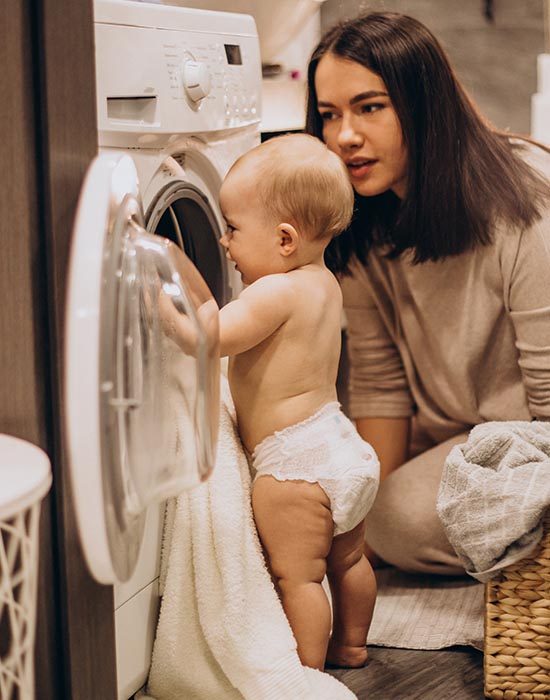
Remember, you are your child’s first teacher. Every waking hour, your child is learning something new from you!
Exciting, isn’t it? But with great power comes great responsibility !
You must be careful about what you say and do! As early as infancy the child is subconsciously absorbing your ways of living be it: food habits, mannerism, interaction with others, body language, temperament, behaviour, and everything else under the sun.
Infants and toddlers are amazing little students, grasping and learning from their immediate environment.
Neurosciences and early learning further reinstate that there is direct correlation between the parental responses and their child’s growth trajectory.
Parenting surely is hard and complicated, however, every child has immense potential. Exposure to the kind of environment is a major decisive factor towards building the abilities of the child (whether they bloom or withers away).



Role #1
Understanding the child’s signal and responding appropriately
Contrary to popular belief, child-rearing is not necessarily an inbuilt competence; education and advice play an essential role.
But the golden rule truly lies in the parent’s ability to effectively perceive, interpret, and respond to their child’s signals. The parents/caregivers bear a huge responsibility of understanding the natural process of a child’s learning through self-exploration and engage the child appropriately.
It is critical for parents to be attuned to their child’s emotions, else a feeling of frustration will creep in, and the child may feel rejected. Empathy with the child’s feelings is essential. Children need constant encouragement, nurturing and opportunities for sharing to develop and strengthen their positive emotions.
Role #2
Establishing a positive environment for your child’s growth and development
Insights emerging from developmental research emphasize on the importance of positive settings for the development of foundations for future growth. Kids thrive when they receive positive and secure relationships with adults who are knowledgeable about how to support their development and learning.
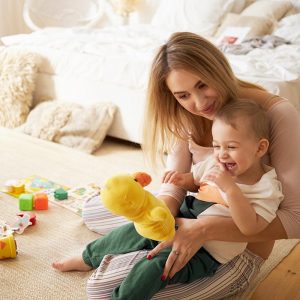
What can you do? Here are some activities you could try with your child
- Sorting toy cars from toy aeroplanes
- Finding squares and circles around the house
- Clicking pictures of objects for each letter of the alphabet
- Throw some of Dad’s shaving cream in a large tray and let their sensory buds explore
- Rescuing their favourite toys from a tub of rice/sand
- Balancing Act – draw a pathway with coloured tape and challenge them to walk on it without stepping out
Beyond the attachment to parents or a single caregiver, support from the wider community like extended family and friend helps the child to uncover and accept society’s patterns and rules and discover the importance of strong and healthy social relations.
Now that we have understood our roles let me pose another question…
What role does experience play in your child development?
Very important! There are two Es – Environment and Experience – that play an equal role in a child’s development. Childhood experiences are developed because of the child’s interaction with his/her environment.
During the early years, the child’s language, social behaviour, and emotional development are primarily dependent on his/her sensory (what the child sees) and perceptual (how the child perceives) experiences. These are strongly influenced by experiences during this time. Research supports the claim that quality of psychosocial experiences is directly proportional to the development of a healthy brain.
For example: Using words like – “please, thank you, I am sorry,” with young children or around them organically inculcates a habit in them of using these words appropriately in social context.
The child’s ability to cope with adversity is an essential marker of healthy brain development. In an environment of supportive relationships, the young child’s brain architecture develops the ability to bounce back into a healthy state.
However, in the absence of buffering relationships to the child, toxic stress can lead to weakening of the neural pathways that might result in lifelong repercussions.
Toxic Stress refers to extreme cases of parental conflicts, poverty, abuse, or neglect. This results in increasing the child’s heart rate and hormone levels leading to frustration and sentiment of rejection.
As we can see, the early experience of children with caregivers is of utmost importance, and we shall discuss it more in the next article. Stay Tuned!

SHARE
Share on facebook
Facebook
Share on twitter
Twitter
Share on linkedin
LinkedIn
Share on whatsapp
WhatsApp
Last chapter
Next chapter