
INFANT – PSED
Social Development in Infants
Chapter 4.3
Share on facebook
Share on twitter
Share on linkedin
Share on whatsapp
7-month-old Mehul, loves to roll and tumble about. So, he uses his new found ability to toss objects around his favourite people, to elicit a response. Gives a light tug to mumma’s dupatta to draw her attention. When tobby is around he shows his excitement by frantically moving his hands and tries to even whoof!
All Mehul is trying to do is be pally and savour the company of others around.
Let’s Reflect
Stage 1 of Erikson’s theory of psychosocial development: Trust:
As per the psychologist, in an environment where the needs are consistently met with unconditional love and care there is a “basic sense of trust” that ignites during the first year of life itself. The child perceives the world as a good place. However, in the absence of any of the above, the infant’s brain perceives the world as unfriendly and mistrust seeps in.
Early Social Behaviour
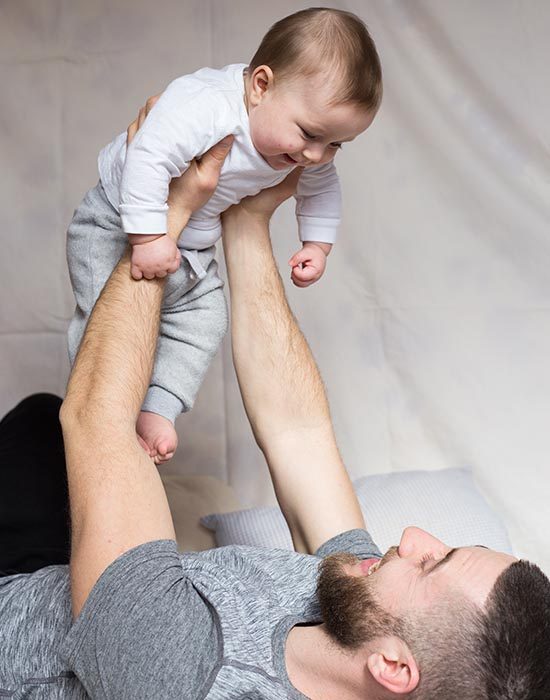
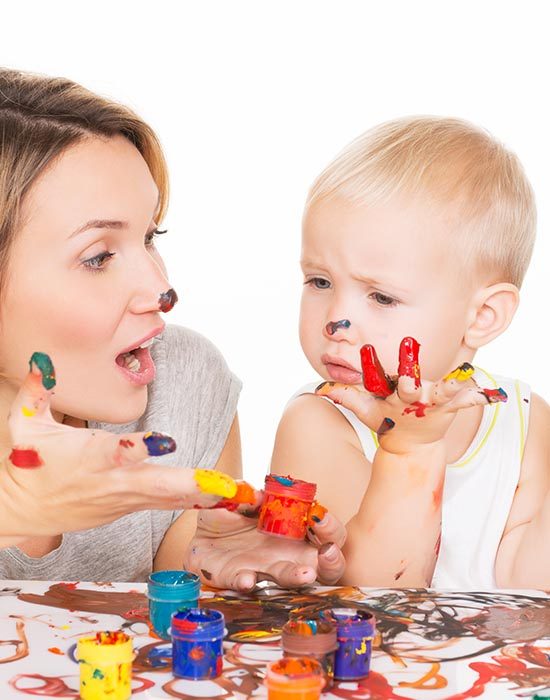
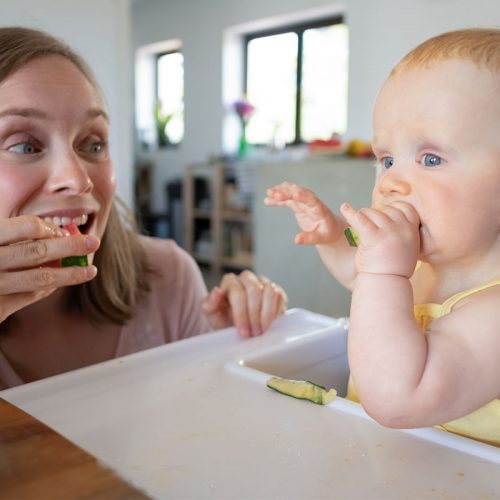
Attachment being the foremost indicator of social development. It is hard to miss the tiny eyes gleam at the sight of his/her parents. When you interact verbally or otherwise, there is a dance-like movement in the petite body, a movement whose rhythm matches that of your communication with him.
Imitation to your gestures follows within a few weeks after birth. Infants smile back, take out sounds as if responding to your words. Such responses are natural instincts for the baby to involve the adults around in social interactions.

Stranger Anxiety is good news!
Within a few months after birth infants fully develop strong attachment with adults (usually parents). In their absence, even if momentary a sense of uneasiness (stranger’s anxiety) sets in them. By the later half of the first year, as the attachment strengthens, so is the pain of being away from the attached one.
Popularly known as ‘separation anxiety’ sets in; a state of distress when the loved one steps out. Gradually as personal development happens the element of trust seeps in, which reassures the baby that his/her loved one is leaving but will be back. Developing trust is a part of coping with separation in this stage.
The power of Everyday Interactions
Let’s consider a scenario:
Child: Whilst engaged in self-play on his cot, hears footsteps. Mira’s eyes dashes towards the sound, as the walking figure slowly comes into the picture. At seeing her mother approaching, Mira’s eyes brighten with joy, and she starts cooing as if calling her mother.
Kind of an everyday scene. Nothing Fancy! However, there can be various responses to the above scenario. The kind of response will leave an impression on the infant’s growing mind, and act as a reference to Mira while forming her relationship with others!
Scene 1:
The mother makes eye contact and warmly greets Mira. On noticing dampness, she strikes a conversation “Oh sweetie, looks like you need a diaper change!” She informs the child: “I am going to pick you up now” saying so she continues her lovingly smile and prepares the baby for a change.
Here, the mother speaks directly to Mira about what she was going to do, using body movements that matched her words. Mira in turn, used her body, facial expressions, and voice to communicate her responses. The parent further responded to her non-verbal responses by interpreting, answering, and discussing.
Scene 2:
The mother, amidst her chores, hurriedly walks towards Mira, feels the diaper, lifts the baby and changes the diaper. Smilingly puts the baby back into the cot and returns back to her chores.
As opposed to scene 1 where the parent made her presence felt, interacted before checking for diaper, here, the mother hastily approaches and swoops up the baby unexpectedly, without a word of acknowledgement to the person inside the diaper.
If we place ourselves in place of the baby, wouldn’t such action seem disrespectful?
Sowing the seeds of attachment:
Series of responsive interactions as illustrated in scene 1 is what builds a partnership. This feeling of being part of a team instead of an object to be manipulated is vital to wholesome development. Reciprocal interactions like these promote attachment between parent and the child. Another benefit from a series of such interactions is that the baby develops a cooperative spirit. A spirit that then stays within, for life!




It is important as a Parent to stop and think for a moment about your own emotions – to tune in to yourselves!
Young children often challenge adults’ ideas, beliefs and feelings. A moment of tuning in to your own responses may help parents to think about what emotion their child is emanating. Following two everyday scenarios might be helpful:
– Crying babies can make heads spin, leaving parents feeling lost, useless and hopeless. Stopping and addressing this can help you understand the emotions of your baby.
– Similarly, when your child hurts others, especially if they hurt a child who is younger or more vulnerable, it is natural for parents to feel a strong surge of dislike or anger.
Again, tuning in to the situation can help in following two ways:
- Parents will realize that they must control themselves and respond calmly to the situation.
- It might help you unearth the underlying perspective as to why your child is doing the hurting? What is the trigger behind his/her anger?, or feeling of rejection or being not liked.
Being a parent is rewarding but often demanding. However, knowing what your child is undergoing is a normal part of a young child’s development, can be very reassuring.
Having high levels of self-awareness and empathy enables parents to ‘tune in’ and respond in a reflective rather than an impulsive way. The relationships they establish with their child and the learning opportunities they provide will help their young child to develop the personal, social and emotional skills.
Before little ones can understand others’ perspective and feelings, he/she needs to introspect the following within self:
– My feelings are important to me
– Others have feelings too
– There might be a variation on thoughts and feelings from that of myself.
Effective practices from the PSED area of learning and development:
– Playfully help your baby to recognize that they are separate and different from others, for example pointing to your own and then your baby’s nose, eyes, fingers.
– Introduce simple words for feelings and mental states into conversation like ‘happy’, ‘sad’, ‘cross’, ‘hurt’ and ‘scared’. This helps children start to learn about words that express feelings and about what they are feeling themselves.
Eg: You can say: “You love playing with sand, don’t you? It makes you happy”.
OR
If another child or adult is hurt or upset, talk about how that person is feeling.
– Reduce incidents of frustration and conflict by keeping routines flexible so that young children can pursue their interests to their heart’s content. So, if the child wants to keep playing in the sand and does not want to leave for snack time right away, give her some more time to enjoy. It is okay.
SHARE
Share on facebook
Facebook
Share on twitter
Twitter
Share on linkedin
LinkedIn
Share on whatsapp
WhatsApp
Last Chapter
Next chapter