
Preschoolers – Physical Development
Supporting your Preschooler’s Motor Skills
Chapter 6.8
Share on facebook
Share on twitter
Share on linkedin
Share on whatsapp
Fundamental Movement Abilities
This is the age to develop and refine basic patterns of movement in the following three areas (Saunders, 1978; Abass, 1999; Lubans, Morgan, Cliff, Barnett, &Okely, 2010)
Locomotion movement abilities: It is the ability of the body to transport itself in horizontal or vertical direction from one point to another (Examples: walking. Running, hopping, jumping, skipping and so on).
Manipulative movement abilities: It is the ability of the body to apply force to an object or receive force from an object (Examples: throwing, catching, kicking, trapping, bouncing etc.)
Non-Locomotor movement abilities: When an individual body remains in place but moves around its horizontal or vertical axis (Examples are Turning and Twisting; Bending and Stretching; Swinging and Swaying; Lifting and Carrying; Pushing and Pulling etc.)
Let’s Reflect
Fine motor control is not yet established, but gross motor control is developing rapidly!
Preschooler’s are active and energetic and often prefer to run from one place to another rather than walk. The love to play and move freely assures tremendous improvement in their cognitive and affective development. Play experiences serve as a means by which preschoolers will learn about themselves and their environment.
Make it fun to practice physical skills with your child throughout the day
Parents should reinforce motor development and foster further progress where necessary. Here are some guidelines and activities to try:
For those Large muscle movement
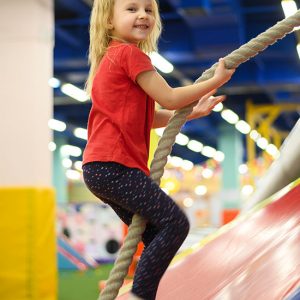
An environment that encourages lots of time and space for energetic and noisy play is vital for the child to discover and challenge his/her gross motor skills
- Involve running and walking: Engage in play activities such as open-ended chasing on the playground, follow-the leader, and giant steps.
- Ensure use of Both: Encourage your child to use alternate feet for kicking or alternate hands for batting. Make sure the ball is large enough to promote success, yet small enough to present a challenge
- Try rolling games: How many different ways can we roll? Slow and fast rolls, arms at side, or one arm up and one arm down
- The Balancing Act: Low balance beams, jumping in and out of car tyres, walking in line on the sidewalk or floor are some of the methods that help developing motor skills
- Rough-and-tumble play: Identify safe areas for rough play, such as soft mats and grassy hills. Rules for rough-and-tumble play, such as taking your shoes off when wresting on the mat, can be instituted. Note: Careful monitoring will be required.

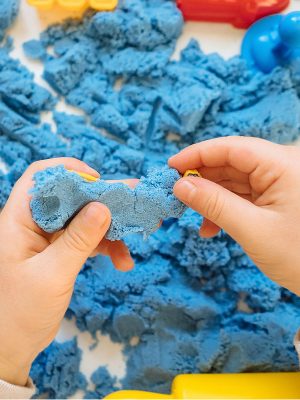
Sharpening Small Muscle Movement:
A lot of practice needs to be done for your little one to gain control of his/her fine-motor skills: The good news is that common items within the house is sufficient for polishing those finer muscles!
- Newspaper/foil paper: Ripping and crumpling up newspaper is a good exercise for the finger and wrist muscles.
- Paper Towel: Folding paper towel in half; helps the fingers gain control and precision
- Sponge: Dip a small sponge into water and then squeeze it out.
- Plastic Cups: Stack and unstack plastic cups to make pyramids or sort by size/color.
- Paper plates: Separate paper plates to improve dexterity.
- Rice or Beans Use small cups for scooping and pouring these for one container to another. Picking them with fingers would also be great for grasping exercise!
Advancements in motor development allow preschoolers to perform self-help skills and will inspire a desire to contribute in family and social life. Parents need to encourage their child in assisting with age appropriate chores like: caring for the plants, or a pet in the house, arranging napkins before meals, helping with storing the grocery and so much more….!
SHARE
Share on facebook
Facebook
Share on twitter
Twitter
Share on linkedin
LinkedIn
Share on whatsapp
WhatsApp
Last Chapter
Next chapter